Address
JINKE Technology Industrial Park, No. 3188 ChunYuan Road, Weifang City, Shandong Province, China
Work Hours
Monday to Friday: 7AM - 7PM
Weekend: 10AM - 5PM
Address
JINKE Technology Industrial Park, No. 3188 ChunYuan Road, Weifang City, Shandong Province, China
Work Hours
Monday to Friday: 7AM - 7PM
Weekend: 10AM - 5PM
Garment quality control in China should start with the approved sample and continue through materials, production, final inspection, and packing. Hengcheng uses this production-led approach to help overseas buyers make bulk standards clearer and catch avoidable issues earlier.
Many apparel problems begin before final inspection: comments are not converted into measurable bulk standards, tolerances remain unclear, workmanship drifts, or labels and packing are confirmed too late. This workflow is designed for OEM, private-label, and repeat-order programs where sample-to-bulk consistency matters.
Apparel brands that want stronger quality control between sample approval and bulk production.
Sourcing teams looking for a China garment manufacturer with a clearer process, not just a vague quality promise.
Buyers who want visibility into how workmanship, measurements, trims, labels, and packing are controlled before shipment.
OEM / private-label projects where fit consistency, finishing quality, branding details, and packaging accuracy all matter to the final order outcome.
Overseas buyers who want fewer surprises after production has already moved too far forward.
Many factories talk about quality control as if it begins at the end of production.
In practice, final inspection is only one checkpoint. If the approved sample is not translated into clear bulk standards, a final inspection often confirms problems after most of the time and cost have already been spent.
That is why stronger garment quality control starts earlier, usually around:
For overseas buyers, this matters because one quality issue rarely stays isolated. It can trigger rework, delay, retailer complaints, packing confusion, or shipment disappointment.
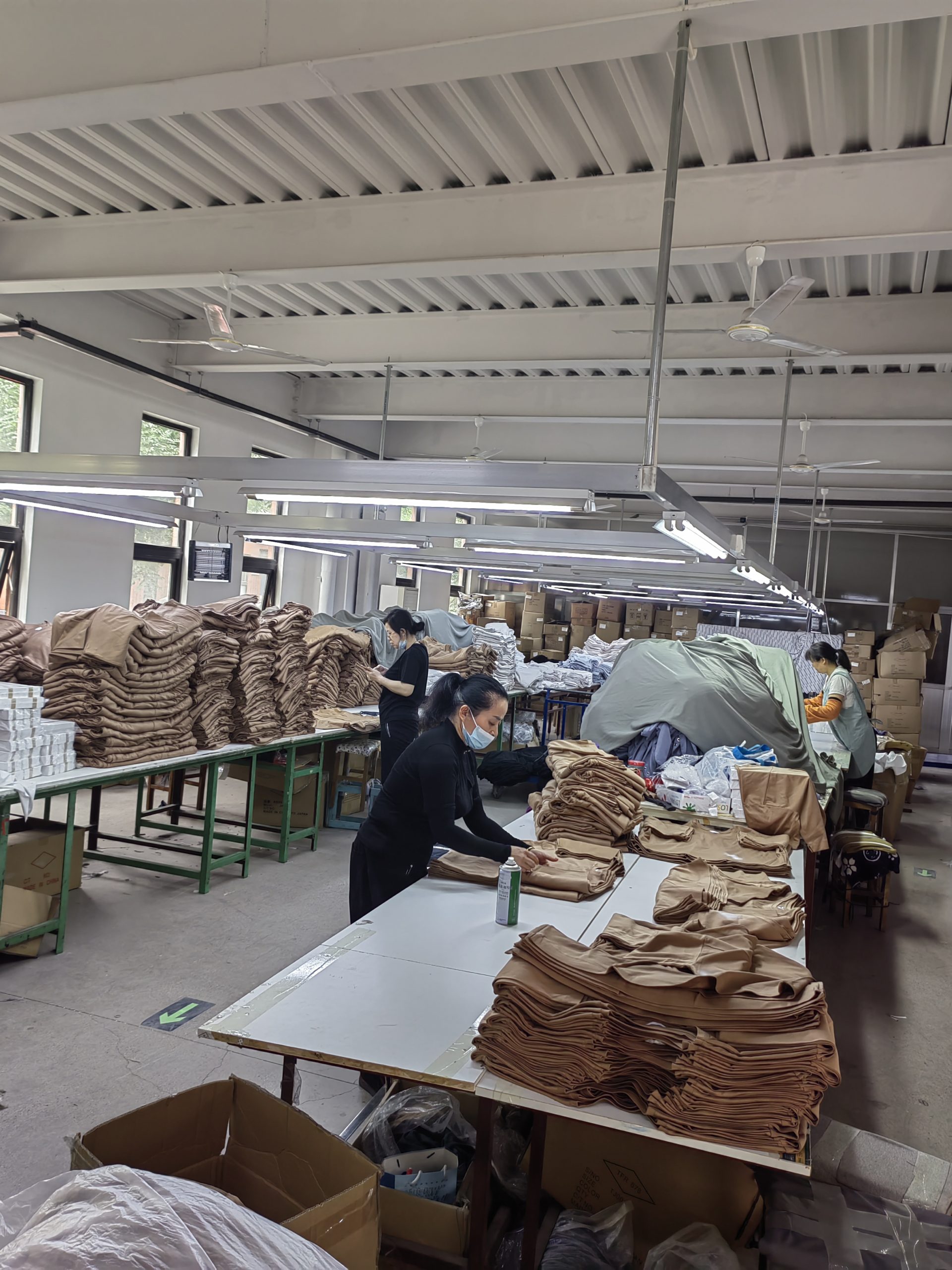
For a China garment manufacturer, “good quality” is too vague to compare suppliers. A more useful question is whether the factory can translate your approved sample, measurement chart, workmanship notes, trims, labels, packing instructions, and destination-market requirements into checkpoints that the production team can actually follow.
Export experience can be a useful background signal, including Hengcheng’s experience with demanding Japan-market orders. It is not a substitute for an agreed specification, a buyer’s inspection standard, or product-specific testing. Requirements vary by buyer, garment category, and destination market.
The process below describes a factory-side operating framework. The final inspection method, AQL level, test plan, and acceptance criteria should be agreed for each order before production.
Different garments and buyers require different details. The checkpoints below show what is reviewed, what it is compared against, and what the buyer should expect before the order moves forward.
| Stage | Typical control point | Reference or input | Expected output |
|---|---|---|---|
| 1. Pre-production | Align measurements, tolerances, fabric, trims, workmanship, decoration, labels, packing, and market notes. | Approved sample, tech pack, size spec, buyer checklist | One agreed production standard before cutting. |
| 2. Incoming materials | Review fabric appearance, shade, composition direction, trims, accessories, and obvious defects. | Approved swatch, trim reference, purchase specification | Materials released, held, or escalated before production. |
| 3. First-piece and inline | Check construction, measurements, stitching, attachments, and decoration while production is running. | Approved sample and first-piece comments | Early correction before a repeated issue spreads. |
| 4. Workmanship and measurement | Review critical points, seam quality, symmetry, reinforcement, loose threads, puckering, and visible defects. | Measurement chart, tolerances, workmanship standard | Recorded findings and corrective action where needed. |
| 5. Finishing and presentation | Check print or embroidery, wash effects, pressing, labels, brand details, folding, and presentation. | Artwork, trim sheet, label file, packing instructions | Finishing and branding match the approved direction. |
| 6. Final inspection | Review defects, assortment, measurements, workmanship, labels, packing, and buyer-defined inspection logic. | Order specification and agreed inspection or AQL plan | Release, hold, rework, or escalation decision. |
| 7. Shipment handoff | Confirm quantity, carton marks, packout, documents, and open quality issues before dispatch. | Final packing list and shipment instructions | Clear shipment-readiness confirmation. |
A factory can control quality more effectively when the buyer’s standards are clear early enough. You do not need a perfect document on day one, but the following inputs should be confirmed before production moves too far forward.
Target-market requirements can involve product safety, chemical, labeling, retailer, or testing obligations. The brand or importer should confirm the applicable requirements and responsibility with a qualified compliance partner; the factory can align the agreed manufacturing checkpoints.
A visible checklist helps buyers understand whether the process is practical and real.
Working with an overseas garment factory always introduces coordination risk. The real question is whether the factory can translate product requirements into a repeatable production process.
A stronger QC system helps reduce risk around:
At Hengcheng, quality control is linked to a broader workflow: sourcing, sample development, production, QC, and shipment coordination should support one another instead of operating as disconnected steps.
Hengcheng is not positioned as a generic inspection-only provider. The value comes from how quality control is connected to the full garment manufacturing path. That includes:
For serious buyers, this matters because a factory’s process quality is often felt long before a shipment is opened. The goal is to reduce uncertainty earlier.
This page is especially relevant for:
No. Final inspection is one checkpoint. The working framework starts with pre-production alignment, material review, first-piece or inline checks, measurement and workmanship control, finishing review, and packing checks.
Yes. A buyer checklist, inspection standard, or AQL requirement can be reviewed and aligned before production. The exact sampling level, defect classification, and acceptance criteria should be agreed for the specific order.
The issue should be identified, contained, corrected, and re-checked against the approved sample or agreed specification. The appropriate action may be rework, replacement, adjustment, hold, or buyer escalation depending on the issue and order terms.
Yes. If a buyer requests third-party inspection before shipment, the timing, scope, standard, and inspection company can be coordinated as part of the overall manufacturing and shipment plan.
Factory QC is part of the production workflow and aims to prevent or correct issues earlier. Third-party inspection is an independent inspection arranged by the buyer or agreed parties. One does not automatically replace the other.
Prepare the product reference, approved sample or tech pack, size chart and tolerances, material and trim direction, decoration, labels, packing instructions, quantity, destination market, and any buyer or retailer inspection requirements.
No. Export experience can indicate familiarity with detailed buyer requirements, but it is not a certification or a substitute for the agreed sample, specification, inspection plan, or product-specific testing requirements.
This process is especially useful for knitwear, T-shirts, hoodies, casualwear, loungewear, kidswear, activewear, and private-label programs where workmanship, measurements, branding details, and packing accuracy matter.
Yes. The agreed scope can include label and hangtag accuracy, folding and polybag instructions, carton marks, assortment, quantity, documents, and open issue confirmation before shipment.
If you are evaluating a garment manufacturer in China and want clearer quality control before shipment, send us your product brief, approved sample direction, quantity, timeline, and any inspection or defect standards that matter to your project.
If you are still mapping the wider manufacturing workflow, you can also explore our Private Label & OEM page and Sample Development page to see how Hengcheng supports apparel projects from sourcing through shipment.