Address
JINKE Technology Industrial Park, No. 3188 ChunYuan Road, Weifang City, Shandong Province, China
Work Hours
Monday to Friday: 7AM - 7PM
Weekend: 10AM - 5PM
Address
JINKE Technology Industrial Park, No. 3188 ChunYuan Road, Weifang City, Shandong Province, China
Work Hours
Monday to Friday: 7AM - 7PM
Weekend: 10AM - 5PM
A balanced comparison of China and USA hoodie manufacturing for private-label brands: cost, MOQ, sampling, communication, freight and best-fit scenarios.
China is usually the stronger route for OEM/private-label hoodie programs that need custom fabric, trim sourcing, decoration coordination and scalable landed cost. USA manufacturing can be the better route when the buyer needs local speed, domestic positioning, very small replenishment or a Made-in-USA claim.
The useful question is not simply, “Which country is cheaper?” A sourcing team should compare the total program: fabric choice, MOQ by colorway, sample workflow, bulk QC, freight, duty, communication speed, replenishment plan and the brand story behind the garment.
If you are building a private-label hoodie program with custom fabric direction, multiple colors, trims, labels, print or embroidery, China is often the more practical route once the order quantity is commercially workable. The supply chain is deeper, the factory can coordinate more components, and the unit economics usually improve as the program becomes repeatable.
If you are a US brand testing a very small local drop, replenishing quickly after a sell-through spike, or using domestic origin as part of the brand message, USA manufacturing may justify the higher production cost. The buyer pays more, but may gain speed, local control and a simpler domestic logistics path.
| Decision area | China route | USA route | Buyer takeaway |
|---|---|---|---|
| Best fit | Scalable OEM/private-label hoodie programs | Domestic, fast-turn or Made-in-USA programs | Match the route to the business model, not only to price |
| Unit cost | Usually stronger at planned bulk volume | Usually higher because of local labor and overhead | Compare landed cost, not just sewing cost |
| MOQ | Often needs clear quantity by style and colorway | May support smaller local batches | Small test orders and repeat programs are different decisions |
| Lead time | Sampling and bulk can be efficient, but freight must be planned | Can be faster for local replenishment | Separate production lead time from delivery lead time |
| Fabric and trims | Often broader sourcing range for fleece, French terry, rib, zippers and labels | May be simpler when using available local materials | Custom material choices usually need deeper supply-chain support |
| Risk point | Requires clear spec control, sample approval and freight planning | Requires accepting higher cost and sometimes narrower options | The better route is the one where the risk is visible and manageable |
A cheap-looking quote can become expensive if it misses freight, duty, sample revisions, rejected production, urgent air shipment or packaging changes. A higher-looking domestic quote can become more reasonable if it helps the brand avoid inventory risk or hit a local launch date.
For hoodie manufacturing, the first quoted unit price is only one layer. A real comparison should separate:
This is why a sourcing team should ask for FOB and landed assumptions separately. FOB can help compare factory-side production. Landed cost helps compare what the buyer will actually pay before the goods are usable in the target market.
| Cost layer | What to ask China suppliers | What to ask USA suppliers | Why it matters |
|---|---|---|---|
| Fabric | Fabric composition, GSM, width, dyeing or stock availability | Available local fabric options and surcharge for special fabric | Fabric often drives both price and performance |
| Decoration | Screen print, embroidery, applique, washing or special finishing feasibility | Local decoration method, setup cost and minimums | Decoration changes MOQ, lead time and defect risk |
| Sample | Sample fee, sample lead time and revision logic | Proto cost, fitting sample timing and adjustment cost | A weak sample process creates expensive bulk mistakes |
| Bulk production | MOQ by style/colorway, bulk lead time and payment milestones | Batch size, local capacity and rush surcharge | Production economics differ by order model |
| Freight | Sea/air estimate, destination port and delivery planning | Domestic freight or local pickup options | Delivery path can change the final route decision |
| QC | Inline and final inspection checkpoints | Local inspection access and rework process | Quality failure is part of cost, even when hidden at quotation stage |
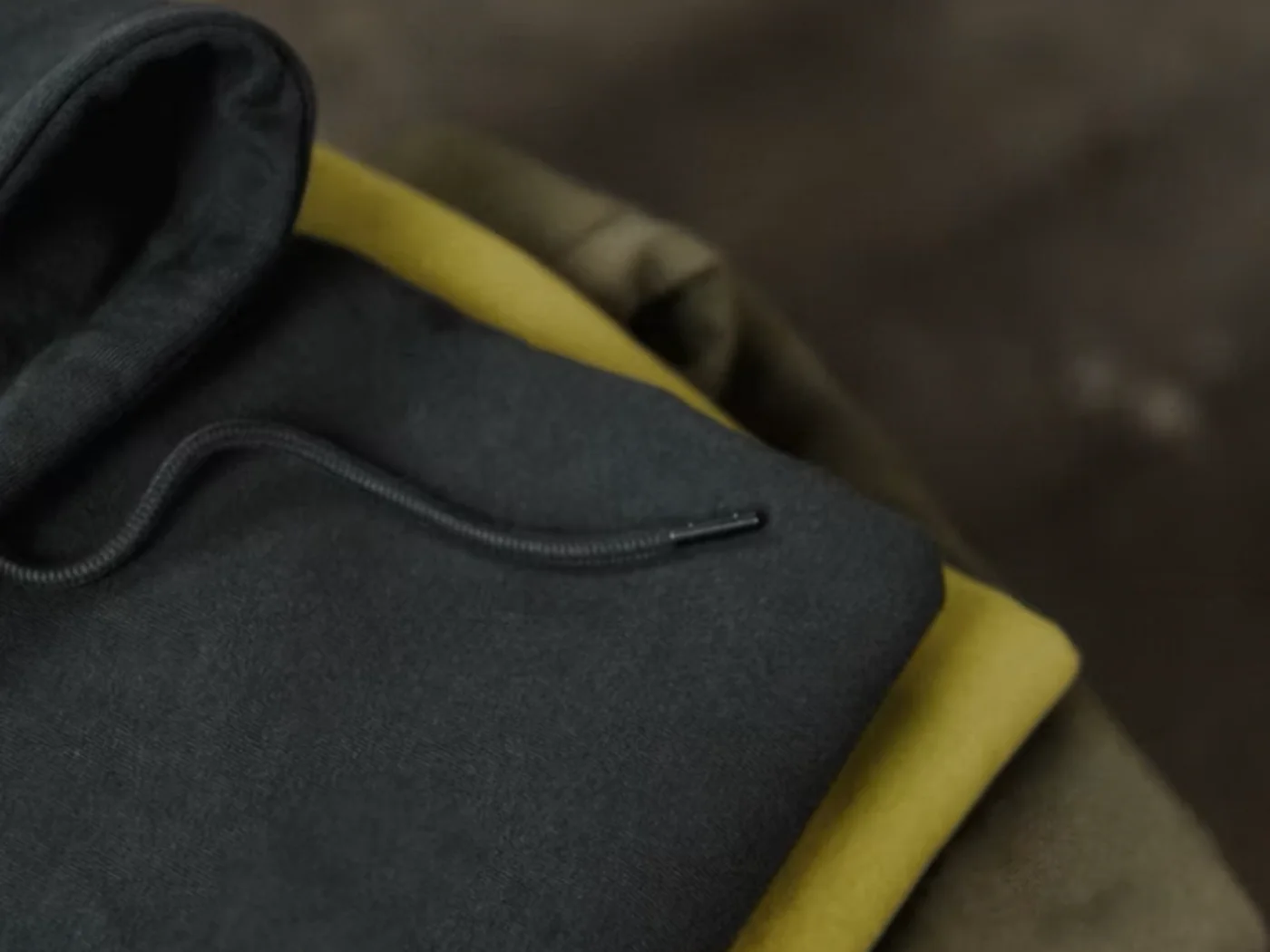
China is usually stronger when the hoodie is not a blank commodity. Once a buyer needs a target hand feel, a specific fleece or French terry weight, rib recovery, two-way zipper, private label, packaging, printing, embroidery or wash effect, the supply chain around the factory becomes important.
For an OEM hoodie project, the factory is not only sewing panels together. The team may need to check fabric sourcing, shrinkage behavior, decoration placement, zipper matching, drawcord quality, label position, carton packing and whether the approved sample can be repeated in bulk.
China can be a strong route for:
The tradeoff is planning. A buyer cannot get the best from a China factory by sending only a vague photo and asking for the cheapest price. The buyer should prepare a clear RFQ and allow time for sample approval, material confirmation and freight planning.
USA hoodie manufacturing can be the better route when speed, local control or origin story matters more than the lowest factory-side cost. A domestic supplier may be useful for very small tests, local pop-up drops, influencer merchandise, urgent replenishment or brands that intentionally sell Made-in-USA products.
The cost structure is different. Labor and overhead are usually higher, and some materials or trims may have fewer local options. But the buyer may save time on international shipping, communicate in the same time zone, visit more easily and reduce the complexity of customs or overseas freight.
| Scenario | Why USA can work | What to check before choosing it |
|---|---|---|
| Very small local test | Lower inventory risk and faster local launch | Whether the supplier is doing real cut-and-sew or blank customization |
| Urgent replenishment | Domestic turnaround may protect a launch or event date | Rush surcharge, fabric availability and actual capacity |
| Made-in-USA positioning | Origin claim supports the brand story | Claim rules, material origin and documentation expectations |
| Local fit review | Buyer can check samples and production more easily | Whether the local workflow still has enough QC discipline |
| Simple decoration on blanks | Fast and flexible for merch-style programs | Whether the product is truly private label or just decorated stock |
For a startup, this is not a simple rule. A very small brand with uncertain demand may start locally to test the market. A brand with a clearer product direction and repeatable demand may find China more practical earlier, especially if custom fabric and private-label presentation matter.
MOQ is often misunderstood. Buyers may see very low online minimums, but those minimums often apply to blank hoodie decoration, not full OEM development. Real private-label hoodie production usually has minimums because fabric dyeing, rib matching, cutting markers, sewing line setup, decoration setup and packing materials all need workable volume.
For Hengcheng hoodie programs, MOQ is usually around 100-200 pieces per colorway per style, depending on fabric, construction and customization details. Sampling is often around 1-2 weeks, and bulk production is often around 2-4 weeks after sample approval and deposit. Freight time is separate and depends on destination and shipping method.
| Area | China OEM hoodie route | USA hoodie route | Buyer risk if unclear |
|---|---|---|---|
| MOQ basis | Often counted by style, colorway and fabric setup | May be counted by batch, blank availability or local production capacity | Buyer compares different production models as if they were the same |
| Sample time | Usually practical if specs and materials are clear | Can be faster locally if fabric is available | Rushed samples miss measurement, fabric and wash checks |
| Bulk time | Efficient after approval, but must include material readiness | May be shorter for local small batches | Buyer forgets fabric lead time and decoration setup |
| Shipping | Sea or air freight must be planned into launch calendar | Domestic freight is simpler for US delivery | Factory lead time is mistaken for total delivery time |
| Replenishment | Better when repeat orders are forecast early | Useful for fast local reorder needs | Stockouts happen because reorder lead time was not planned |
A fair timeline comparison should start from the desired delivery date and work backward. Include sample approval, material confirmation, bulk production, inspection, packing, export documents, freight and local delivery. If the launch is too close, the route decision may change even if the China unit cost is better.
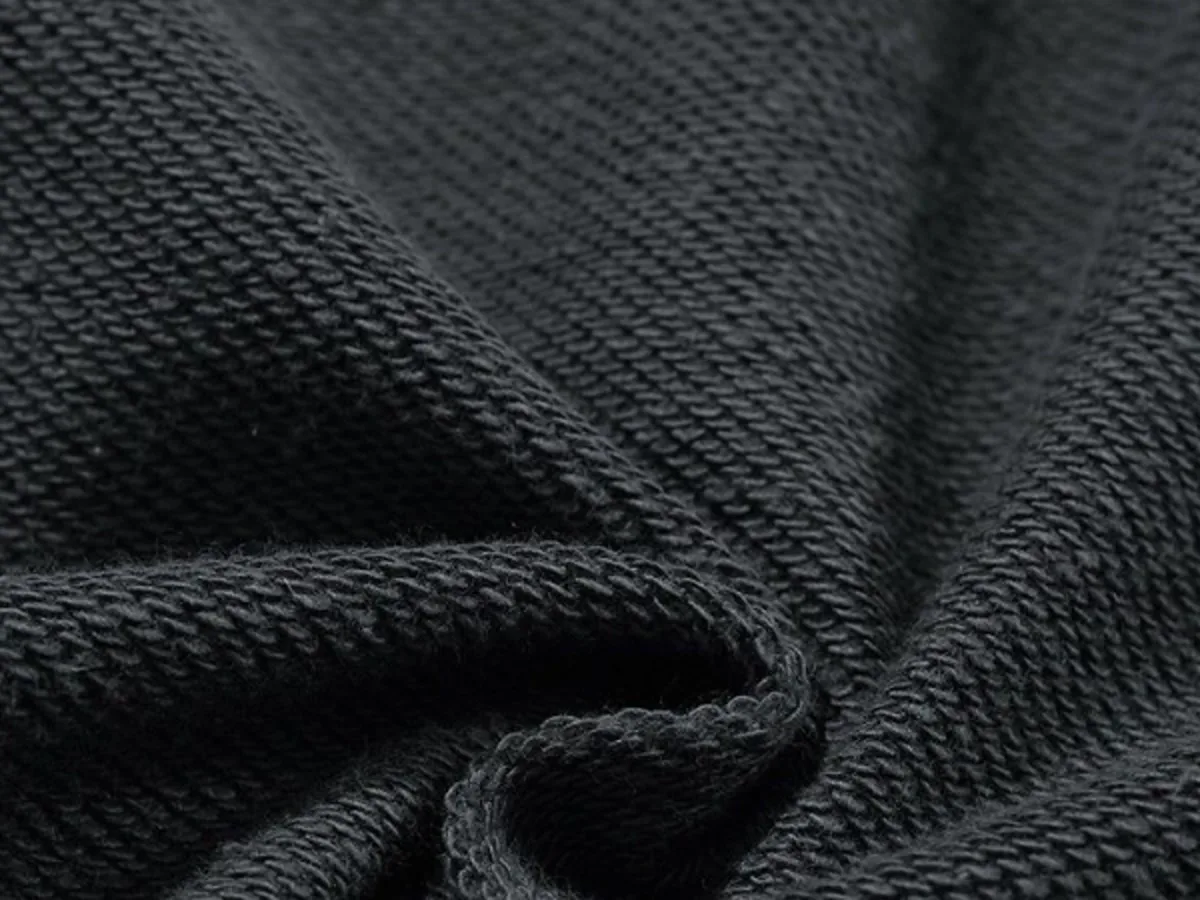
Two hoodies can look similar in a photo and still have very different production costs. A 280 GSM basic fleece pullover is not the same as a 400 GSM oversized hoodie with heavy rib, double-layer hood, embroidery, custom wash, zipper pockets and individual polybags.
The country comparison only becomes useful after the product is defined. Without that, a USA supplier may quote one product and a China supplier may quote another product. The buyer thinks one is cheaper, but the comparison is not real.
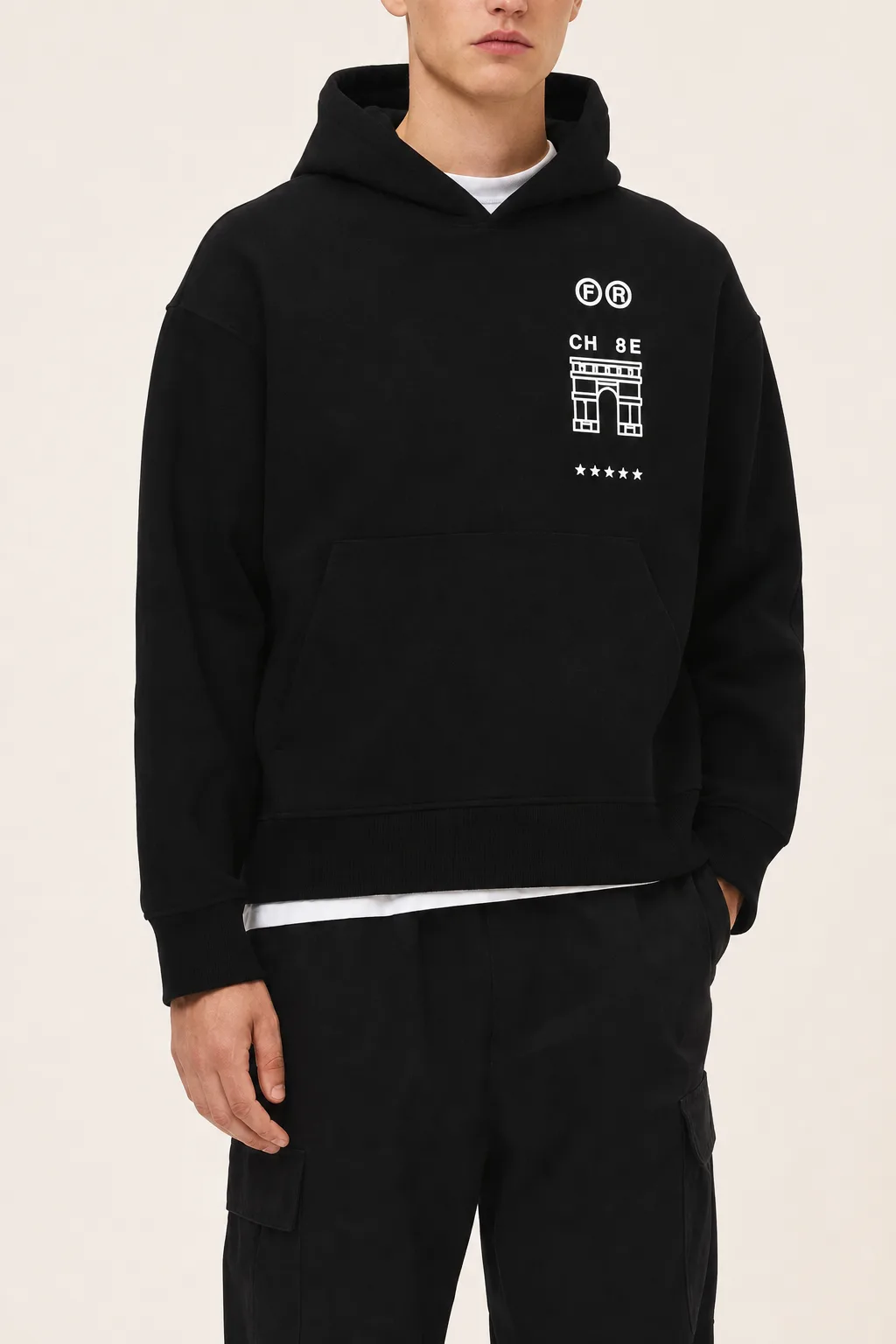
From a factory perspective, the most dangerous RFQ is the one that says only “custom hoodie, 500 pieces, best price.” A better RFQ tells the factory what needs to be built and what can be adjusted to hit the target cost.
A hoodie sample is not just a showroom piece. It is a control document. It shows what the buyer approved and what the factory must repeat in bulk. This matters whether the supplier is in China or the USA.
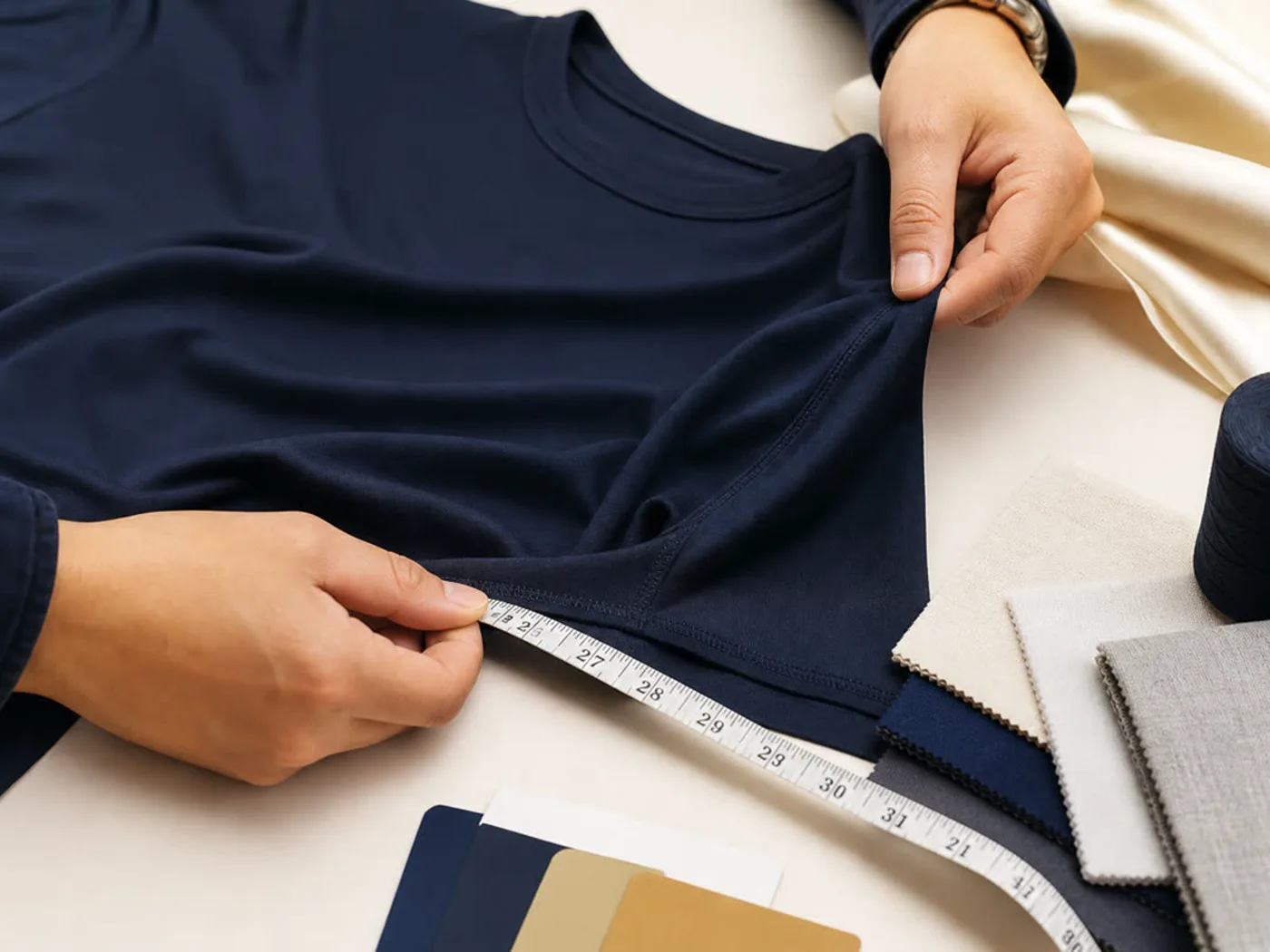
When the buyer compares samples from different countries, the evaluation should be structured. Do not only look at the front photo. Wear it, wash it, measure it and check the finishing.
| Checkpoint | What to review | Why it affects the route decision |
|---|---|---|
| Fabric hand feel | Weight, softness, stretch, brushing and recovery | Shows whether the supplier understood the target product |
| Wash behavior | Shrinkage, twisting, pilling and color change | Prevents approving a sample that fails after first use |
| Measurement | Chest, length, sleeve, shoulder, hood and rib tolerance | Fit inconsistency becomes expensive in bulk |
| Construction | Seam strength, pocket alignment, hood shape and rib attachment | Workmanship affects perceived quality more than buyers expect |
| Decoration | Print hand feel, embroidery tension, placement and color match | Decoration can be the highest visible defect risk |
| Packing | Folding, bagging, label, carton mark and presentation | Private-label buyers need retail-ready consistency |
If a USA sample is faster but does not match the target fabric or private-label finish, speed alone is not enough. If a China sample has better product detail but the launch date cannot absorb freight time, the buyer may need to split the strategy: local test now, offshore bulk later.
To compare China and USA factories fairly, send the same information to both sides. If one supplier receives a complete tech pack and the other receives a vague reference photo, the quotation will not mean much.
| RFQ field | What to include | Factory-side use |
|---|---|---|
| Style reference | Photos, sketch, sample garment or tech pack | Confirms product type, construction and development complexity |
| Fabric target | Composition, GSM, fleece/French terry, color and hand feel | Drives cost, MOQ, sourcing and shrinkage control |
| Quantity | Total quantity plus breakdown by color and size | Determines workable MOQ, cutting efficiency and price tier |
| Fit direction | Regular, oversized, cropped, boxy, unisex or market-specific sizing | Guides pattern, grading and measurement tolerance |
| Decoration | Artwork files, print/embroidery method, placement and size | Defines setup cost, sample risk and QC points |
| Branding and packing | Neck label, care label, hang tag, polybag, carton mark | Shows whether the project is true private label |
| Destination and timing | Delivery country, required arrival date and shipping preference | Allows landed-cost and timeline comparison |
| Quality standard | Measurement tolerance, wash test, inspection preference and defect limits | Prevents quality expectations from being discovered too late |
This RFQ discipline helps both sides. The buyer gets a more reliable comparison. The factory can separate confirmed details from open questions and avoid quoting a misleading low price against missing specifications.
For Hengcheng, the first review would focus on product fit and execution risk. The team would look at whether the project is a hoodie style within the factory’s knitwear and casualwear scope, whether the target quantity is workable, whether fabric and trim expectations are clear, and whether the buyer needs OEM/private-label support rather than blank-stock decoration.
If the buyer is comparing China and USA manufacturing, I would not frame the answer as “China is always better.” A practical factory-side answer is more specific:
A buyer who wants to explore the China route should prepare the RFQ fields above before asking for a quote. For a deeper view of the relevant capability, the most useful next page is Hengcheng’s hoodie manufacturer in China page. If the project is still in development, the sample development process page is also useful. If the buyer is worried about bulk consistency, the quality control page explains the factory-side control logic.
The biggest mistake is comparing two incomplete quotes as if they represent the same hoodie. In reality, one quote may assume stock fleece, basic sewing and no private-label packing. The other may include custom fabric, trims, decoration and export packing. The lower number is not always the better offer.
No. China is often more cost-effective for planned OEM/private-label bulk programs, but the buyer should compare landed cost after sample revisions, freight, duty, inspection and delivery. For urgent local replenishment or very small domestic tests, USA manufacturing may be commercially reasonable even with a higher unit price.
It depends on the startup’s order model. If the brand needs a tiny local test or domestic origin story, USA manufacturing can fit. If the brand has a clearer product direction, can meet MOQ and needs custom fabric, trims and private-label execution, a China factory may be a better development route.
MOQ varies by factory, fabric, colorway and customization level. For Hengcheng hoodie programs, MOQ is usually around 100-200 pieces per colorway per style, depending on the project. Custom fabric, dyeing, heavy decoration or special trims can push the practical MOQ higher.
For Hengcheng, sampling is often around 1-2 weeks and bulk production is often around 2-4 weeks after sample approval and deposit. This does not include international freight time. Buyers should plan backward from the required delivery date and include sample review, materials, inspection, packing and shipping.
Compare both. FOB price helps compare factory-side production. Landed cost helps compare the buyer’s real cost after freight, duty, customs handling and local delivery. For route selection, landed cost is usually the more useful number.
Yes, some brands use a local test first and move successful styles into offshore OEM production later. The important step is to document the approved sample clearly, including fabric, measurements, construction, decoration and packing, so the China factory is not guessing from photos alone.
Send reference images or a tech pack, target fabric and GSM, quantity by color and size, decoration details, label and packing needs, destination country, target delivery date and any QC expectations. If some details are unknown, say so clearly so the factory can identify what affects price, MOQ and lead time.