Address
JINKE Technology Industrial Park, No. 3188 ChunYuan Road, Weifang City, Shandong Province, China
Work Hours
Monday to Friday: 7AM - 7PM
Weekend: 10AM - 5PM
Address
JINKE Technology Industrial Park, No. 3188 ChunYuan Road, Weifang City, Shandong Province, China
Work Hours
Monday to Friday: 7AM - 7PM
Weekend: 10AM - 5PM
Quick answer: A useful kidswear bulk QC checklist starts with the approved sample and the current tech pack. It should define measurement points, workmanship, trims, artwork, labels, packing, inspection timing and acceptable outcomes. A visual inspection can find defects, but it does not replace a laboratory test or a market-specific safety review.
I approach this as a product-development and sourcing decision for overseas brands, procurement teams and private-label founders. The purpose is not to promise zero defects. It is to turn "good quality" into checkpoints that the buyer, patternmaker, factory and inspection partner can review against the same product version.
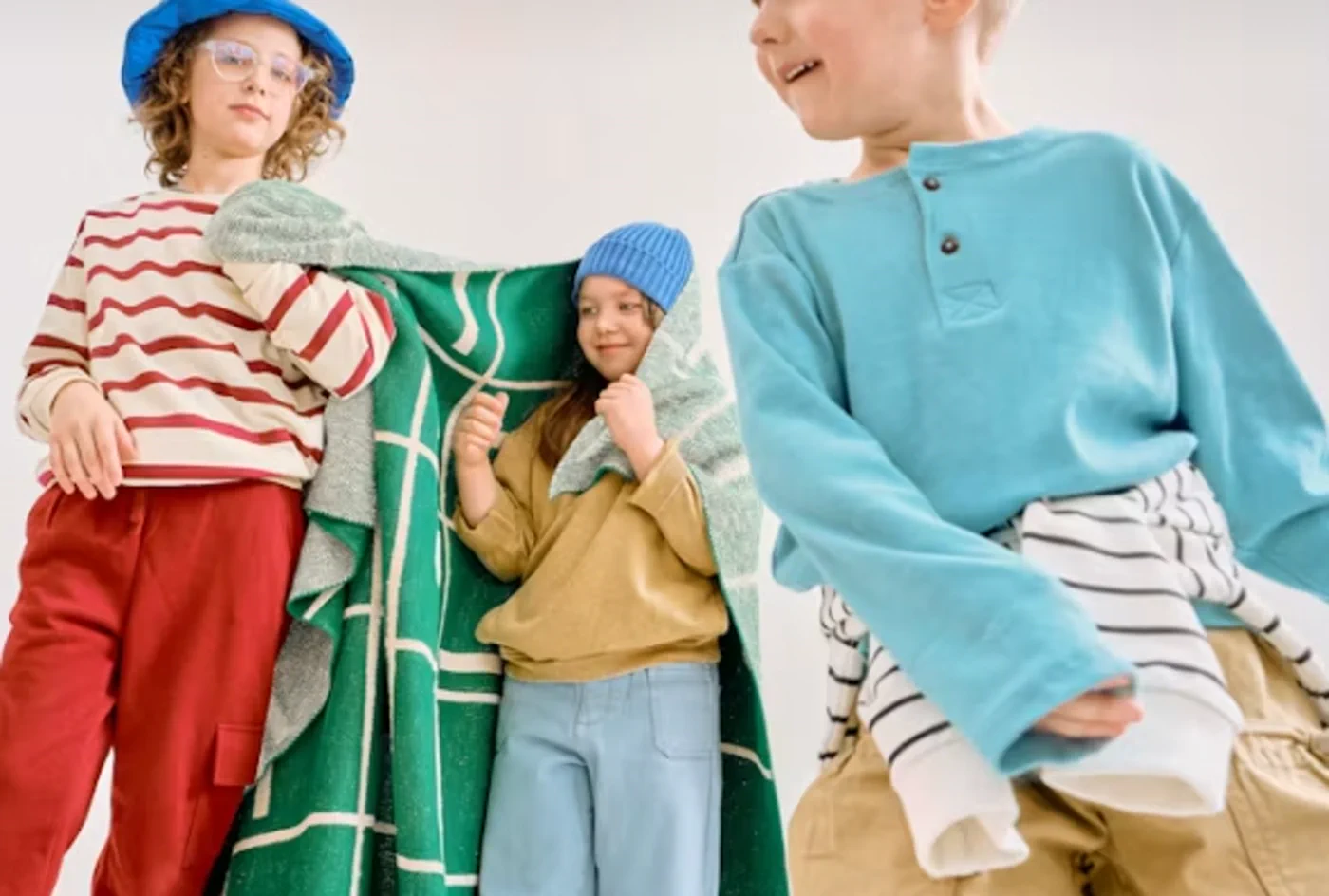
A final inspection is too late to define the product standard. By the time finished garments are on a table, the factory may already have purchased fabric, cut panels, printed artwork and sewn hundreds of pieces. If the buyer has not frozen the approved sample and current specification, an inspector has no reliable reference for deciding what is correct.
For kidswear, this matters because a small change can affect several decisions at once. A different fabric width can alter measurements. A new label position can change comfort. A trim substitution can change the appearance, attachment method or testing scope. A print scaled for one size may look crowded on another. These are development and production-control questions, not just final appearance questions.
A practical rule is: approve the reference first, define the check second, and inspect the bulk against that version. If a change is needed after approval, record the change, identify the owner and state whether a new sample or additional review is required.
The factory and buyer should use one dated package. A message thread, an old sample photo and a new measurement sheet can easily describe three different products. The package should make it possible to identify the exact style, colorway, size, material and packing instruction being inspected.
| Control item | What the buyer should freeze | Why it matters during bulk QC |
|---|---|---|
| Product identity | Style code, colorway, size range and purchase-order reference | Prevents an inspector from comparing the wrong garment or color |
| Approved reference | Dated sample photos, physical approved sample and revision status | Gives the team one visual and construction baseline |
| Measurements | Point-of-measure diagram, measuring method and tolerances by size | Makes a pass or fail decision repeatable |
| Material route | Composition, construction, target weight, color and approved trims | Prevents unapproved substitutions from being treated as equivalent |
| Workmanship | Seam, hem, closure, attachment and appearance requirements | Turns a general quality expectation into observable checks |
| Artwork and labels | Final artwork file, placement, scale, color, label copy and version | Controls print, embroidery, label and care-information errors |
| Packing | Folding, size stickers, assortment, polybag and carton marks | Prevents correct garments from being packed or identified incorrectly |
The buyer should also mark each item as confirmed, provisional or not applicable. A provisional material or pending label should not quietly become a bulk assumption. If a component remains open, put a hold point into the production plan.
The exact points of measure depend on the product. A T-shirt, dress, romper and hooded sweatshirt do not use the same measurement map. The buyer and patternmaker should define the points and tolerances rather than asking the factory to invent them after cutting.
For tops, the checklist may include body length, chest width, shoulder width, sleeve length, armhole and neck opening. For bottoms, it may include waist relaxed and extended, hip, rise, inseam, outseam and leg opening. For dresses, rompers and layered products, add total length, skirt or short length, strap or shoulder position, crotch depth and any gathered or elasticized section that affects fit.
| Measurement area | What to check | Practical buyer question |
|---|---|---|
| Body dimensions | Length, width and key circumference points by size | Is the garment measured in the same position as the approved POM sheet? |
| Openings | Neck, armhole, waist, leg and cuff opening | Does the opening match the intended fit after the specified stretch or relaxation? |
| Symmetry | Left-right balance, shoulder points, pocket positions and hems | Are both sides consistent, or is the difference a defined design feature? |
| Proportion | Panel, ruffle, pocket, hood and print placement relative to the body | Does the detail remain correctly placed across the size range? |
| Post-wash dimensions | Measurement change after the agreed wash method where relevant | Was the tolerance approved for the actual fabric and finished garment? |
Do not mix the measurement basis. A pre-wash sample measurement, a relaxed knit measurement and a post-wash bulk measurement are not interchangeable. Record the measuring method, garment position, tool and environmental or wash condition when those factors can change the result.
If a measurement falls outside the approved tolerance, record the point, size, quantity affected and likely cause. Do not solve every variance by changing the tolerance after production. First ask whether the issue comes from pattern grading, shrinkage, cutting, sewing tension, elastic recovery or the measuring method.
Workmanship should be checked by product zone, not only by scanning the garment for loose threads. A clean outside appearance can hide an uneven seam, weak attachment or uncomfortable internal finish. The checklist should tell the inspector where to look and what evidence to record.
| Product zone | Checkpoints | Record if there is a problem |
|---|---|---|
| Shoulder and side seams | Seam alignment, skipped stitches, puckering, seam allowance and joining | Location, length, severity and whether the issue repeats by size or panel |
| Armhole and sleeve | Smooth curve, sleeve balance, seam security and opening measurement | Garment size, left or right side and effect on fit or comfort |
| Crotch and inseam | Seam security, reinforcement, alignment and finishing | Stress-point location and whether the seam changes after handling or wash review |
| Waist and elastic channels | Channel width, elastic placement, twisting, recovery and stitching | Elastic specification, affected quantity and whether the issue is visible or functional |
| Hems and cuffs | Even turn, skipped stitches, wavy edge, raw-edge control and symmetry | Measurement or visual defect against the approved sample |
| Closures and pockets | Button or snap attachment, zipper function, pocket placement and reinforcement | Component, attachment method and any need for a separate safety review |
For knit garments, check stretch recovery and seam distortion as well as flat appearance. For woven dresses and shirts, check seam slippage risk, puckering and the way the garment hangs. For garments with gathers, ruffles or layered panels, compare fullness and attachment to the approved reference instead of treating every irregularity as the same defect.
The buyer should agree defect classification with the inspection provider. A minor appearance issue, a measurement failure and a component or safety concern may require different actions. Do not insert an AQL level or acceptance number into a tech pack unless the buyer and inspection partner have agreed the sampling plan, defect definitions and applicable scope.
Trims need both an appearance review and a construction review. A component can look correct in a photo but be attached differently in bulk. It can also be correct on one size but poorly positioned on another. Confirm the approved component, placement, count and attachment method.
Visual QC is useful, but it is not a substitute for product-specific testing. In kidswear, the buyer and its qualified compliance or testing partner should define any required checks based on the destination market, product age range, component and intended use. Keep those decisions separate from a factory claim about sewing quality.
Artwork control starts with the file version, not the finished garment. The RFQ or tech pack should identify the artwork name, scale, placement, print or embroidery route, color reference, acceptable registration and any wash or adhesion review required for the actual fabric.
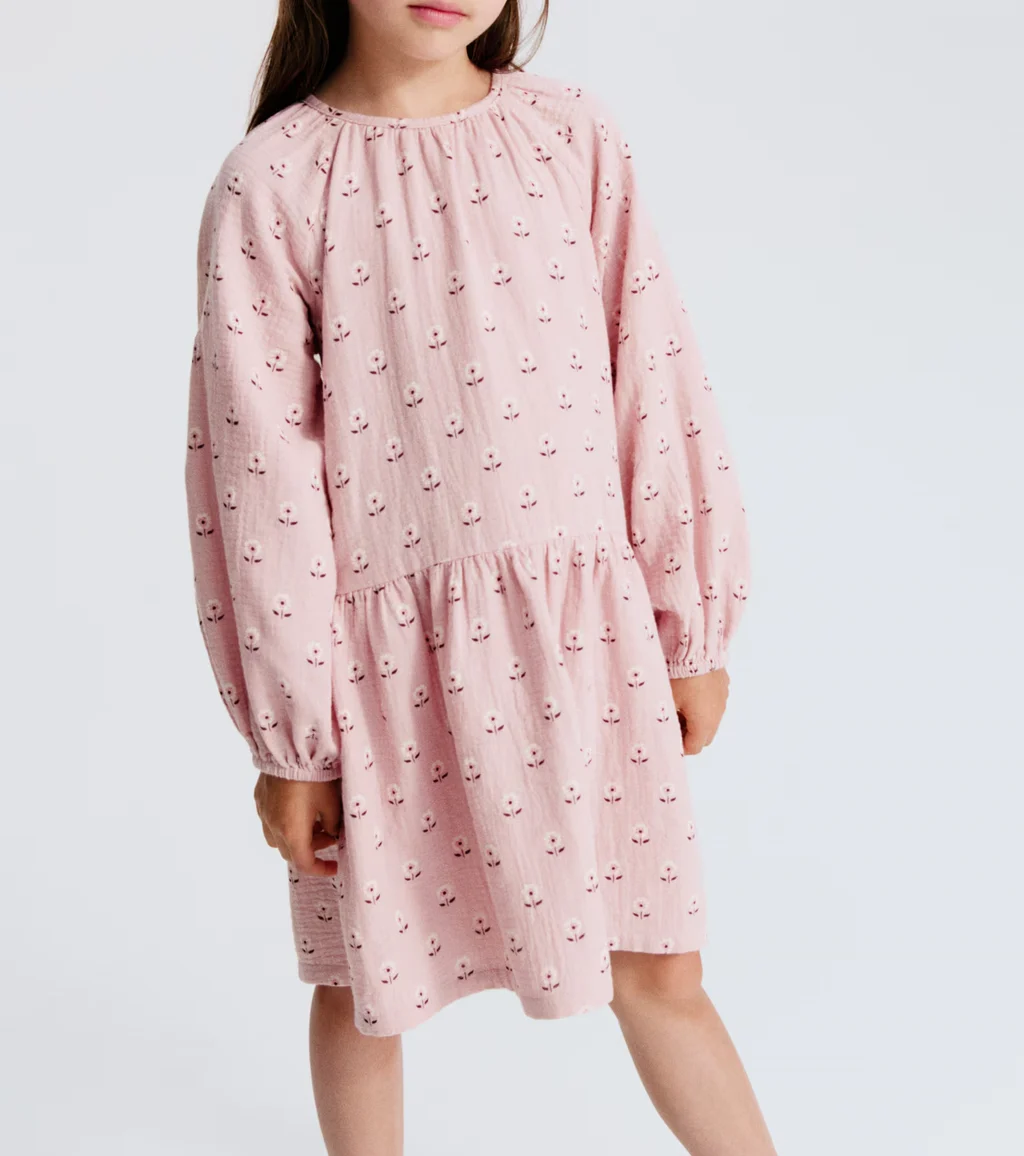
A useful artwork checklist includes:
A printed floral dress, graphic sweatshirt or labeled basic tee can each need a different approval standard. Do not turn one sample observation into a universal statement about all colors, sizes or fabrics. If a new fabric, decoration route or colorway is introduced, ask whether the existing approval still represents the bulk risk.
The most useful QC plan spreads checks across the order. It does not ask final inspection to discover every problem after fabric has been cut and assembled.
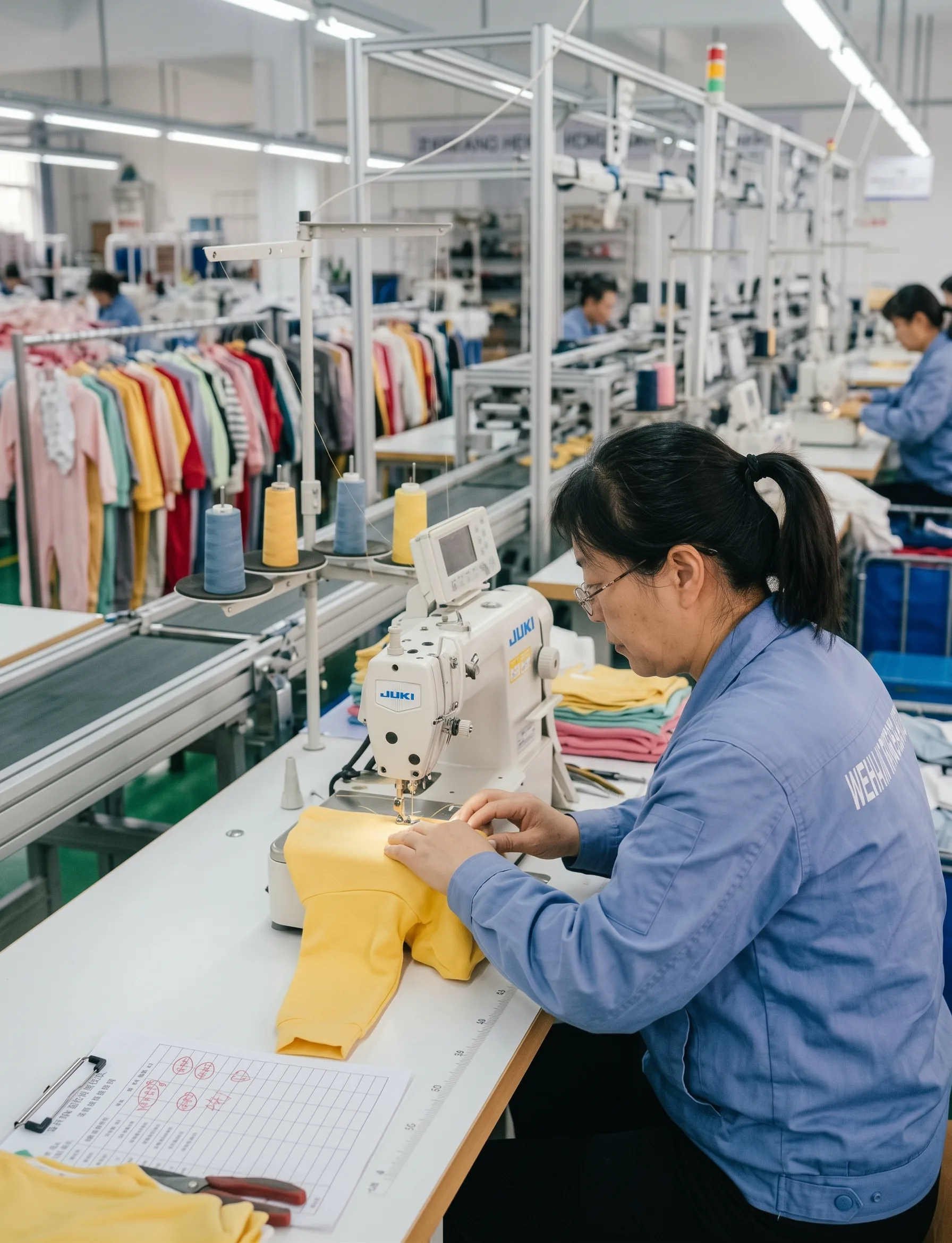
| Production stage | Main checks | Buyer or factory record |
|---|---|---|
| Material and trim receipt | Fabric shade, construction, weight, trim identity, artwork and label version | Incoming inspection record, shade-lot notes and approved material status |
| Pre-production review | Finished sample, measurements, construction, decoration, labels and packing | Signed sample comments, final tech-pack version and open-issue list |
| Cutting and printing | Marker or panel identity, grain or direction, print placement and size-specific artwork | First-piece approval, panel control and rework record |
| Inline sewing | Seam quality, attachments, measurements, balance and recurring defects | Inline checklist, photos, corrective action and recheck status |
| Endline or final inspection | Finished appearance, measurements, trims, labels, packing and assortment | Inspection report against the agreed sampling and defect plan |
| Testing or third-party review | Product-specific test scope, sample identity and report interpretation | Lab or inspection report controlled by the buyer or nominated partner |
A factory can correct an inline sewing issue faster than a final inspection can correct a packed carton. The buyer should therefore agree which findings require a line stop, which can be reworked, and which require written approval before shipment.
Sample approval is not a single sentence saying "approved." It is a controlled handoff from development to production. A buyer can use the following sequence:
This sequence protects both sides. The buyer gets a traceable standard, and the factory gets a clearer basis for cutting, sewing, finishing and packing. It also makes later root-cause analysis more useful when a customer complaint or inspection failure appears.
Quality control is not free, but every control does not need to become a third-party laboratory project. Match the depth of the plan to the risk of the product and agree who pays for extra samples, tests, inspection or rework.
| QC decision | Possible cost or MOQ effect | What to ask before approval |
|---|---|---|
| Stock material versus custom fabric or color | Custom dyeing, printing or special trims may require material minimums and extra approval time | Is the garment MOQ separate from the fabric, print or trim minimum? |
| One colorway versus several | More colors can increase shade review, artwork checks, sampling and inspection coverage | Which colors are representative, and which need separate approval? |
| Basic visual inspection versus measurement plan | Measurement sheets take preparation and inspection time but reduce fit ambiguity | Which POMs, sizes and tolerances are critical to the buyer? |
| In-house checks versus independent inspection | External inspection adds a fee and scheduling step; its scope must be defined | Who books the inspection, what sampling plan applies and who receives the report? |
| Standard label and packing versus custom packout | Custom labels, stickers, assortments and cartons add setup and checking work | Which packing details are part of the quote and which are buyer-supplied? |
| New decoration or trim route | Strike-offs, test pieces, revisions and extra sample rounds may be needed | Is the approved sample representative of the exact bulk route? |
For an initial Hengcheng discussion, the related kidswear sourcing material currently uses a typical reference of 100-200 pieces per style per colorway. That is not a universal promise or a substitute for a project quote. Fabric availability, construction, decoration, size breakdown, packing and the number of colorways can change the feasible minimum. Ask the factory to separate garment quantity, material minimums, sample charges, testing and inspection costs.
A factory can review a quality plan more accurately when the commercial request includes the inputs that create the risk. Add these items to the RFQ instead of asking only for a unit price.
| RFQ input | Detail to provide | Why the factory needs it |
|---|---|---|
| Product reference | Sketch, tech pack, reference garment or clear photos | Establishes construction and styling scope |
| Quantity plan | Units by style, colorway and size | Supports material planning, MOQ review and inspection coverage |
| Fabric direction | Composition, construction, target weight, color and finish | Helps identify material route, availability and likely QC focus |
| Construction | Seams, gathers, pockets, closures, elastic, lining and reinforcement | Allows the factory to review workmanship and sample complexity |
| Decoration | Print, embroidery, applique, label and placement files | Determines strike-off, setup, color and wash-review needs |
| Measurement standard | POM diagram, fit intent and tolerances | Prevents the factory from guessing what fit means |
| Market and use | Destination market, age range and intended product use | Tells the buyer and compliance partner what needs separate review |
| Packing | Folding, labels, stickers, polybags, assortment and carton marks | Prevents late packout changes and incorrect identification |
| QC scope | Incoming, inline, final, testing or third-party inspection expectations | Makes cost, timing and responsibility visible before production |
The request should also state what is not yet known. A factory can quote with an assumption, but the assumption should be visible and revisited before bulk approval.
The goal is not to create a checklist so long that nobody uses it. The goal is to identify the few product risks that could change fit, comfort, appearance, safety review, cost or launch timing, and give each risk an observable control.
From a China garment factory perspective, the first review would connect the product brief to the production route. Hengcheng would need to understand the reference style, fabric direction, size and color plan, decoration, quantity, packing and the specific failure modes the buyer wants to prevent.
The factory-side discussion should then separate three questions:
For example, a factory can review whether an elastic channel, seam finish or print placement is manufacturable and repeatable. The buyer and its nominated partner still need to decide the applicable market requirements and evidence needed for the finished product. Keeping these responsibilities visible makes the RFQ more useful and avoids unsupported promises.
No. Final inspection is one control point. Material receipt, pre-production approval, inline checks and final inspection each catch different risks. Testing or independent inspection may also be needed depending on the product and destination market.
The buyer and patternmaker should define the POMs, measuring method and tolerances, then confirm them with the factory. The factory can flag manufacturability concerns, but it should not silently invent or change the buyer's fit standard.
The coverage depends on the product, material, decoration and buyer risk plan. A representative plan may be possible, but the buyer should not assume that one size or color automatically proves every variation. Confirm coverage with the factory or inspection partner.
No. The checklist helps control identity, workmanship, measurements, trims, artwork and packing. Laboratory testing and market-specific compliance decisions have a different purpose and should be handled by the buyer or its qualified testing and compliance partner.
Inline inspection checks production while the line is running, so recurring issues can be corrected before the whole order is finished. Final inspection reviews finished goods against the agreed plan. Both are useful; neither should be treated as a guarantee of zero defects.
It can reduce some production quantities, but it does not automatically reduce material minimums, sample work, artwork setup, inspection fees or testing needs. Ask for garment MOQ, material minimums and QC-related charges as separate lines.
Record the difference by style, colorway, size and quantity. Hold or separate the affected lot where practical, ask the factory for a root-cause and correction plan, and agree reinspection or buyer approval before shipment. Do not rely on a verbal promise alone.
Send the reference style or tech pack, quantity by style and colorway, size range, fabric direction, artwork, trims, labels, packing needs, target market and the quality risk you most want to control. A clear brief helps the factory distinguish quotation questions from sample and inspection questions.
Hengcheng develops OEM and private-label kidswear, including T-shirts, hoodies, babywear and dresses. Send the reference, material direction, size and color plan, quantity, decoration, packing and QC concerns through the contact page. The team can review the manufacturing scope and sample path; the buyer and its qualified advisers remain responsible for destination-market compliance and testing decisions.
Related: Kidswear manufacturer and OEM/private-label capability | Sample development process | Quality-control process
Editorial note: This buyer guide is informational. Confirm product-specific factory terms, inspection sampling, testing scope, labeling and destination-market requirements with the relevant production, laboratory or compliance partner before using it for a commercial decision.