Address
JINKE Technology Industrial Park, No. 3188 ChunYuan Road, Weifang City, Shandong Province, China
Work Hours
Monday to Friday: 7AM - 7PM
Weekend: 10AM - 5PM
Address
JINKE Technology Industrial Park, No. 3188 ChunYuan Road, Weifang City, Shandong Province, China
Work Hours
Monday to Friday: 7AM - 7PM
Weekend: 10AM - 5PM


Before kidswear moves from sample to bulk, the buyer should confirm the final material route, measurements, construction, trims, artwork, labels, packing requirements and approved reference version. The approval should be dated and traceable. "Looks good" is not a production standard when the factory still has to interpret which sample, comment or file is final.
I treat sample approval as a control system for the order, not as a single yes-or-no email. Each stage should answer a defined question: does the product direction work, does the fit work, does the construction match the brief, and is the bulk package complete enough to release? The exact stage names vary by factory, so agree the purpose and evidence for each stage with the supplier.
A development sample and a bulk production standard are related, but they are not automatically the same thing. The sample may use a provisional fabric, one size, a temporary trim or an unfinished artwork file. Bulk production needs a controlled reference that explains what is approved, what is still open and who owns each decision.
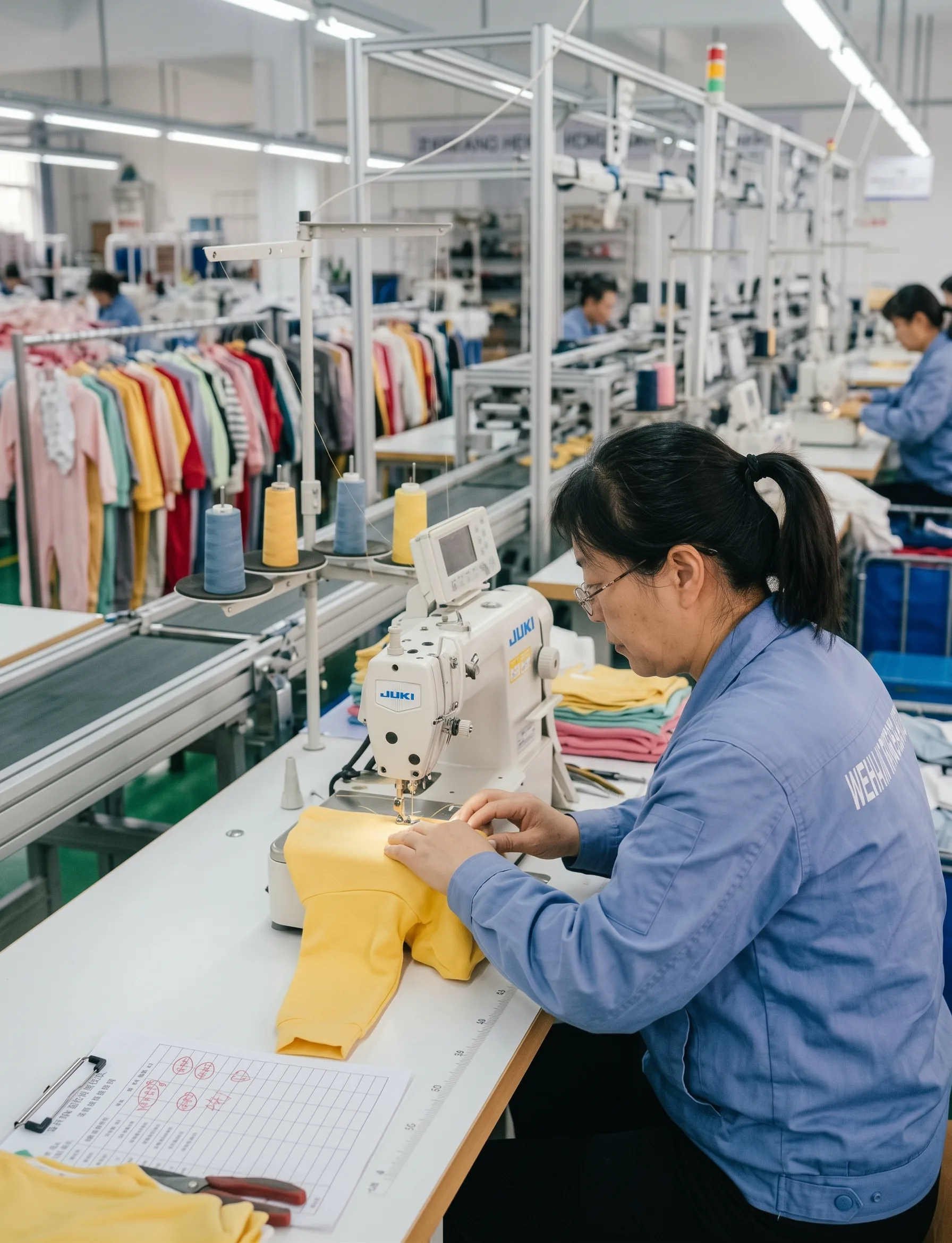
A useful approval process prevents three common problems:
The best approval record is not the longest one. It is the one that lets a factory, brand and quality-control contact identify the same product without relying on memory.
The buyer should make the product brief specific enough that a factory can separate fixed requirements from open development questions. A reference image helps, but it cannot define hidden construction, tolerances, material composition or the quantity plan by itself.
| Brief element | What to define before sampling | Why it affects approval |
|---|---|---|
| Product identity | Garment type, style reference, intended age group and use | Prevents a generic product name from hiding different construction needs |
| Target market | Destination country or market and the buyer's compliance contact | Keeps factory support separate from market-specific responsibility |
| Fit intent | Fitted, regular, relaxed, oversized, layering or growth-oriented fit | Determines the measurements and review method |
| Materials | Fiber direction, knit or woven construction, weight, color and finish | A substitute material may not prove the bulk result |
| Construction | Seams, hems, lining, pockets, closures, reinforcement and comfort details | Makes inside workmanship part of the approval rather than an afterthought |
| Branding | Artwork, labels, hangtags, placement and packaging | Avoids approving a garment while brand components remain unresolved |
| Quantity plan | Styles, colorways, sizes and estimated units | Connects sample decisions to MOQ, material and quotation assumptions |
| Sample purpose | Development, fit, correction, appearance or pre-production approval | Gives each sample a clear job and prevents unnecessary rounds |
Mark each item as confirmed, provisional, buyer to supply or not applicable. That simple status field is valuable when several people are reviewing the same style.
There is no universal number of sample rounds for every kidswear style. A complete tech pack for a simple T-shirt may need fewer stages than a lined dress, a multi-size babywear range or a garment with several trims and decoration methods. The buyer and factory should agree what each stage is meant to prove before development begins.
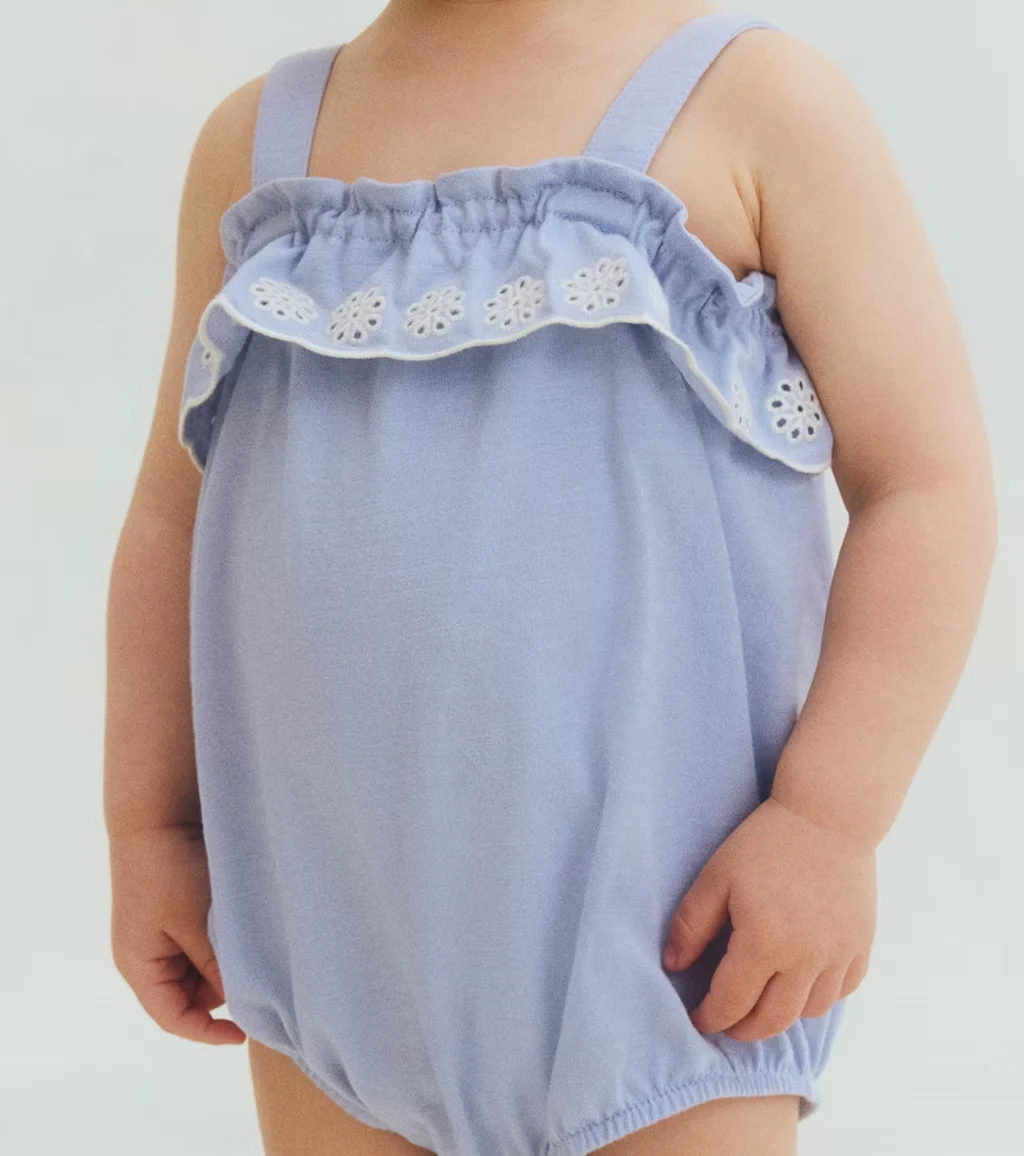
| Sample stage | Main question | Evidence to keep |
|---|---|---|
| Development or first sample | Does the overall product direction, pattern and construction make sense? | Sample photos, material notes, open issues and initial measurements |
| Fit or correction sample | Do the requested measurement, balance and proportion changes work? | Dated comment log, updated point-of-measure sheet and correction status |
| Material or decoration approval | Does the selected fabric, trim, print, embroidery or wash match the intended route? | Swatch or sample reference, artwork version and approval comments |
| Pre-production or final approval sample | Is there a defined version that can guide bulk production? | Approved sample photos, final specification, exceptions and sign-off |
| Bulk reference or sealed sample | Can production and QC compare finished goods to one controlled reference? | Reference ID, storage owner, tolerance notes and release date |
Some projects combine these stages, and some use different names. The name matters less than the question and the record. Ask whether a new physical sample is needed for every change or whether a corrected measurement sheet, photo set or material approval can close a minor issue.
A buyer should not assume that the first attractive sample is automatically a pre-production sample. It may still contain a substitute fabric, unfinished branding or construction details that the factory expects to adjust.
Use one dated comment log instead of sending scattered observations across email, chat and image annotations. Each line should point to one issue and one requested action. This makes it easier to distinguish a factory correction from a buyer-requested change.
| Comment field | Example of useful information |
|---|---|
| Reference | Style code, sample stage, size and color |
| Location | Left shoulder, front hem, inner neck, pocket opening or artwork position |
| Observation | What the buyer actually sees or measures |
| Requested action | Correct, confirm, retain, replace or provide evidence |
| Owner | Buyer, factory, patternmaker, trim supplier or testing partner |
| Priority | Must fix before approval, review at next stage or record only |
| Status | Open, in progress, revised, approved or not applicable |
| Version | Comment-log date and the file or sample version it refers to |
Photograph the full garment and important details in a consistent way. A close-up is useful for a seam or trim, but it should not replace a full-front, full-back and inside view when fit and construction are being assessed.
A good comment is observable and actionable. "The fit feels wrong" is difficult to close. "Increase finished chest measurement at size 4 by the agreed amount and confirm sleeve balance against the updated point-of-measure sheet" gives the next reviewer something to verify.
Review the sample against the latest brief, not against memory or an old product photograph. For kidswear, check both appearance and the details that affect comfort, workmanship, repeatability and the intended use.
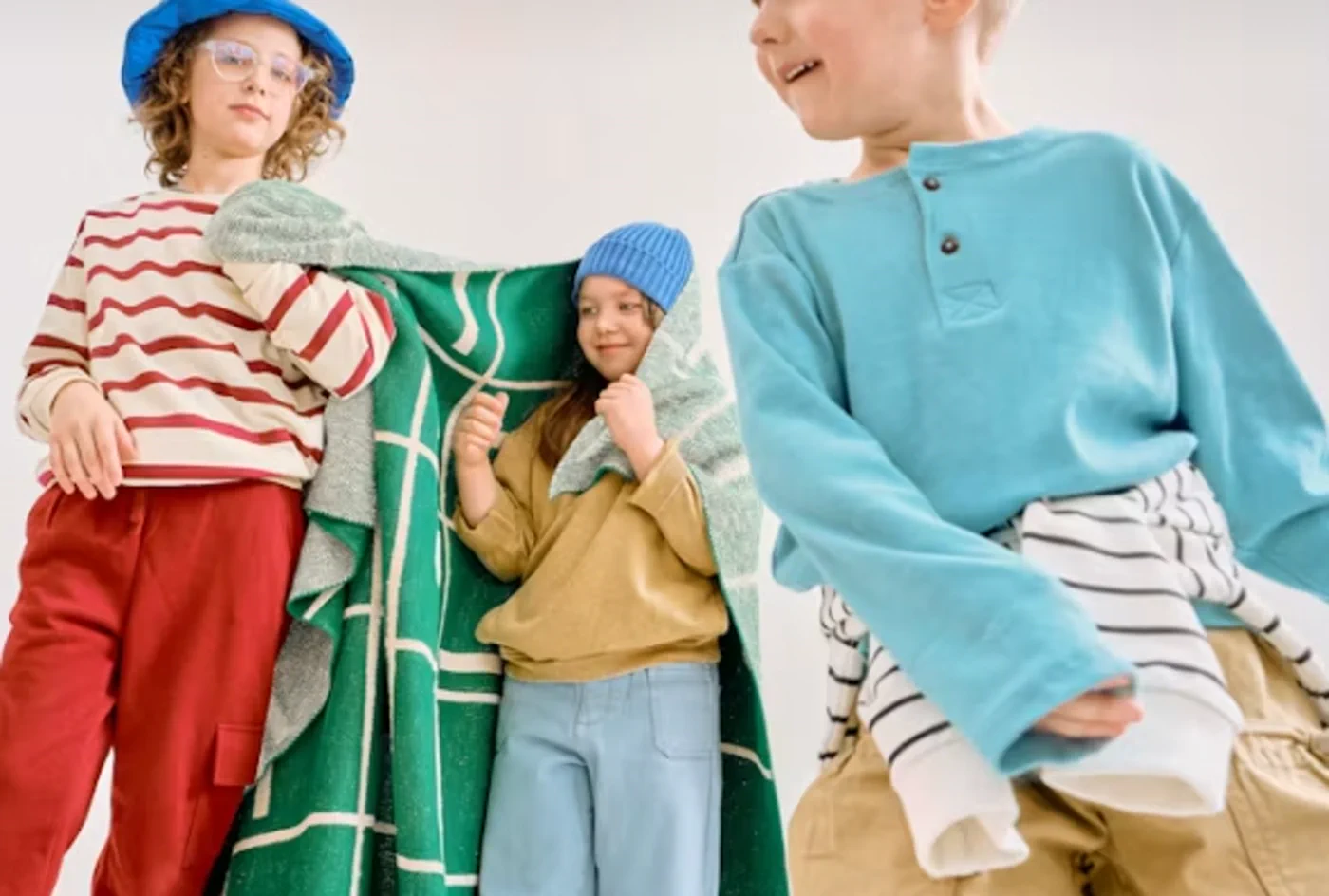
Use this review sequence:
Visual inspection is one part of the approval process. It does not replace product-specific testing, laboratory work or destination-market review where those are required.
Not every comment needs a completely new sample, but the decision should be explicit. A new sample is more likely to be useful when the change affects fit, proportion, material behavior, closure attachment, decoration appearance or a safety-related construction question.
| Change type | Can a document or photo sometimes close it? | When another sample is usually more useful |
|---|---|---|
| Typo in a label or file name | Yes, after the corrected artwork is checked | When the label placement or physical feel also changes |
| Small artwork position adjustment | Sometimes, if the process and scale are unchanged | When print, embroidery or applique appearance must be judged physically |
| Measurement correction | Updated measurements may define the change | When balance, ease, rise, sleeve or movement changes materially |
| Fabric substitution | Usually not by photo alone | When weight, stretch, shrinkage, color or hand feel affects the product |
| Closure or trim change | A specification and supplier confirmation may help | When attachment, comfort, pull behavior or workmanship is part of the risk |
| New lining, panel or seam method | Rarely enough by document alone | When the sewing sequence, fit or inside finish changes |
| Buyer-requested style change | It needs a new scope decision | When the change creates a new pattern, material or decoration requirement |
Record why the next sample is needed. This prevents the buyer from treating every additional round as unexplained factory delay and prevents the factory from treating a new design request as a free correction.
The sample should not be called a bulk reference if important inputs are still provisional. A factory can make a useful first sample from an available substitute, but the record should state what the sample does and does not prove.
Separate these three decisions:
A material approval note should cover composition direction, construction, weight, color, finish and any relevant performance questions such as shrinkage, colorfastness, pilling or stretch recovery. The buyer should confirm which claims require supplier documents or testing rather than relying on appearance.
For trims and branding, record the actual supplier or specification where known, placement, attachment method, dimensions, color and approval status. For artwork, keep the final file name, technique, size, color count and position with the sample record. A garment can be visually approved while its print or label is still based on an outdated file.
One approved sample does not automatically prove every size and color in a collection. Kidswear proportions, grading, fabric behavior and trim placement can change across the range. The buyer should state which size is the fit reference and how other sizes will be checked.
| Planning question | What to agree |
|---|---|
| Fit reference | Which size is physically fitted and who approves it |
| Grading | How measurements change across sizes and which points are controlled |
| Size set | Whether additional sizes need a sample, measurement check or photo review |
| Color range | Which color is the development reference and whether each color needs a shade or lab-dip approval |
| Material behavior | Whether stretch, shrinkage or surface appearance changes by color or finish |
| Quantity split | Units by style, colorway and size for the later quotation and production plan |
| Exception handling | What happens if a size or color cannot follow the approved reference |
For a family or multi-style range, keep shared fabric, trim and artwork approvals linked to each style. This reduces the risk that one style uses a different assumption without anyone noticing.
Before issuing a final bulk release, the buyer should be able to answer what is approved, what is excluded and what remains a hold point. The factory should not be expected to infer final instructions from a folder containing multiple near-identical files.
Use a release checklist like this:
| Release area | Minimum record before bulk |
|---|---|
| Product identity | Style code, version, size range, colorway and intended use |
| Measurements | Final point-of-measure sheet, grading direction and tolerance method |
| Material | Approved fabric route, composition direction, color and finish |
| Construction | Final sewing, lining, closure, pocket, seam and reinforcement instructions |
| Branding | Approved artwork, labels, hangtags and placement |
| Packaging | Folding, bags, cartons, marks and any retail-pack requirements |
| Quantity | Units by style, colorway and size, plus the applicable MOQ assumption |
| Quality control | Inspection scope, defect definitions, measurement checks and reporting owner |
| Compliance | Buyer or qualified adviser confirmation of applicable market requirements and testing |
| Commercial terms | Price, revision status, delivery plan, payment and any open exclusions |
| Approval record | Dated approval, approved sample or reference photos, and named approver |
If a point is intentionally open, mark it as open and define the hold point. Do not hide an unresolved decision inside a general note such as "please follow the sample."
Sample approval closes a development gate; it does not eliminate production control. Bulk goods should still be checked against the approved reference and the agreed inspection scope. The exact sequence depends on the program, but the buyer should discuss where checks happen and what evidence will be shared.
A practical control sequence may include:
The factory and buyer should agree who measures, how results are recorded and what triggers a hold or corrective action. The sample is the reference; the QC plan explains how the bulk is tested against it.
The cost and MOQ conversation often becomes more accurate after sampling because the material and construction assumptions are less abstract. Approval does not guarantee a particular price or MOQ, but it gives the factory better information for a style-specific review.
| After sample approval, confirm | Why it matters |
|---|---|
| Final fabric and color route | Custom material or color may have a separate minimum |
| Trim and label quantities | Components can have supplier minimums or lead times |
| Decoration method | Setup, artwork and repeatability may change the unit-cost assumption |
| Size and color split | Total units alone may not explain fabric or production loading |
| Sample changes | Buyer-requested changes may alter pattern, material or construction scope |
| Packing format | Individual or retail packing can change labor and material requirements |
| Sample fee and credit | Any deduction or bulk-order credit must be confirmed for the actual project |
A useful RFQ distinguishes sample quantity, fabric minimum, trim minimum, bulk MOQ and planned quantity split. Do not assume that making one sample removes the minimums for a custom fabric or branded component.
A concise handoff package lets the factory quote, sample and plan production without guessing. It also gives the buyer a defensible record when comparing suppliers.
| Package item | What to attach or state | Decision it supports |
|---|---|---|
| Product brief | Style reference, intended age group, use and target market | Confirms the product scope |
| Measurement file | Points of measure, size range, fit intent and tolerances | Supports pattern and fit review |
| Construction notes | Seams, hems, lining, closures, pockets and reinforcement | Defines workmanship expectations |
| Material brief | Fiber direction, construction, weight, color and finish | Separates sample input from bulk approval |
| Artwork and labels | Current files, dimensions, placement and content owner | Prevents version errors |
| Sample plan | Sample size, quantity, purpose and expected stages | Creates a clear development sequence |
| Quantity plan | Style, colorway and size split | Connects the sample to MOQ and quotation |
| QC plan | Inspection points, defect criteria, measurement method and owner | Makes post-approval control practical |
| Open questions | Items still provisional, evidence required and decision date | Keeps uncertainty visible |
If the tech pack is incomplete, say so. A factory can review a reference package, but the quotation and schedule should be described as provisional until the missing inputs are confirmed.
From a China OEM and private-label garment factory perspective, the first review is about separating product decisions from assumptions. Hengcheng would need to understand the product type, fabric direction, sample size, construction complexity, decoration, labels, quantity plan and intended market before treating a request as production-ready.
A practical factory-side review would ask:
Hengcheng develops OEM and private-label kidswear including T-shirts, hoodies, babywear and dresses. The useful starting point is a structured product brief, not only a product photograph or a target price. The more clearly the buyer separates final decisions from open questions, the more useful the factory's quotation and sampling review can be.
Most sample-to-bulk problems are preventable process failures rather than unavoidable surprises.
A dated approval packet is one of the simplest ways to reduce avoidable revision and dispute risk.
There is no fixed number for every style. A complete, simple product brief may need fewer rounds than a new dress shape or a multi-size program with special trims. Agree the purpose of each stage, the expected number of revisions and the cost treatment before development starts.
It is the defined sample or reference version that the buyer and factory agree will guide bulk production for the stated scope. It should be linked to the final measurements, materials, construction, artwork, labels and any written exceptions. The exact name can vary by factory.
Only when the buyer and factory explicitly agree the sequence, hold point and risk. If unresolved artwork, labels or packaging affect the finished product, production should not be treated as fully released until those inputs are controlled.
The current public reference is typically 2-4 weeks after the required details are confirmed, but actual timing depends on material sourcing, construction, decoration, revisions and approval speed. Confirm the project-specific schedule with the factory rather than treating the reference as a promise.
No. Sample approval confirms the product decisions within the agreed scope. It does not replace product-specific testing, labeling review or destination-market compliance work. The buyer should confirm those requirements with a qualified adviser or laboratory and clarify what support the factory can provide.
It can be the fit reference, but it does not automatically prove every size. Agree the grading direction, tolerance method and whether additional sizes need measurement or physical review. Larger size ranges may need a more deliberate size-set plan.
Describe the change, identify whether it affects pattern, material, construction, decoration or packaging, and ask the factory whether a new sample is needed. Confirm any new cost and timing before treating the change as part of the approved bulk scope.
Do not assume that it is. Any bulk-order credit or deduction is project-specific and should be confirmed in the quotation or order terms. The sample-cost article explains the other scope questions buyers should ask before paying a fee.
Send the product reference, target fabric, sample size, construction notes, quantity by style and colorway, decoration, labels, packing needs and destination market through the Hengcheng contact page. The factory can review the manufacturing scope and prepare a project-specific quotation; market compliance and testing decisions remain with the buyer and its qualified advisers.
Related reading: Kidswear sample and production process | Kidswear quality checkpoints | Kidswear quotation guidance.
Editorial note: This buyer guide is informational. Verify product-specific factory terms, market rules and any claims with the relevant production, laboratory or compliance partner before using it for a commercial decision.



