Address
JINKE Technology Industrial Park, No. 3188 ChunYuan Road, Weifang City, Shandong Province, China
Work Hours
Monday to Friday: 7AM - 7PM
Weekend: 10AM - 5PM
Address
JINKE Technology Industrial Park, No. 3188 ChunYuan Road, Weifang City, Shandong Province, China
Work Hours
Monday to Friday: 7AM - 7PM
Weekend: 10AM - 5PM

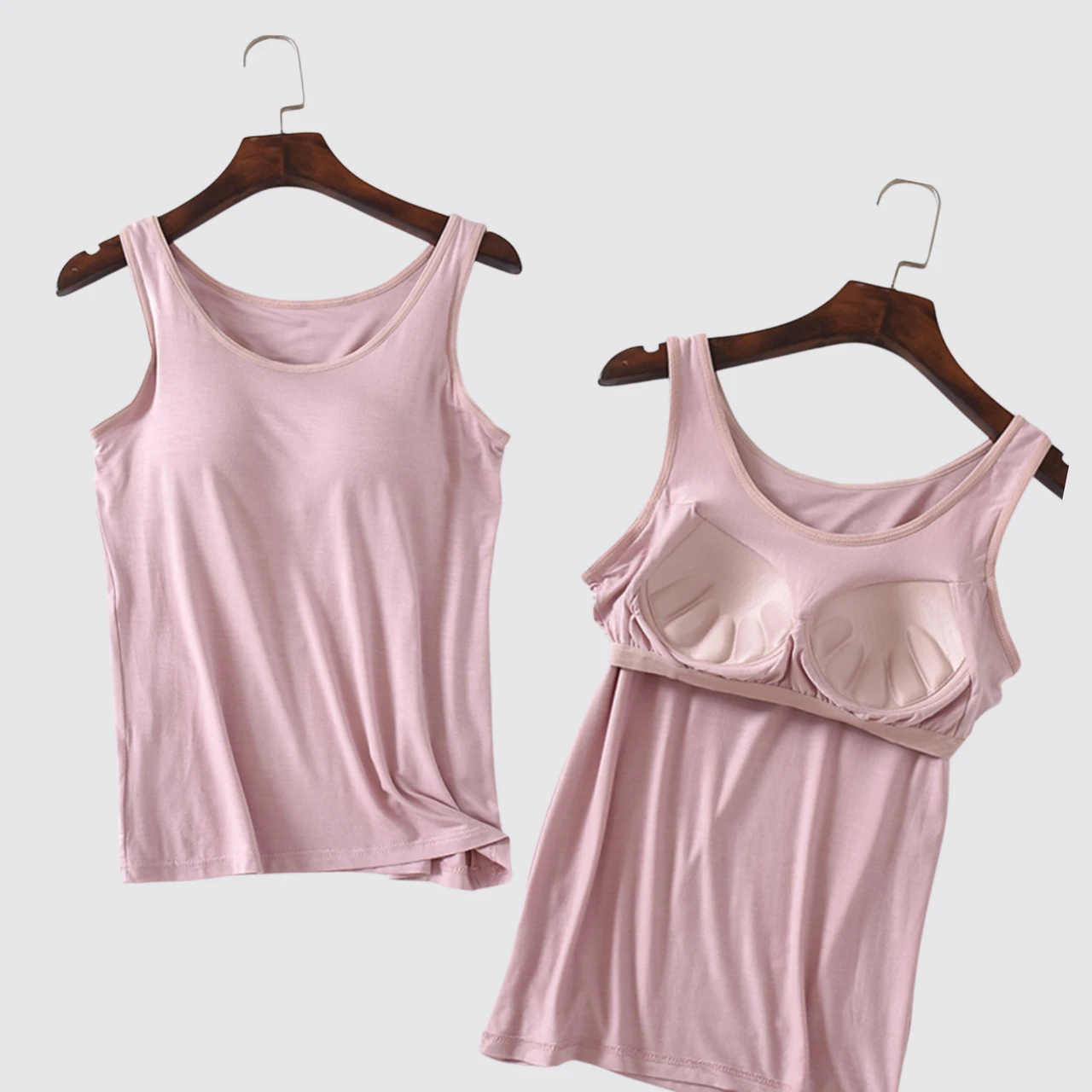
Built-in bra loungewear can look simple in a product photo, but it is not one standard construction. A buyer may want light coverage, removable cups, a shelf bra, gentle support, nursing access or a smoother silhouette under clothing. Each requirement changes the fabric, inner layer, cup attachment, size grading, sampling and quotation.
Short answer: Before production, define the intended support level, decide whether the cups are fixed or removable, confirm the outer and support fabrics, agree how cup sizes will be graded, and test the garment after washing. Built-in bra loungewear can provide coverage and light support, but it should not automatically be described as equivalent to a structured bra or high-support activewear.
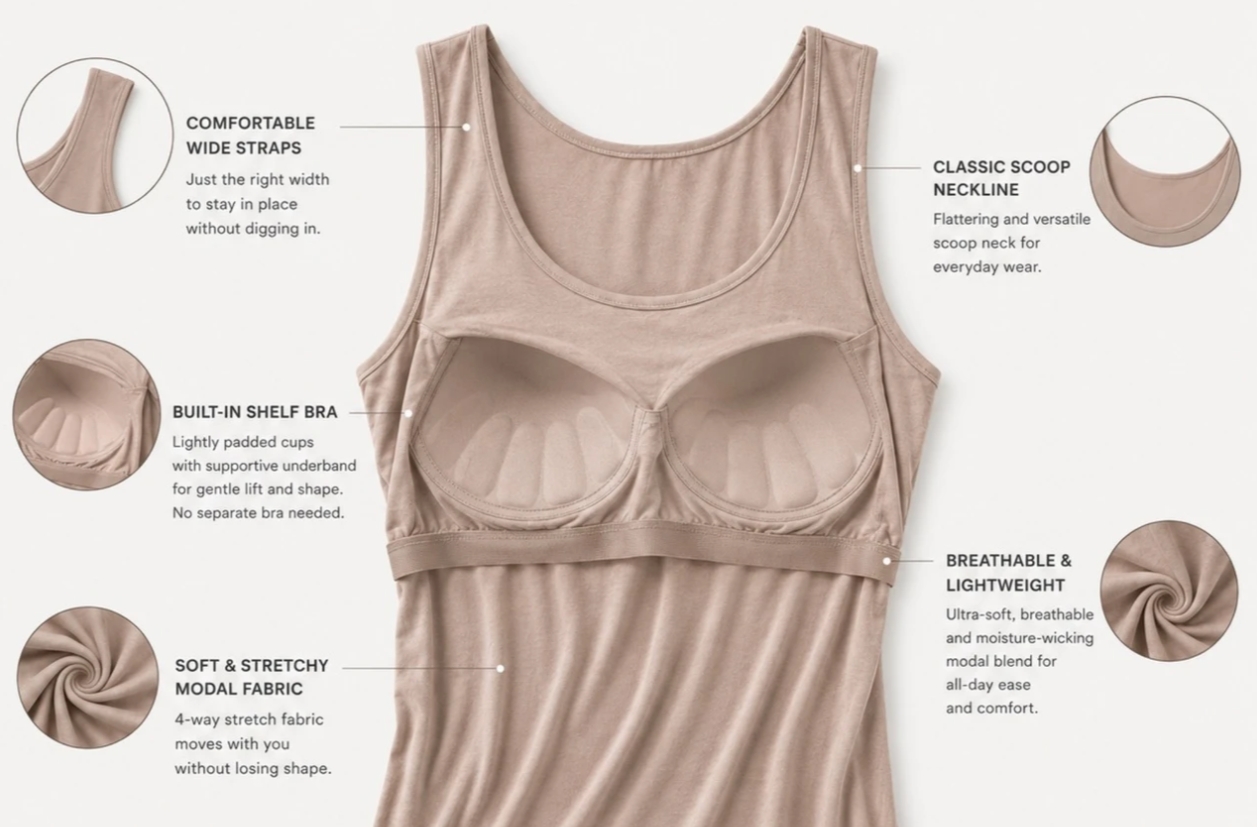
From a China OEM/private-label factory perspective, the most reliable brief separates the visible design from the hidden support structure. The outside may be a soft modal dress, a pajama top or a lounge set, but the inside still needs its own product-development decisions.
The phrase is used for several different constructions. If a buyer and factory use the same words for different structures, the first sample can miss the intended result.
My practical answer: Describe the inner construction directly in the tech pack or RFQ instead of relying on “built-in bra” alone.
| Construction | Main purpose | Buyer should confirm |
|---|---|---|
| Built-in cups | Coverage and a smoother appearance | Cup shape, thickness, position and attachment |
| Shelf bra | Light support from an inner fabric layer | Layer height, elastic width and support level |
| Built-in support panel | More structured coverage across the bust | Panel shape, stretch, seams and comfort |
| Removable cups | Flexible care and replacement | Opening location, cup movement and folding risk |
| Nursing access | Feeding access for maternity or nursing products | Opening method, security and whether it is separate from cup support |
A product can combine these features, but the combination should be stated in the quotation request. “Built-in support” is not a sufficient technical specification by itself.
Both options can work. The right decision depends on care habits, target price, desired stability and the type of loungewear.
Fixed cups are usually better when:
Removable cups are usually better when:
The risks are different. Fixed cups require accurate positioning and more careful size development. Removable cups need a well-designed opening so the pad does not fold, twist or escape during washing.
A shelf bra can be practical for sleepwear and lounge products, but it should not be treated as a universal solution.
My practical answer: A shelf bra is suitable when the product needs light coverage and gentle support, rather than firm support for sport or high-impact movement.
| Customer need | Possible direction | Important caution |
|---|---|---|
| Sleep comfort | Soft inner layer with light coverage | Avoid hard edges and excessive elastic pressure |
| Everyday lounge use | Shelf bra or lightly structured panel | Check movement, opacity and recovery |
| Layering under a jacket | More stable cups or support panel | Confirm cup edges do not show through |
| Exercise or high-impact use | Separate activewear development route | Do not market ordinary loungewear as high-support sportswear |
Support is influenced by the fabric, inner layer, elastic, cup shape, garment fit and construction together. A soft garment can feel comfortable while offering only light support. That is not a defect if it matches the intended product promise.
The outer fabric and support structure need to work together. A very soft, fluid fabric may look attractive but need a stronger inner layer. A firmer stretch jersey may provide more stability but feel less relaxed.
My practical answer: Choose fabric by hand feel, stretch recovery, opacity, seasonal use and support requirements, not by softness alone.
| Fabric direction | Potential advantage | What to review |
|---|---|---|
| Modal or modal blend | Soft hand feel and smooth drape | Recovery, pilling and whether extra support is needed |
| Bamboo viscose blend | Light, soft and suitable for sleepwear concepts | Stretch stability, shrinkage and wash performance |
| Cotton-spandex jersey | Useful stretch and familiar everyday feel | Shrinkage, recovery and body-hugging comfort |
| Rib knit | Natural texture and stretch | Cup edges, transparency and surface recovery |
| Double-layer jersey | More coverage and a steadier bust area | Added thickness, heat and sewing complexity |
Two fabrics with similar GSM can perform differently because of yarn, knit density and finishing. Ask for actual swatches and review the support layer with the outer fabric before locking the material.
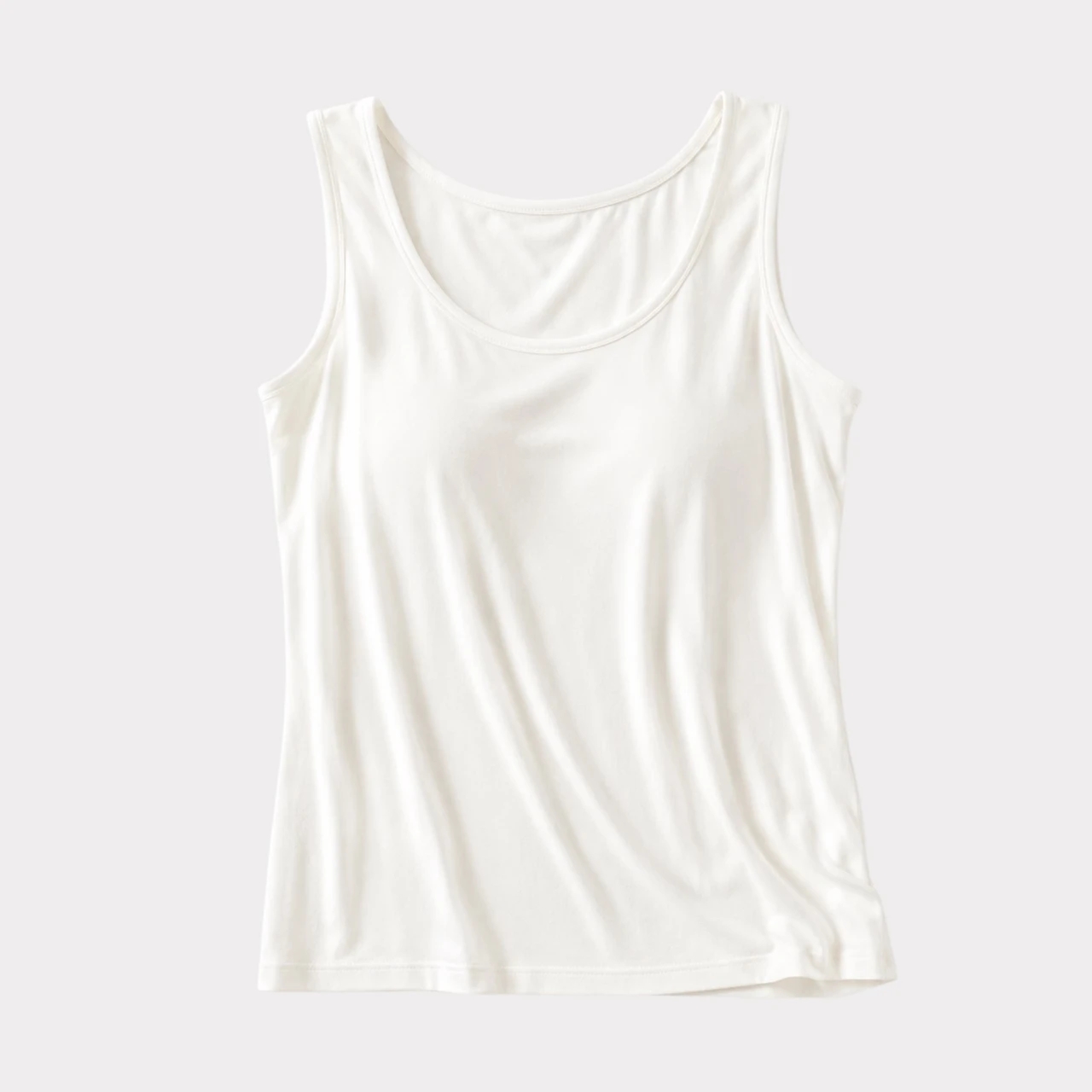

The underbust area has a large effect on comfort. A narrow or stiff elastic can create pressure, while an overly soft structure may not keep the garment in place.
My practical answer: Use the lightest structure that achieves the intended coverage and stability, then check it in movement and after washing.
A wider, softer underbust band may improve comfort, but it still needs stretch-recovery and wash testing. Do not describe the garment as strongly supportive until the construction and intended use justify that wording.
The first sample should be inspected from both sides. A clean outer appearance can hide a support layer that twists, pulls at the side seam or creates pressure at the armhole.
Using one pad size across every garment size may simplify purchasing, but it can create fit problems at both ends of the size range.
My practical answer: Decide early whether the project needs one standard pad, graded cup sizes or a more flexible removable-pad system.
| Approach | Suitable for | Risk or tradeoff |
|---|---|---|
| One cup size for all | Simple, low-complexity test programs | Coverage and placement may not suit every garment size |
| Graded cup sizes | Brands prioritizing fit across S–XL or a wider range | More development, sourcing and inventory complexity |
| Removable standard pads | Flexible products and replacement programs | Movement, folding and opening design must be controlled |
| Custom molded cups | Products needing specific shape control | Higher development cost and possible MOQ requirements |
Ask whether the cup is graded with the garment size or simply inserted into every size. The answer affects fit, appearance, comfort and the final quotation.
A built-in support layer adds more than one component to a basic lounge garment. The commercial impact depends on the construction chosen, not just on the number of finished pieces.
| Development choice | Cost effect | MOQ or timing effect |
|---|---|---|
| Fixed foam or molded cups | Adds cup sourcing, attachment and placement work | Special cup shapes or colors may require supplier MOQ |
| Removable cup pocket | Adds pattern and sewing operations | Usually manageable, but opening size needs a sample check |
| Graded cup sizes | Adds size-specific development and inventory | Can increase sampling and component planning |
| Elastic or power mesh support | Adds materials and handling steps | Component availability should be checked before quote approval |
| Custom-dyed or custom-molded components | Adds development and approval cost | Often requires longer lead time and a higher component MOQ |
| Additional wash and fit rounds | Adds sample and testing time | Bulk schedule must include the approval gate |
A factory can quote more accurately when the buyer provides the garment style, support level, cup direction, size range, color quantity, target market and delivery window. A low unit price based on an undefined “built-in bra” concept is not a reliable comparison.
For an early project, ask the factory to separate the quotation assumptions: outer garment, support construction, cup or pad, labels and packaging, sample charges, and any special component MOQ. This makes later changes easier to track.
A sample should answer more than whether the garment looks attractive on a model. The inner support structure needs a practical review.
Use this sample checklist:
Record the results against the approved sample. If the brand changes the fabric, cup thickness or support layer after fit approval, the garment may need another review.
The most expensive problems are often small specification gaps repeated across a full order. For this product type, QC should check the hidden support construction as carefully as the outside appearance.
| QC checkpoint | What the team should verify |
|---|---|
| Cup position | Left and right placement follows the approved measurement and remains symmetrical |
| Component identity | Bulk cups, elastic, mesh and lining match the approved sample or written substitution approval |
| Stitching | Pocket, cup attachment and support seams are secure without skipped stitches or exposed sharp edges |
| Measurement | Bust, underbust, armhole and finished length remain within the approved tolerance |
| Appearance | No cup outline, twisting, puckering or visible pulling appears on the outside |
| Wash behavior | The agreed care test does not cause unacceptable movement, shrinkage or loss of recovery |
| Packing | Removable pads, if included, are protected, paired and packed according to the approved instruction |
From a factory perspective, the bulk release should be blocked if the outer fabric changes, a cup supplier changes, or a support layer is substituted without buyer approval. The garment may look similar while behaving differently in wear.
A factory can quote more accurately when the buyer separates the product concept from confirmed specifications.
| RFQ item | What to provide |
|---|---|
| Product type | Pajama top, lounge set, dress, camisole or robe |
| Intended use | Sleepwear, home lounging, everyday layering, nursing or another use |
| Support direction | Coverage only, light support, shelf bra or structured panel |
| Cup construction | Fixed or removable, shape, thickness and size approach |
| Outer fabric | Composition, target GSM, stretch and hand-feel preference |
| Inner structure | Self-fabric layer, lining, mesh, elastic or support panel |
| Size range | Finished measurements, grading and any cup-size requirements |
| Branding and decoration | Labels, prints, embroidery, packaging and care label |
| Commercial details | Colorways, quantity, target market and delivery timing |
| Testing expectations | Wash method, internal review points and any market-specific requirements |
If the project is maternity or nursing-related, state that separately. Nursing access is a different construction requirement and should not be assumed from a built-in cup request.
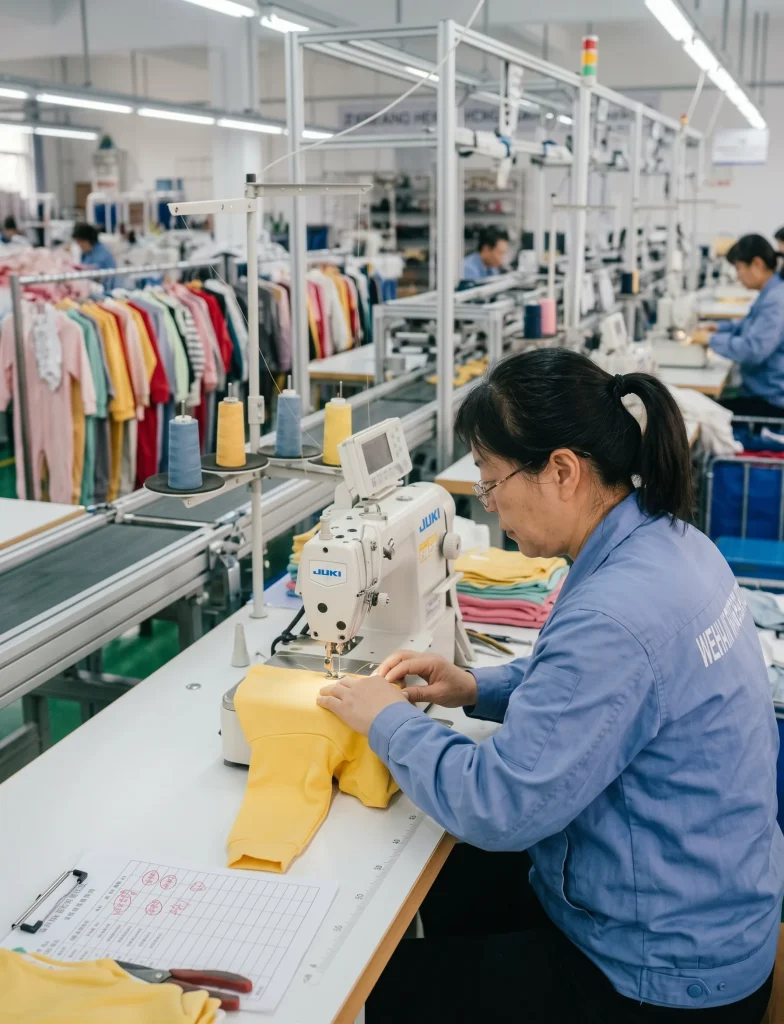
For a China OEM/private-label project, we would first confirm the intended use: sleepwear, lounge use, everyday layering, nursing or a more structured fashion top. We would then review the outer fabric, stretch recovery, cup or panel construction, underbust support, size chart and quantity.
The first sample should confirm fit, comfort, opacity, cup placement, outer appearance and wash behavior. Once the sample is approved, the factory needs a clear bulk reference, including the final fabric, measurements, construction details, labels and packing.
At Hengcheng, this kind of project would be reviewed as a coordinated sleepwear or loungewear development brief. The exact support level, cup structure, component availability and compliance requirements should be agreed before a firm quotation is issued. If a buyer needs high-support activewear or a specialized bra product, that should be treated as a separate product category rather than assumed to be covered by ordinary loungewear production.
Built-in cups use separate pads or cups inside the garment. A shelf bra usually uses an inner fabric layer and underbust support to create light coverage and support. Some products combine both.
Not automatically. Built-in loungewear can provide coverage and light support, but support depends on the full construction and intended use. A normal lounge garment should not be marketed as a high-support bra or activewear product without appropriate development and testing.
Fixed cups offer more stable positioning, while removable cups offer care and replacement flexibility. The choice depends on the target wearer, garment type, price and wash requirements.
Modal blends, bamboo viscose blends, cotton-spandex jersey, rib knit and double-layer jersey can all be considered. The best option depends on stretch recovery, opacity, support structure, climate, hand feel and wash performance.
Not always, but graded cup sizes can improve coverage and placement across a wider size range. The brand should confirm this during sample development rather than assuming one pad size will work for every garment.
There is no reliable single price before the construction is defined. Cup type, support layer, fabric, size range, quantity, colorways, labels, packaging and testing requirements all affect the quotation. Ask for the assumptions behind the price so alternative constructions can be compared fairly.
MOQ depends on the garment program and the components. A standard fabric and removable-pad pocket may be easier to develop at a smaller project scale, while custom molded cups, custom colors or graded components can create separate supplier MOQs. Confirm both garment MOQ and component MOQ before approving the sample plan.
Send the reference image or tech pack, product type, intended use, fabric direction, target GSM, cup construction, support level, size chart, colors, quantities, labels, packaging and any nursing or testing requirements.
Built-in bra loungewear is best developed as a coordinated product system, not as a basic pajama with a pad added at the end. Define the support level, fabric, inner layer, cup attachment, size approach and commercial assumptions before sampling, then test the garment in movement and after washing.
Explore custom sleepwear manufacturing or send your reference image and project details for review.
This buyer guide is based on apparel product-development and sample-review logic. Final product claims should be matched to the approved construction, material specification, care instructions and any applicable testing requirements.



