Address
JINKE Technology Industrial Park, No. 3188 ChunYuan Road, Weifang City, Shandong Province, China
Work Hours
Monday to Friday: 7AM - 7PM
Weekend: 10AM - 5PM
Address
JINKE Technology Industrial Park, No. 3188 ChunYuan Road, Weifang City, Shandong Province, China
Work Hours
Monday to Friday: 7AM - 7PM
Weekend: 10AM - 5PM

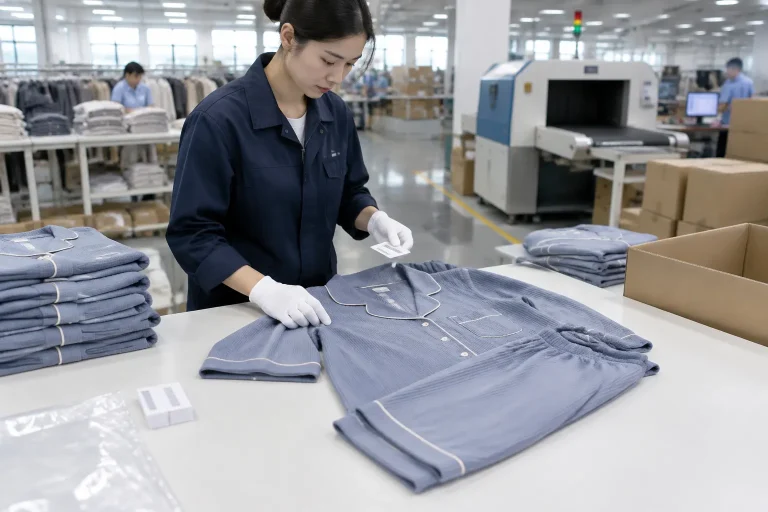
Cotton and flannel pajamas can change in size, shape and surface after washing. For a private-label buyer, the useful control is not a generic promise that a fabric is “pre-shrunk.” It is a documented review of the selected fabric and finished garment under an agreed care or test method, with critical measurements recorded before and after.
If a brand approves only an unwashed sample, the first wash can change body length, sleeve length, inseam, waistband fit or the balance between a pajama top and bottom. The risk depends on fiber, yarn, knit or woven construction, finishing, garment design and the care conditions. A 100% cotton label by itself does not predict the final result.
Shrinkage is dimensional change after a material or garment is exposed to a defined process, such as washing and drying. Buyers should agree what will be measured, how the sample will be conditioned and washed, and which result is acceptable for the product. There is no single shrinkage figure that should be assumed for every cotton or flannel program.
A simple dimensional-change calculation is:
Dimensional change (%) = (measurement after the agreed process − measurement before the process) ÷ measurement before the process × 100.
A negative result indicates a reduction in that measured dimension. The calculation is only useful when the measurement points and process are repeatable. For formal testing, the buyer should identify the method and acceptance criteria required by its market, retailer or testing partner.
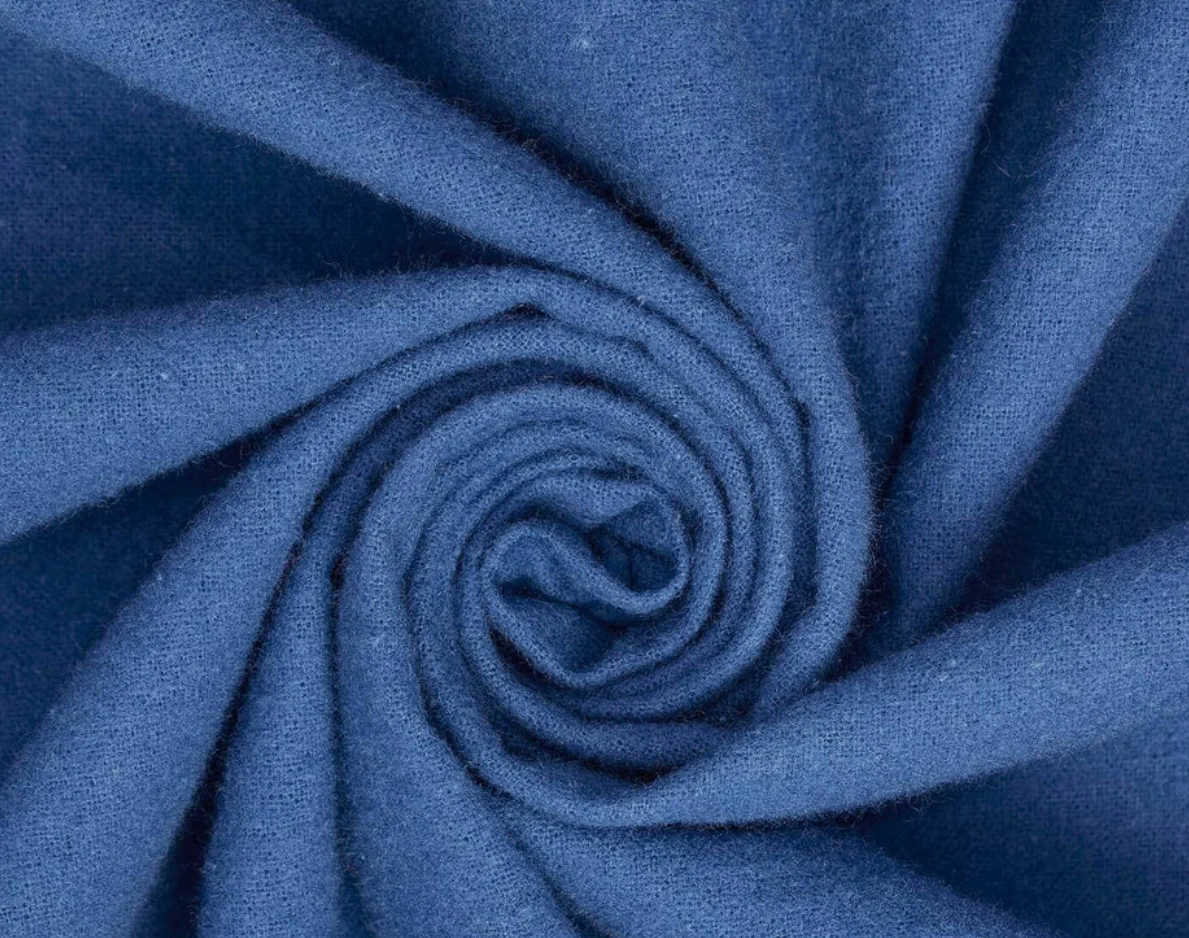
Cotton fabric behavior can vary with yarn, construction, finishing and production lot. Flannel describes a raised or brushed surface on a woven fabric; it does not define one fixed weight, fiber blend or shrinkage result. Cotton jersey, interlock and woven flannel should not be treated as interchangeable just because each contains cotton.
The buyer should also separate fabric change from garment change. Seam construction, grain direction, pattern balance, elastic recovery and sewing tension can affect how the finished pajama set looks and fits after laundering. A fabric test can inform the decision, but it does not replace reviewing the finished garment.
The important points depend on the style and fit block. A relaxed woven set may show a change in body length, sleeve, trouser outseam or inseam. A knit set may also need review for width, twisting and recovery. Waist construction can feel tighter after lengthwise or crosswise change, even when the elastic itself has not changed.
| Area to review | Why it matters after washing | Example control |
|---|---|---|
| Top body and sleeve | A small length change can alter coverage and proportion | Record agreed points of measure before and after the wash review |
| Trouser rise and inseam | Change can affect movement, fit and the top-to-bottom balance | Measure the selected reference size at consistent points |
| Waistband and elastic | Fabric change or poor elastic recovery can change comfort | Check waist measurement, stretch and recovery after laundering |
| Side seams and legs | Skew or twisting can make the garment hang unevenly | Inspect alignment and seam appearance on the finished sample |
| Brushed surface | Washing can change nap, hand feel or appearance | Compare surface and pilling against the approved reference |
Measurements should be chosen for the garment, not copied as a universal checklist. Buyers should identify a reference size and critical points of measure in the tech pack or approval comments.
The material name is only a starting point. Compare candidate fabrics against the product’s intended use, design, care label and fit. Ask the supplier or factory what is known about the selected lot and what needs verification through sample or testing.
| Material route | Points to review | Buyer implication |
|---|---|---|
| Cotton jersey | Length and width change, twisting, recovery and surface condition | Confirm stretch and post-wash fit on the intended pajama silhouette |
| Cotton interlock | Dimensional change, weight, seam shape and hand feel | Review whether the more stable hand feel supports the desired drape and comfort |
| Cotton flannel | Change in length/width, brushing, surface appearance and care behavior | Assess the raised surface and the finished garment after the intended care process |
| Cotton blend or finished fabric | Exact composition, finish, lot consistency and post-wash behavior | Do not assume a blend or finish removes the need to verify the chosen fabric |
Fabric weight can be one input, but higher weight alone does not guarantee lower shrinkage or a better fit. The chosen construction and finishing, plus how the garment is cut, sewn and cared for, all matter.
Use the sample stage to turn the concern into a repeatable approval record. A practical review includes the fabric, garment measurements, care process, surface appearance and fit. If a third-party test is required, confirm the test method and sample submission plan before the bulk schedule is fixed.
For a bulk decision, the brand should state its acceptance criteria in advance. If the brand or retailer has no requirement yet, agree a suitable test and tolerance with its technical or compliance partner rather than inventing a universal number after seeing the result.
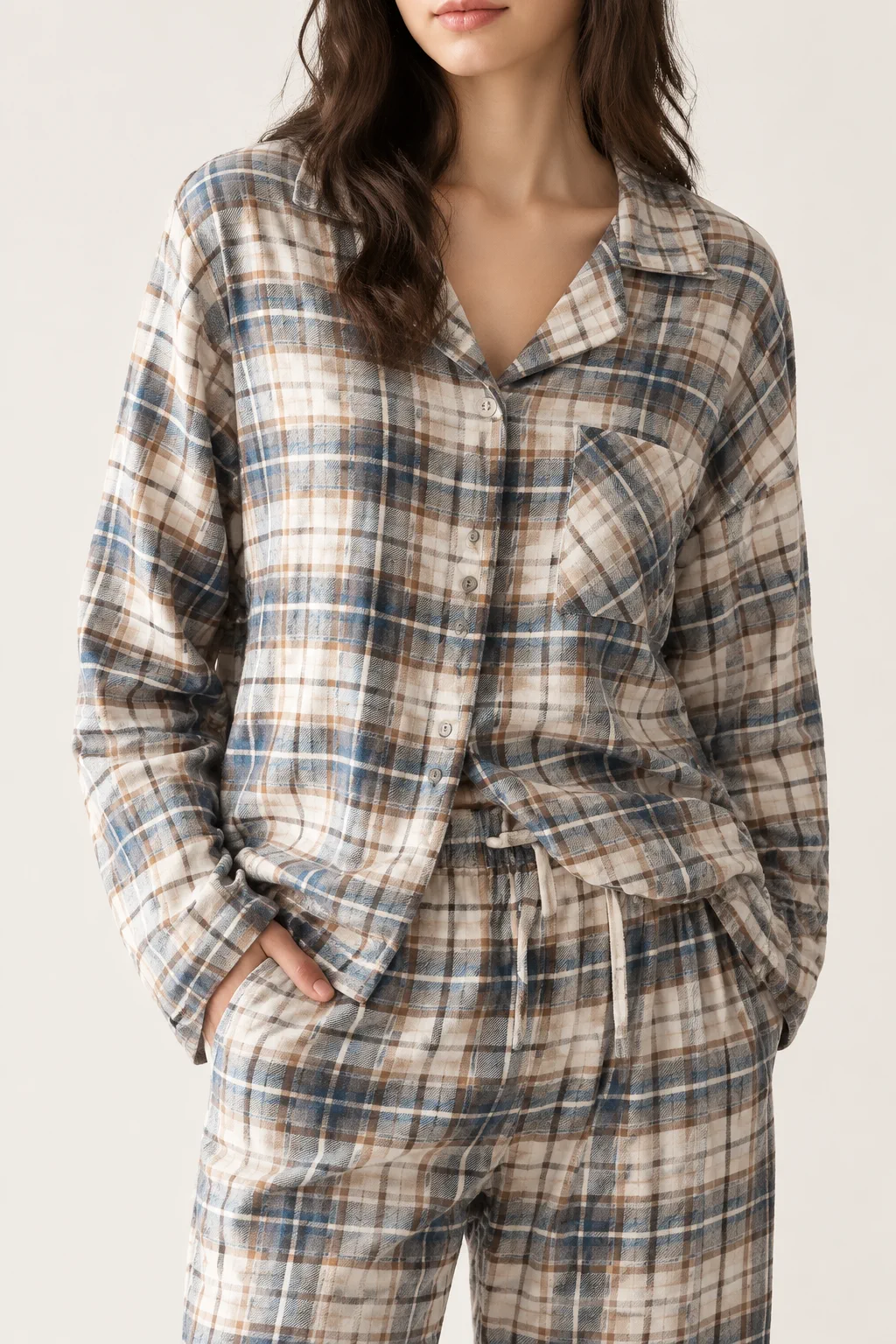
A factory can review an early concept, but quotation and sampling become more precise when the brief separates confirmed requirements from open questions. Include the details that affect material choice, sample planning and the final approval standard.
| RFQ or tech-pack input | Why it is needed |
|---|---|
| Fiber composition, fabric construction and target weight | Identifies the intended material route without treating fiber content as a performance guarantee |
| Fabric finish and nominated supplier or lot, if known | Helps distinguish the sample material from a substitute or later production lot |
| Garment type, fit block and size range | Defines which measurements and proportions are critical |
| Points of measure and tolerance | Gives sample review and bulk QC a shared reference |
| Care-label and destination-market requirements | Determines the relevant wash/dry or third-party test conditions |
| Desired test method and acceptance criteria | Makes results comparable and clarifies who approves them |
| Quantity by style, color and size | Helps the factory review material availability, lot planning and quotation assumptions |
| Change-approval contact | Prevents unreviewed fabric or process substitutions from bypassing the agreed standard |
If these inputs are not final, label them as assumptions. For example, a quote based on a standard stock fabric should not be read as confirmation that a later nominated fabric will behave identically.
A sample result only helps if bulk uses a controlled reference. Before cutting, align the approved material, color, construction, measurement chart, tolerance and care expectation. Any substitution that may affect weight, finish or dimensional behavior should be reviewed and approved before production proceeds.
During production and final inspection, buyers and factories can:
The exact inspection frequency and sampling plan should follow the buyer’s quality plan and order requirements. This article does not set a universal inspection level or laboratory standard.
From a China OEM and private-label factory perspective, Hengcheng would first clarify the garment type, fabric direction, fit, size range, quantity, target market and care expectation. The team can then identify which dimensions should be tracked, whether the buyer’s test requirement needs a nominated laboratory, and what needs approval before bulk.
For an inquiry, share the reference style or tech pack, fabric requirements, quantity by color and size, measurement chart, destination market and any retailer testing criteria. If some details are still open, mark them clearly so the quote and sample plan can state their assumptions. Buyers can also review the <a href="https://hengcheng-garment.com/sample-development-process/">sample development process</a>, <a href="https://hengcheng-garment.com/quality-control/">quality-control approach</a> and <a href="https://hengcheng-garment.com/sleepwear-pajama-manufacturer-china/">sleepwear manufacturing page</a> before sending a brief.
No single result applies to every cotton garment. The selected construction, finishing, garment design, lot and care process affect dimensional change, so brands should verify the actual program.
Not necessarily. Flannel and jersey have different constructions and finishes, but the name alone does not establish which will change more. Compare the selected fabrics using the same agreed process.
No. Weight can inform material selection, but it is not a stand-alone predictor. Construction, finishing, garment pattern and laundering also matter.
Both may be relevant. Fabric testing helps characterize a material, while finished-garment review shows how measurements, seams, elastic and fit behave together. Follow the buyer’s or retailer’s specified method.
For a measured dimension, subtract the before measurement from the after measurement, divide by the before measurement and multiply by 100. Keep the measurement points and wash/dry process consistent; a negative percentage indicates a reduction.
Include the material direction, garment type, size range, quantity by color and size, critical measurements, care expectation, applicable test criteria, trims and packing requirements. Mark unresolved specifications as assumptions.
A factory should not make a blanket promise without the selected material, process, method and acceptance criteria being defined. Buyers should agree those requirements with their technical or testing partner and verify the production material.
Set the method and criteria before sample testing. Review the relevant sample, document the decision, and carry the approved material and measurement standard into bulk.
This guide describes a buyer-side product-development workflow. The applicable laundering and dimensional-change test method, care instructions and acceptance limits should come from the brand, retailer, destination-market requirements or its qualified testing partner. Hengcheng’s related resources: <a href="https://hengcheng-garment.com/sample-development-process/">sample development</a>, <a href="https://hengcheng-garment.com/quality-control/">quality control</a> and <a href="https://hengcheng-garment.com/sleepwear-pajama-manufacturer-china/">sleepwear manufacturing</a>.