Address
JINKE Technology Industrial Park, No. 3188 ChunYuan Road, Weifang City, Shandong Province, China
Work Hours
Monday to Friday: 7AM - 7PM
Weekend: 10AM - 5PM
Address
JINKE Technology Industrial Park, No. 3188 ChunYuan Road, Weifang City, Shandong Province, China
Work Hours
Monday to Friday: 7AM - 7PM
Weekend: 10AM - 5PM
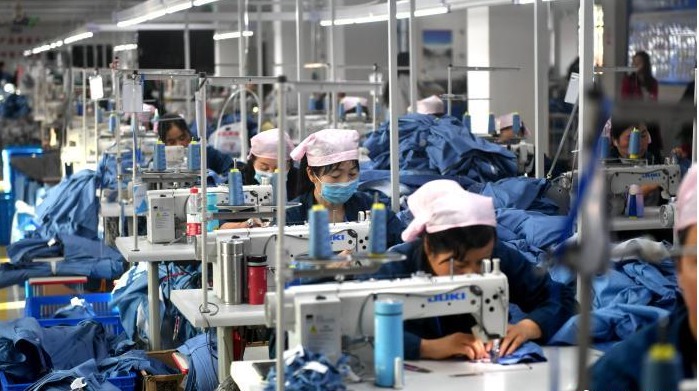
A practical guide to finding and verifying China clothing manufacturers without Alibaba: channels, checks, inquiry tips, samples and QC.
You can find a trusted clothing manufacturer in China without Alibaba by using Google search, factory websites, trade fairs, referrals, sourcing agents, LinkedIn, industry directories, and brand-supplier research. But the channel only helps you discover names. Trust comes from verification.
That is the part many new brands miss. Leaving Alibaba does not automatically remove middlemen, weak factories, or quality risk. A direct-looking website can still belong to a trading company. A factory can be real but wrong for your product. A responsive salesperson can still give a price that is not production-ready.
If you do not want to source through Alibaba, use a more disciplined process: discover, filter, verify, sample, then place a controlled first order. The goal is not to find the most supplier names. The goal is to build a short list of manufacturers that can actually make your product at your quality, quantity, timeline, and communication standard.
The safest way is to separate supplier discovery from supplier verification. Do not treat a Google result, directory listing, trade fair contact, or referral as proof. Treat it as a lead.
A practical process looks like this:
| Step | Buyer question | What you should collect | Decision output |
|---|---|---|---|
| Discovery | Where can I find possible suppliers? | Factory websites, trade fair contacts, referrals, directories, LinkedIn profiles, sourcing-agent suggestions | A broad supplier list |
| Shortlist | Which suppliers seem relevant to my product? | Product category fit, factory focus, export experience, website evidence, response quality | 5-10 candidates |
| Verification | Which suppliers are real and capable? | Business identity, factory type, sample process, QC process, category evidence, communication behavior | 2-4 serious options |
| Sampling | Who can execute my actual product? | Sample quality, revision handling, fabric/trim sourcing, measurement control, decoration testing | 1-2 production-ready options |
| Trial order | Who can handle bulk production responsibly? | Small bulk run, inline checks, final inspection, packing/shipping execution | Long-term supplier decision |
From a factory perspective, buyers who follow this sequence usually get better answers. They do not ask every supplier for a vague price. They ask fewer suppliers better questions.
Start with channels that give you more context than a marketplace listing. Each channel has a different strength. Google can surface independent factory websites. Trade fairs help you see samples and meet teams in person. Referrals reduce cold-start risk. Sourcing agents can coordinate China-side checks. LinkedIn and brand-supplier research can help you understand whether a company has real apparel experience.
| Channel | Best use case | Main risk | How to use it well |
|---|---|---|---|
| Google search and factory websites | Finding direct suppliers with public capability pages, category pages, case examples, and contact details | SEO pages can look polished even when the factory fit is weak | Search by product category, not just "clothing manufacturer China" |
| Canton Fair and other trade fairs | Meeting suppliers face to face and checking real samples | Booth quality still needs verification after the fair | Photograph sample tags, product categories, booth materials, and contact details |
| Referrals and industry network | Reducing cold-start risk through people who have sourced before | A good supplier for one product may not fit your category | Ask what product they made, order size, QC result, and whether they would reorder |
| Sourcing agents | Managing China-side supplier search, negotiation, inspection, and logistics | You may not build a direct factory relationship | Use agents when category breadth or local coordination matters more than direct control |
| Global Sources, Made-in-China, and directories | Building a first supplier pool outside Alibaba | Supplier types are still mixed | Use directories for discovery, then verify independently |
| LinkedIn and company research | Finding people, company activity, and export signals | Information can be incomplete or outdated | Cross-check names, website, product focus, and email domain |
| Brand-supplier and import research | Understanding what types of suppliers serve similar brands | Data can be partial and not always current | Use it for direction, not as final proof |
A good search query should include the garment type and the production model. For example, search for "China hoodie manufacturer OEM", "private label T-shirt factory China", "pajama manufacturer China", "cut and sew knitwear factory China", or "kidswear manufacturer China" instead of only searching "clothing manufacturer".
Alibaba is a discovery channel. So are Google, trade shows, and directories. None of them replaces due diligence.
A trustworthy apparel manufacturer must fit your product category, understand your production requirements, communicate clearly, and show how it controls sampling and bulk quality. This matters because "clothing manufacturer" is too broad. A woven jacket factory, sweater factory, T-shirt factory, hoodie factory, pajama factory, activewear factory, and children's wear factory are not interchangeable.
The biggest risk outside Alibaba is not that you cannot find suppliers. It is that you may mistake a supplier's marketing for production capability.
Watch for these common traps:
A direct factory is useful only when you can communicate clearly with the team responsible for sampling, merchandising, production, and quality control. If every technical question turns into a vague sales answer, the channel does not matter.
Factories can respond faster when your first inquiry is specific. If you only send "Can you make my clothing brand?" the answer will be generic. If you send product type, reference photos, fabric direction, size range, quantity, decoration, label needs, target market, and timeline, the factory can tell you whether the project is realistic.
Prepare at least this information before you ask for pricing:
| Information | Minimum version | Better version | Why it matters |
|---|---|---|---|
| Product type | Hoodie, T-shirt, pajama, sweatshirt, kidswear, etc. | Exact style direction with reference images | Factories need to know whether it fits their category |
| Fabric | Cotton, polyester, fleece, jersey, rib, satin, modal, etc. | Composition, GSM, handfeel, stretch, shrinkage expectation | Fabric drives MOQ, cost, sample timing, and quality risk |
| Quantity | Total order quantity | Quantity by style, color, and size | MOQ is usually controlled by fabric/color/trim, not total units only |
| Decoration | Logo print or embroidery | Artwork size, position, colors, technique, special finish | Decoration affects setup cost, sample cost, and bulk consistency |
| Size range | S-XL or kids sizes | Size chart, tolerance, grading notes, fit reference | Measurements need a standard before QC can be meaningful |
| Label and packing | Brand label and polybag | Main label, care label, hangtag, barcode, carton mark, packing ratio | Export packing affects both cost and shipment readiness |
| Target market | US, EU, UK, Japan, Australia | Compliance, care label, language, test requirements | Requirements differ by market and product type |
| Timeline | Need sample soon | Sample deadline, revision window, bulk deadline, launch date | A factory needs to plan fabric, sample room, production line, and QC |
If you are early and do not have a full tech pack, that is fine. Send a clear starter brief. A good factory can help you turn a product direction into a quotation path, but it still needs enough information to avoid guessing.
There is nothing automatically wrong with a trading company or sourcing agent. Sometimes they are useful. The problem is when buyers think they are working directly with production but key technical information is being filtered through layers.
Ask practical questions. Do not only ask "Are you a factory?" Ask what products they produce in-house, what is subcontracted, who handles sampling, where QC happens, and whether they can show production or inspection evidence for your category.
| Signal to check | Weak answer | Stronger answer |
|---|---|---|
| Product ownership | We can make all clothing | We mainly handle knit casualwear such as T-shirts, hoodies, sweatshirts, sleepwear, or loungewear |
| Sampling | We can sample anything quickly | We need fabric, size, artwork, quantity, and label details before confirming sample cost and timing |
| MOQ | No problem, any quantity | MOQ depends on style, fabric, colorway, trim, and decoration; here is the practical range |
| QC | We have strict QC | We check fabric, measurements, workmanship, decoration, labels, and packing against approved standards |
| Production route | Our partners can do it | This part is in-house; this process is outsourced; this is how we control it |
| Communication | Sales will handle everything | Sales, merchandising, sampling, production, and QC coordinate comments against the approved sample |
You can also ask for a short video call, factory photos, production-process photos, sample-room explanation, and a clear company email domain. These do not prove everything, but they help you separate real operators from thin intermediaries.
Verification should move from light checks to serious checks. Do not spend too much money before the supplier has passed basic screening. At the same time, do not expect a factory to complete deep product development for free before you show serious intent.
A practical verification sequence is:
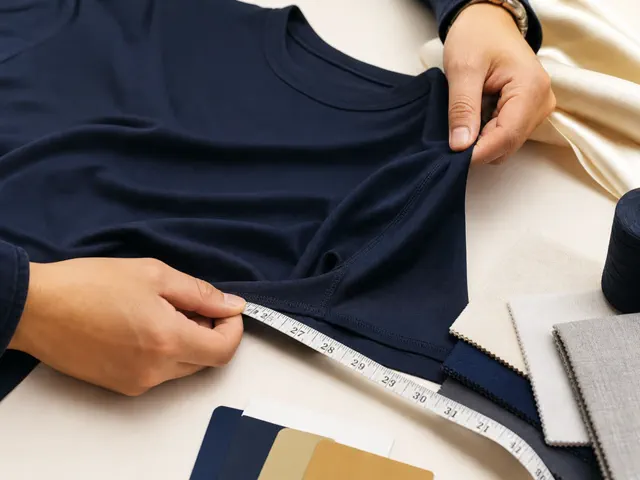
The sample is not only a product preview. It is a test of how the factory reads instructions, solves problems, communicates changes, and responds to comments. If sampling is chaotic, bulk production rarely becomes smooth.
Your first serious conversation should test whether the supplier understands apparel production, not whether they can send a catalog.
Use questions like these:
| Question | What a useful answer should reveal |
|---|---|
| What categories do you produce most often? | Whether your product fits the factory's real strength |
| What is made in-house and what is outsourced? | How much control the supplier has over your product |
| What information do you need before quoting? | Whether the factory understands cost drivers |
| How do you calculate MOQ? | Whether MOQ is tied to fabric, dyeing, trims, decoration, and colorways |
| How many sample rounds are normal? | Whether the supplier has a realistic sample development workflow |
| How do you control measurements from sample to bulk? | Whether QC is tied to an approved size chart and tolerance |
| How do you handle decoration approval? | Whether print, embroidery, patch, or wash effects are sampled and approved properly |
| What happens if fabric is unavailable or different from the reference? | Whether substitutions are communicated before production |
| Can you support export packing and shipping coordination? | Whether the supplier understands carton, label, and shipment readiness needs |
| Who will communicate after order confirmation? | Whether you will have production/merchandising support, not only sales contact |
If a supplier gives sharp, practical answers to these questions, you can keep them in the shortlist. If they dodge everything and push only price, be careful.
Do not compare only the unit price. A low garment price can hide missing fabric details, weaker decoration, unclear sample cost, no QC scope, excluded packaging, or unrealistic shipping assumptions.
When you receive quotations, compare them line by line:
| Quote item | Why buyers misread it | What to confirm |
|---|---|---|
| Unit price | One supplier may quote a simpler fabric or construction | Fabric composition, GSM, width, shrinkage, finishing, and construction |
| MOQ | Total MOQ may hide color or fabric MOQ | MOQ by style, colorway, size range, fabric, and decoration |
| Sample fee | Some quotes exclude artwork, trims, or repeated revisions | What the sample fee includes and when it can be refunded or credited |
| Decoration | Print or embroidery setup may be separate | Technique, size, color count, placement, setup, test sample, and bulk tolerance |
| Labels and packing | Basic packing may not match your retail needs | Main label, care label, hangtag, barcode, polybag, carton mark, packing ratio |
| QC | "QC included" can mean different things | Inspection points, measurement tolerance, defect classification, photo report |
| Trade term | Product cost is not landed cost | EXW, FOB, CIF, DDP, freight, duty, and final delivery responsibility |
| Lead time | Lead time may start after deposit, sample approval, or fabric arrival | Exact timing trigger and what can delay the schedule |
For first orders, compare landed cost and execution risk, not only garment cost. Freight, duties, labels, packaging, inspection, and revision delays can change the real business decision.
A sourcing agent can be useful when you need China-side coordination, multiple product categories, factory visits, translation, inspection scheduling, or logistics follow-up. But an agent is not automatically better than a direct factory.
Use an agent when:
Prefer a direct factory when:
The right choice depends on your team, not on a slogan. For a startup brand with one focused apparel line, a capable direct factory may be more efficient. For a retailer sourcing many unrelated products, an agent may be practical.
Small brands often have two opposite problems. Some ask too little and choose the cheapest supplier. Others ask for a perfect enterprise-level supply chain while the project is still too small. Both create friction.
A better approach is to match the supplier to your stage.
| Buyer stage | Better supplier fit | What to avoid |
|---|---|---|
| Very early idea test | POD, blank customization, local sample maker, or small-batch studio | Expecting a factory to build a full custom line for tiny quantity |
| First serious product launch | Focused factory with sample development and clear MOQ | Choosing a broad supplier only because the first quote is cheap |
| Repeat private-label program | Direct factory with QC, fabric/trim coordination, and export experience | Changing suppliers every order to chase small price differences |
| Retail or distributor order | Factory or agent with documentation, packing, inspection, and schedule discipline | Ignoring compliance, carton, barcode, and shipment readiness until the end |
Small brands should also be honest about quantity. If your order is too small for custom dyeing, special trims, complex labels, or many colors, simplify the product. A cleaner product brief usually gets a better factory response than an unrealistic design with tiny volume.
At Hengcheng, we do not judge an inquiry only by whether the buyer asks for T-shirts, hoodies, sweatshirts, sleepwear, or another category we may support. We also look at whether the project has enough information to move into a serious quotation or sampling discussion.
A factory-side review usually includes:
This is why a serious inquiry does not need to be long, but it does need to be structured. The more specific the brief, the less time both sides waste.
Keep the first email short, but include enough detail for the factory to answer intelligently. Do not attach a huge file dump with no explanation. Do not ask only "best price" before the product is defined.
A practical first inquiry can follow this structure:
| Email section | What to write |
|---|---|
| Who you are | Brand, retailer, agency, startup, or sourcing team |
| Product | Garment type, style direction, reference images, and target quality level |
| Fabric | Composition, GSM, handfeel, stretch, or fabric reference if known |
| Quantity | Estimated units by style, color, and size range |
| Decoration | Print, embroidery, label, patch, wash, or other special process |
| Market | Target country and any compliance or care-label needs |
| Timeline | Sample deadline, revision window, and launch or delivery target |
| Ask | Whether the factory can review the project and advise MOQ, sample process, and quotation path |
Here is a simple version:
> We are developing a private-label hoodie line for the US market. The first style is a pullover hoodie in cotton/poly fleece, around 320-380 GSM, with front embroidery and custom neck label. Our first order target is 600 pieces across 2 colors and 5 sizes. We can share reference photos and a rough size chart. Could you advise whether this fits your production range, what MOQ and sample process would apply, and what details you need for a more accurate quotation?
That kind of email gets a better response than "Can you make hoodies? Please quote your lowest price."
Yes, many China clothing factories can produce for US, European, Australian, and other overseas buyers. Some can also coordinate export packing, freight-forwarder handoff, or shipping support. But "ship to my country" needs detail.
Ask whether the quote is EXW, FOB, CIF, DDP, or only product cost. Also confirm labeling, carton marks, packing ratio, barcode needs, care-label language, and whether you or the factory handles freight-forwarder coordination.
For first orders, I would not judge the supplier only by whether they say they can ship. I would judge whether they ask the right shipping and packing questions before production starts.
Hengcheng is a direct garment manufacturer for OEM and private-label apparel programs, especially knitwear-related casualwear categories such as T-shirts, hoodies, sweatshirts, kidswear, sleepwear, pajamas, and loungewear. The strongest fit is a buyer who has a product direction, realistic quantity, and wants sample-first development with QC and export communication.
Hengcheng may be a good fit when:
Hengcheng may not be the right fit if you only need ten blank garments tomorrow, if your product is far outside our category focus, or if the project requires a specialized factory type that we do not handle. In that case, a local POD supplier, blank customization vendor, sourcing agent, or another category-specific factory may be better.
Before you contact factories, use this checklist to make the conversation more productive.
You can find China clothing manufacturers through factory websites, Google search, trade fairs, referrals, sourcing agents, Global Sources, Made-in-China, industry directories, LinkedIn, and supplier research. The important step is verification: product fit, factory type, sample process, QC process, and communication quality.
Build a supplier list from direct search, referrals, fairs, directories, LinkedIn, and sourcing networks. Then contact factories with a clear product brief. Shortlist the suppliers that understand your category, ask practical production questions, and can explain sampling, MOQ, QC, and export terms.
Send a short professional inquiry with your product type, reference images, fabric direction, quantity by color and size, decoration, labels, target market, and timeline. Ask whether the project fits their production range before asking for a final price.
Ask what products are made in-house, what is outsourced, who handles samples, where QC happens, what category they produce most often, and whether they can show production or inspection evidence for your product type. A real factory should give category-specific answers, not only broad promises.
Use a sourcing agent if you need many categories, China-side coordination, inspections, translation, or logistics help. Contact factories directly if your product category is focused and you want closer control over sampling, production details, QC, and long-term supplier communication.
Ask for the confirmed quotation scope, fabric details, MOQ, sample approval process, revision rules, production lead time, QC checkpoints, packing requirements, trade term, payment terms, and what happens if fabric, trims, or decoration results differ from the approved sample.
Yes, many China garment factories work with overseas buyers and can coordinate export packing or freight-forwarder handoff. But you should confirm trade terms, care labels, carton marks, packing ratios, documentation, duties, freight responsibility, and whether the quoted price is product cost or landed cost.
The biggest mistake is thinking the channel itself creates trust. Whether you use Google, trade fairs, referrals, directories, or a sourcing agent, you still need to verify product fit, factory type, sample execution, QC process, communication, and order readiness.
Hengcheng can give a more useful first response when you share product type, reference photos, fabric direction, quantity by color and size, decoration, labels, target market, timeline, and any special QC or compliance requirement. If you do not have a full tech pack yet, a clear starter brief is still better than a vague price request.
This article is based on Hengcheng garment manufacturing experience, current buyer questions from search data, and external references reviewed for sourcing context. Use external guides for broad market orientation, but make the supplier decision through product-specific verification and sampling.
If you want Hengcheng to review your apparel project, send your product brief through the contact page. Include reference images, quantity, fabric, decoration, labels, packing, target market, and timeline so the team can give a useful first response.