Address
JINKE Technology Industrial Park, No. 3188 ChunYuan Road, Weifang City, Shandong Province, China
Work Hours
Monday to Friday: 7AM - 7PM
Weekend: 10AM - 5PM
Address
JINKE Technology Industrial Park, No. 3188 ChunYuan Road, Weifang City, Shandong Province, China
Work Hours
Monday to Friday: 7AM - 7PM
Weekend: 10AM - 5PM
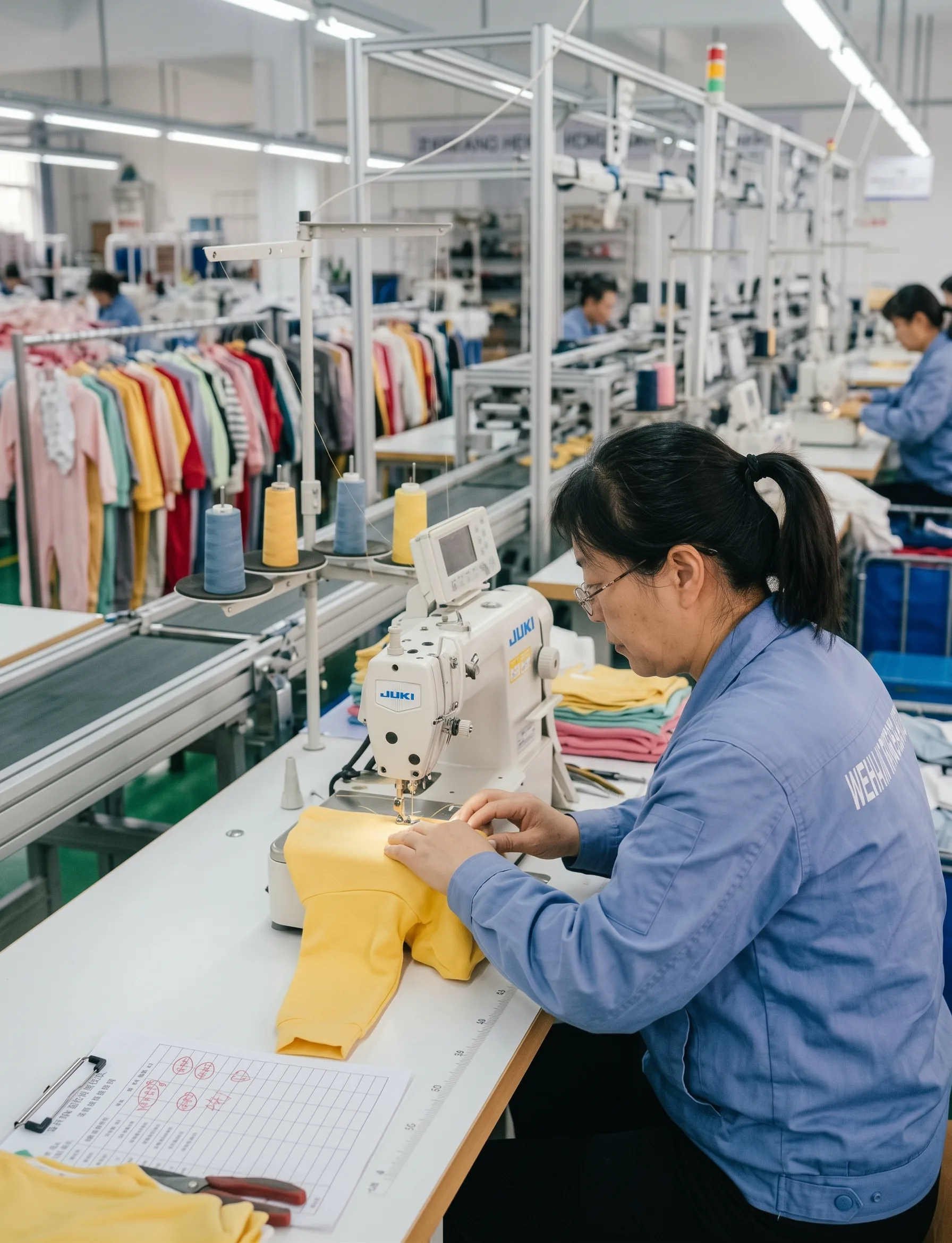
Reinforcement belongs at the points where movement, pulling, abrasion or repeated opening puts extra load on a garment. Common examples include knees, elbows, pocket corners, crotch junctions, inseams, plackets and shoulder openings. The correct solution is not always an extra patch or more stitching. It may be a different seam construction, a facing, a bar tack, a shaped panel or a better-matched fabric. Buyers should specify the stress point, the intended appearance and the sample or inspection standard instead of asking a factory to make the garment simply “stronger.”
For a kidswear order, durability is a product-development decision. The factory needs to understand how the garment will be worn, washed and sold, while the buyer needs to approve comfort, mobility and appearance as well as construction. A visibly reinforced seam is not automatically a durability guarantee.
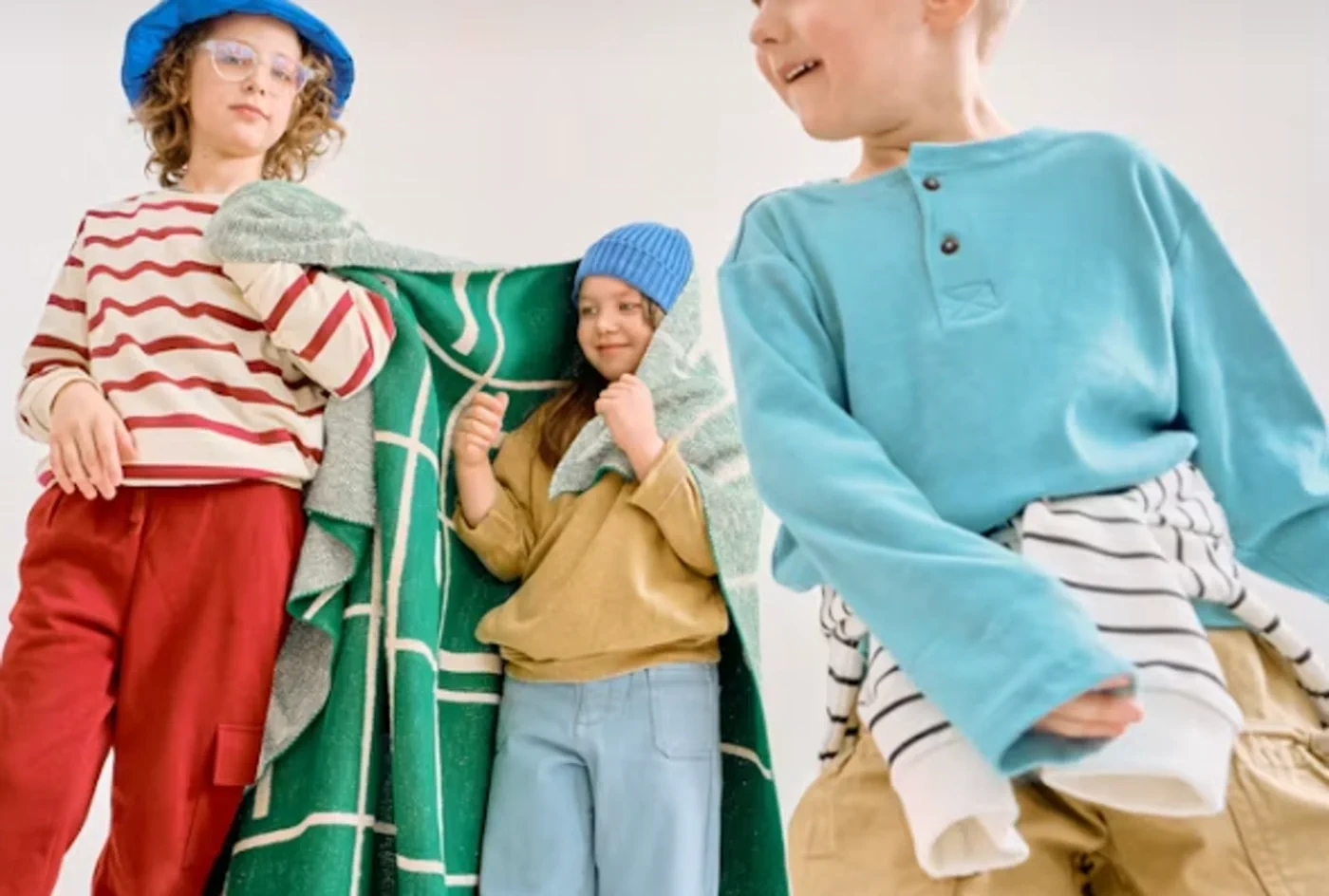
Children’s clothing may be pulled, stretched, rubbed against play surfaces and washed frequently. A garment that looks fine on a flat table can still fail at a pocket corner, inseam junction or opening seam after repeated use. If a buyer writes only “durable kidswear,” each supplier may interpret the requirement differently.
A better brief turns durability into reviewable decisions:
From a China factory perspective, this information affects pattern review, material planning, sewing operations, sample comments and the final QC checklist. It can also affect quotation and lead time when the style needs extra panels, special attachments, additional operations or a separate test round.
Start with the garment type and use case rather than applying the same reinforcement package to every style. A play trouser, school cardigan, sweatshirt, romper and occasion dress have different stress patterns.
| Stress point | Typical risk | Possible production response | Buyer review point |
|---|---|---|---|
| Knees | Crawling, kneeling, abrasion and repeated bending | Shaped panel, double layer, stronger seam route or compatible patch | Check mobility, bulk, placement and appearance after care |
| Elbows | Bending and rubbing against surfaces | Elbow panel, layered construction or adjusted seam placement | Check range of motion and whether the panel twists |
| Pocket corners | Pulling from use and repeated loading | Reinforced stitch route, bar tack or strengthened pocket attachment | Check neatness, hand feel and pocket opening |
| Crotch and inseam junction | Stretch, sitting, climbing and leg movement | Suitable seam construction, secure seam ends and balanced allowance | Inspect inside and outside; check comfort and seam continuity |
| Placket and closure ends | Repeated opening, pulling and component load | Secure attachment, clean finishing and suitable reinforcement | Operate the closure repeatedly on the sample |
| Shoulder and armhole | Dressing, movement and garment weight | Stable seam construction and appropriate seam finish | Check stretching, puckering and ease |
| Neck and label area | Pulling during dressing and local irritation | Clean attachment and soft finish where appropriate | Inspect the inside for scratch points and loose threads |
The “possible production response” is a discussion point, not a universal instruction. The factory should review the chosen solution against fabric thickness, stretch, needle marks, appearance and the target construction.
The simplest reinforcement is not always the best one. Extra stitching can secure a seam end, but it will not solve every abrasion or fabric-tear problem. A patch may spread load, yet it can add stiffness. A double layer can improve resistance in one area but change drape, breathability and cost.
| Option | When it may help | Trade-offs to review |
|---|---|---|
| Extra stitch line | Local seam security or a defined seam end | Can cause puckering, stiffness or a visible line if poorly balanced |
| Bar tack or concentrated stitch | Pocket corners, opening ends or small load points | Must be placed accurately and checked for appearance and comfort |
| Shaped panel | Knees, elbows or design-led reinforcement zones | Adds pattern and sewing work; can change fit and visual identity |
| Double layer or facing | Areas needing more body or coverage | Adds fabric use, bulk and possible heat/comfort concerns |
| Different seam construction | Stress points where the base seam is the weak link | May affect machine setup, allowance, sampling and quotation |
| Fabric or knit change | When the base material is too fragile or unstable | Changes hand feel, cost, shrinkage, color and possibly the whole fit |
A practical factory conversation compares at least two viable constructions on a physical sample. Ask the factory to explain what changes, then choose based on the product brief rather than assuming that the most reinforced-looking version is the best version.
Reinforcement cannot be separated from the base material. A lightweight knit, brushed sweatshirt fleece, woven twill and stretch interlock will respond differently to the same seam or patch. Fabric recovery, shrinkage, surface abrasion, thickness and stretch direction all affect the result.
Fit matters as well. A close-fitting sleeve may not tolerate a bulky elbow panel. A relaxed play trouser may need movement allowance before it needs a heavier construction. A babywear style may need a softer inside finish even when the outside looks similar to an older-child garment.
Before approving a construction, compare:
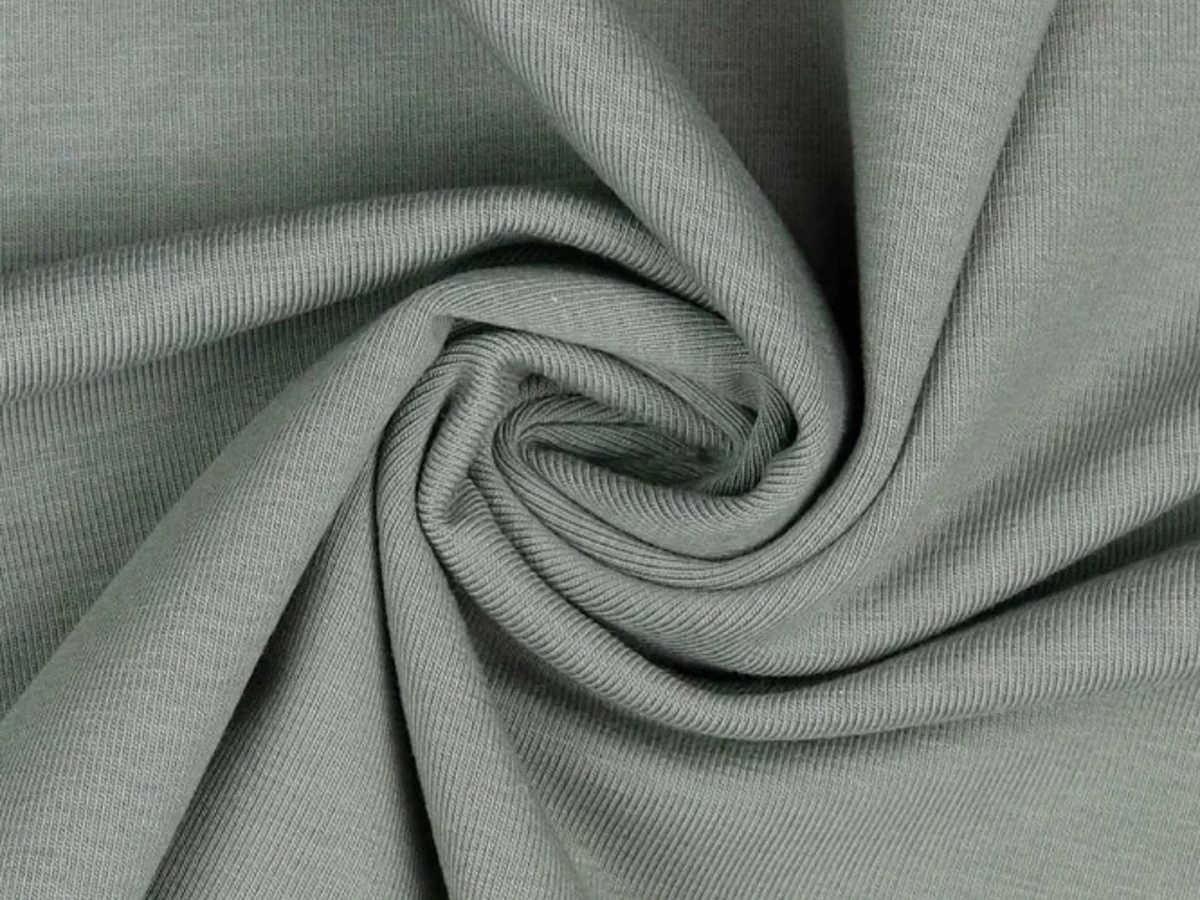
The buyer should also be clear about whether the priority is play durability, a premium structured look, softness for sensitive wearers, easy-care performance or a particular price target. One construction rarely maximizes all five.
A factory can quote and sample more accurately when reinforcement requirements are visible in the same package as the style reference, fabric information and quantity plan. Do not hide the requirement in an email paragraph that can be separated from the tech pack.
| RFQ or tech-pack field | Information to provide | Why it matters |
|---|---|---|
| Product use | Playwear, schoolwear, lounge, outer layer or occasionwear | Helps identify the relevant stress pattern |
| Marked location | Flat sketch, callout, photo reference or pattern zone | Prevents different interpretations of “reinforced” |
| Construction target | Panel, patch, bar tack, seam route, facing or open for suggestion | Gives the factory a starting point without blocking alternatives |
| Base material | Composition, construction, weight/hand-feel target, stretch and color | Determines stitch and layer compatibility |
| Appearance limits | Visible or hidden, maximum bulk, acceptable puckering, color matching | Makes sample approval more objective |
| Measurement and fit | Size range, POM chart, ease and movement intent | Prevents reinforcement from changing fit unexpectedly |
| Quantity plan | Units by style, color and size; expected repeat potential | Affects operation planning, material use and quotation |
| Care and testing | Care label direction, wash review, buyer test or lab input | Avoids unsupported durability or safety claims |
| Approval owner | Name, version date and final comment route | Keeps the approved construction traceable |
If the construction is still open, write “factory suggestion requested” and ask for the quotation to identify assumptions. A quote based on an assumed single-layer patch should not be compared directly with a quote based on a double-layer shaped panel.
Reinforcement usually changes cost through material use, sewing operations, pattern work, machine setup, trim or testing requirements. The effect depends on the style and the quantity plan; it should not be expressed as a universal percentage without a specific factory quotation.
| Cost or schedule driver | What may change | Buyer question |
|---|---|---|
| Added fabric or layer | Consumption, cutting and handling | Is the reinforcement cut from the main fabric or a separate material? |
| Added operation | Sewing time, bar tack, panel attachment or finishing | Which operation is added and where is it performed? |
| Pattern revision | New pieces, grading and sample corrections | Does the change affect every size or only the base size? |
| Special material or trim | Patch fabric, tape, thread or component | Is the material stock-based or custom-developed? |
| Sample rounds | More than one construction may need comparison | How many versions are included in the development plan? |
| Inspection or testing | Additional review or qualified-lab work | Who defines the method and who approves the result? |
For lower-volume programs, a complex reinforcement can have a larger effect because development and setup work are spread across fewer units. For a repeat program, a construction may become easier to standardize after the pattern, operation and QC points are approved. Ask the factory to separate confirmed requirements from assumptions before comparing quotes.
Review the garment on a person or appropriate form where fit and movement matter. Then inspect it inside out. A table review alone can miss restricted motion, a twisting panel, an uncomfortable seam allowance or a closure that puts load on the wrong area.
Use a written sample checklist:
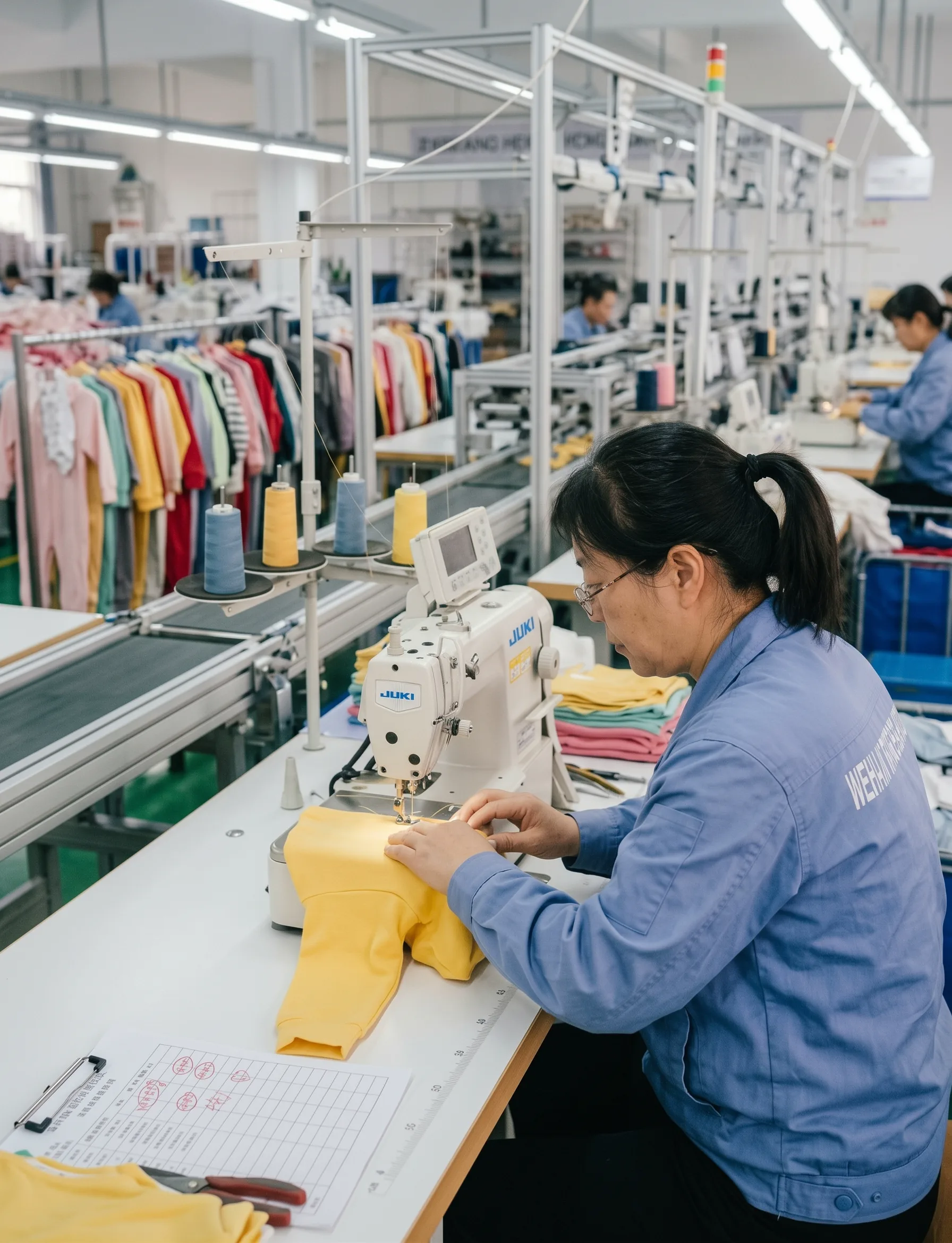
Photograph the outside and inside of each important zone. For a revision, annotate the image rather than writing only “make stronger.” This gives the patternmaker, factory and buyer a common reference.
If the product claim or buying decision depends on repeated-use performance, define a suitable review or test before bulk. The method and acceptance criteria should come from the buyer, factory quality team and, where required, a qualified laboratory or compliance adviser. Do not treat a single home wash as a universal durability test.
At minimum, compare the pre-care and post-care sample for:
Record the care conditions and the sample version. “Passed washing” is incomplete unless the garment, material, method and acceptance criteria are identified.
Bulk inspection should connect back to the approved sample and tech pack. The inspector or production team should know which details are critical and what counts as a deviation. Reinforcement is easy to miss when it is hidden inside a seam, so the checklist should include both visible and internal points.
A practical bulk-QC pass can include:
Hengcheng’s role as a manufacturer is to review construction feasibility, sample execution and production controls within the agreed scope. The buyer remains responsible for approving the commercial product brief, destination-market requirements and any product claims with qualified advisers.
The most common mistake is treating durability as a slogan instead of a specification. Other avoidable errors include:
The strongest buyer brief is not the one with the most technical words. It is the one that identifies the use case, marks the risk zone, states the acceptable result and leaves a clear approval record.
Before bulk, send one current package that connects design, production and QC:
Ask the factory to list any open assumptions. If the buyer changes the reinforcement after the pre-production sample, treat it as a controlled revision and confirm whether quotation, lead time, testing or grading must be revisited.
No. The decision depends on the product use, fabric, design, fit and buyer quality target. A marked stress-point review is more useful than applying a standard patch to every trouser.
Not automatically. A double layer may change load distribution, but the result also depends on fabric, seam construction, stitching, placement and care. Approve the actual sample.
That is a design and comfort decision. An outside panel may be visible and decorative; an internal layer may be less visible but can still create bulk or heat. Review both sides with the factory.
A bar tack is a concentrated group of stitches used at a local point. A reinforced seam may involve a different seam route, added layer, stitch configuration or attachment. They are not interchangeable instructions.
No responsible supplier should make an absolute guarantee without a defined product, use condition and evidence. Buyers should agree construction, sample approval and suitable inspection or test criteria.
It may affect development, material planning or production economics, but there is no universal MOQ rule. Ask for the effect on the specific style, quantity, colorway and material plan.
Mark the location, construction target, material, stitch or seam requirement, appearance and comfort limits, measurement reference and any agreed inspection or test method. Add a dated sample photo after approval.
Only describe what the final product actually contains and what the available evidence supports. Avoid promising a lifespan or performance level that has not been substantiated for the exact garment.
Hengcheng develops OEM and private-label kidswear, including T-shirts, hoodies, babywear and dresses. Share your reference, target fabric, size range, quantity by style and colorway, decoration and packing needs through the contact page. The team can review the manufacturing scope; market compliance and testing decisions remain with the buyer and its qualified advisers.
Related: Kidswear construction details | Kidswear quality control.
Editorial note: This buyer guide is informational. Verify product-specific factory terms, market rules and any claims with the relevant production, laboratory or compliance partner before using it for a commercial decision.