Address
JINKE Technology Industrial Park, No. 3188 ChunYuan Road, Weifang City, Shandong Province, China
Work Hours
Monday to Friday: 7AM - 7PM
Weekend: 10AM - 5PM
Address
JINKE Technology Industrial Park, No. 3188 ChunYuan Road, Weifang City, Shandong Province, China
Work Hours
Monday to Friday: 7AM - 7PM
Weekend: 10AM - 5PM
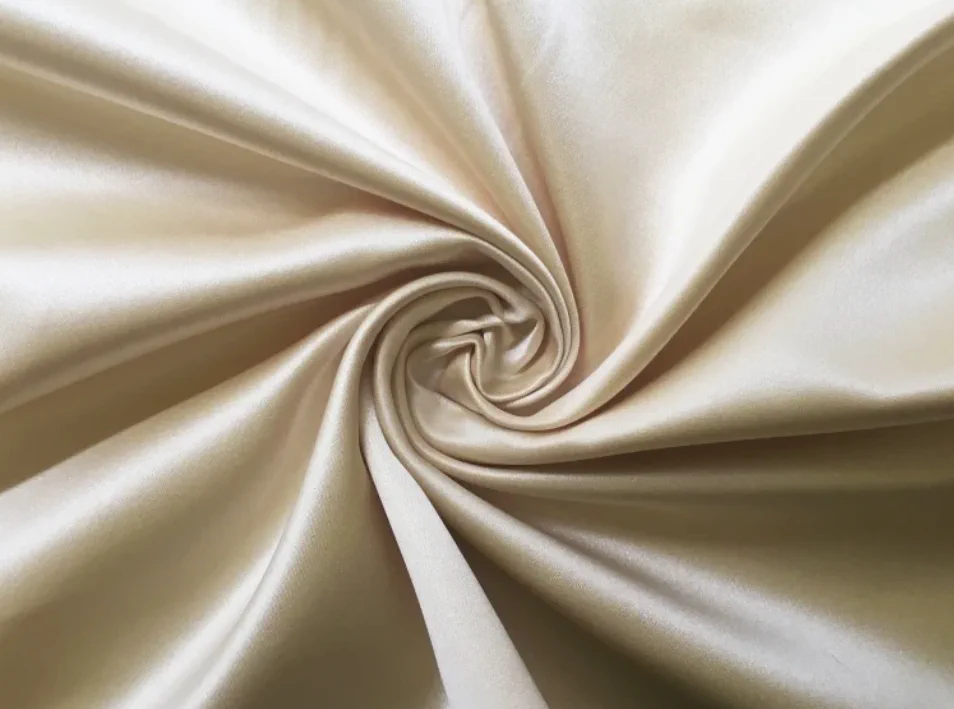
If a sleepwear brief says “satin pajamas,” the factory still needs more information before it can select the right material route. “Satin” may describe a smooth, lustrous surface or a woven construction, but it does not by itself define fiber content, stretch, opacity, care, cost or bulk-production behavior.
For a private-label program, the practical comparison is not simply woven versus knit. It is whether the finished pajama set should prioritize fluid drape and premium visual shine, or stretch, recovery and everyday comfort—and what sample-stage evidence will prove that choice. A buyer who defines those requirements early will receive a more useful quotation, a more predictable sample and a clearer bulk-production standard.
Satin-look woven pajamas are often the stronger starting route for bridal, gifting, premium visual merchandising and styles where drape, surface reflection and a polished appearance lead the product position. Knit pajamas are often the stronger starting route for relaxed sleepwear, close-to-body comfort, stretch-sensitive fits and programs where recovery and easy movement matter more than shine.
Neither route is automatically better. A light woven can feel less stable at seams; a knit can look less polished or change shape if recovery is weak. The right material depends on the silhouette, target market, color, decoration, care promise, quantity and selling price. The buyer should approve the finished garment rather than approve a material name from a message or a single photograph.
Before sampling, separate four things that are often mixed together in a short brief:
A useful RFQ therefore does not ask only for “satin fabric.” It states the desired visual effect, hand feel, stretch level, opacity, color range, care expectation and product position. The factory can then quote and sample against explicit assumptions instead of guessing what the material name means.
| Development route | Strengths a buyer may want | Risks to check before approval | Typical product direction |
|---|---|---|---|
| Satin-look woven | Fluid drape, smooth surface, polished visual presentation and clear color reflection | Seam slip, static, limited stretch, opacity, pressing marks and care sensitivity | Bridal, premium gift, fashion-led or visually polished pajama sets |
| Knit jersey | Stretch, movement comfort, softer casual hand feel and easier fit tolerance | Recovery, pilling, twisting, spirality, print definition and coverage | Everyday sleepwear, relaxed sets and comfort-led private labels |
| Knit interlock or similar stable knit | More body and coverage than a very light jersey, with a stable hand feel in many programs | Weight, warmth, drape, recovery and wash change | Structured comfort sets and premium knit programs |
| Silk or silk-blend route | Natural-fiber or luxury positioning when the specification and budget support it | Fiber verification, care, shade, seam behavior, price and availability | Premium programs requiring a separately approved cost-and-care route |
The table is a starting point, not a substitute for sampling. The same product name can behave differently at different weights, fiber blends, finishes and colorways.
Lay the fabric flat, hold it from the intended garment direction and review the finished sample on a body or dress form. A fabric can look attractive as a close-up but produce a different result once it is cut into a shirt, trouser or robe with seams and trims. Check whether the lapel, sleeve, trouser leg and hem hang as intended, and whether the surface reflects light consistently across the garment.
For premium visual sleepwear, the buyer should record the acceptable hand feel and drape in words or reference photographs. “Luxury” is too vague for a production standard; “fluid fall with a smooth, cool hand feel and no visible boardiness at the hem” gives the development team a more useful direction.
A light woven route can require more attention at shoulder seams, side seams, armholes, plackets, piping and pocket openings. Review whether the fabric shifts during sewing, whether the seam allowance remains stable and whether the finished seam opens or distorts when the garment is worn. Stitch type, seam allowance, needle choice, interfacing and pressing method may all affect the result.
The buyer does not need to prescribe every machine setting in the first inquiry. The buyer does need to identify seam appearance and stability as approval points so the factory can recommend a workable construction.
A woven pajama usually has less natural stretch than a knit unless stretch fiber or a special construction is introduced. That changes the fit plan. Confirm whether the style is intended to fit loosely, whether the waistband needs elastic or a drawcord, and whether the wearer must move comfortably while sleeping or lounging.
Do not copy knit measurements directly into a woven pattern. The finished sample should be reviewed for sitting, bending, reaching and walking, not only for a standing front photograph.
Static can become more noticeable in smooth lightweight materials, particularly in dry conditions or with certain fiber routes. Light colors also need an opacity review under realistic lighting. Check the garment rather than relying on the swatch: lining, seam allowance, print, pocket bags and the body position can all change the result.
Confirm the care direction before the brand writes a promise on its product page or care label. Review appearance after the relevant wash or care test, including shine, wrinkles, seam appearance, color and dimensional change.
For knit pajamas, stretch alone is not enough. The buyer should review how far the material extends during movement and how well it returns afterward. Weak recovery may show at the neckline, waistband, cuffs, seat and knees. It can also make a size set look inconsistent after wear or washing.
Ask the factory to identify the key stretch direction and include recovery in the sample discussion. Compare the garment after movement, not only when it is freshly pressed on a table.
A smooth knit can still pill or lose its surface appearance depending on fiber, yarn, finishing and use. Check areas with repeated friction, such as the side body, underarm, seat and inner thigh. Review whether the side seam twists, whether the trouser leg spirals and whether the neckline or waistband changes shape after the relevant test.
These are not reasons to reject every knit route. They are reasons to define the test and approval standard before bulk production. The factory should know which appearance changes are unacceptable for the brand’s positioning.
Very light knits can look different in pale colors or under bright lighting. If the program uses all-over print, check print hand feel, definition, color consistency and stretch recovery. If it uses piping, buttons, labels or lace, confirm that the trim does not create local distortion or uncomfortable pressure.
A knit pajama set may be comfort-led, but comfort is still a construction result. Neck openings, sleeve cuffs, waistband height, pocket placement and seam finishing can decide whether the fabric performs well on the finished garment.
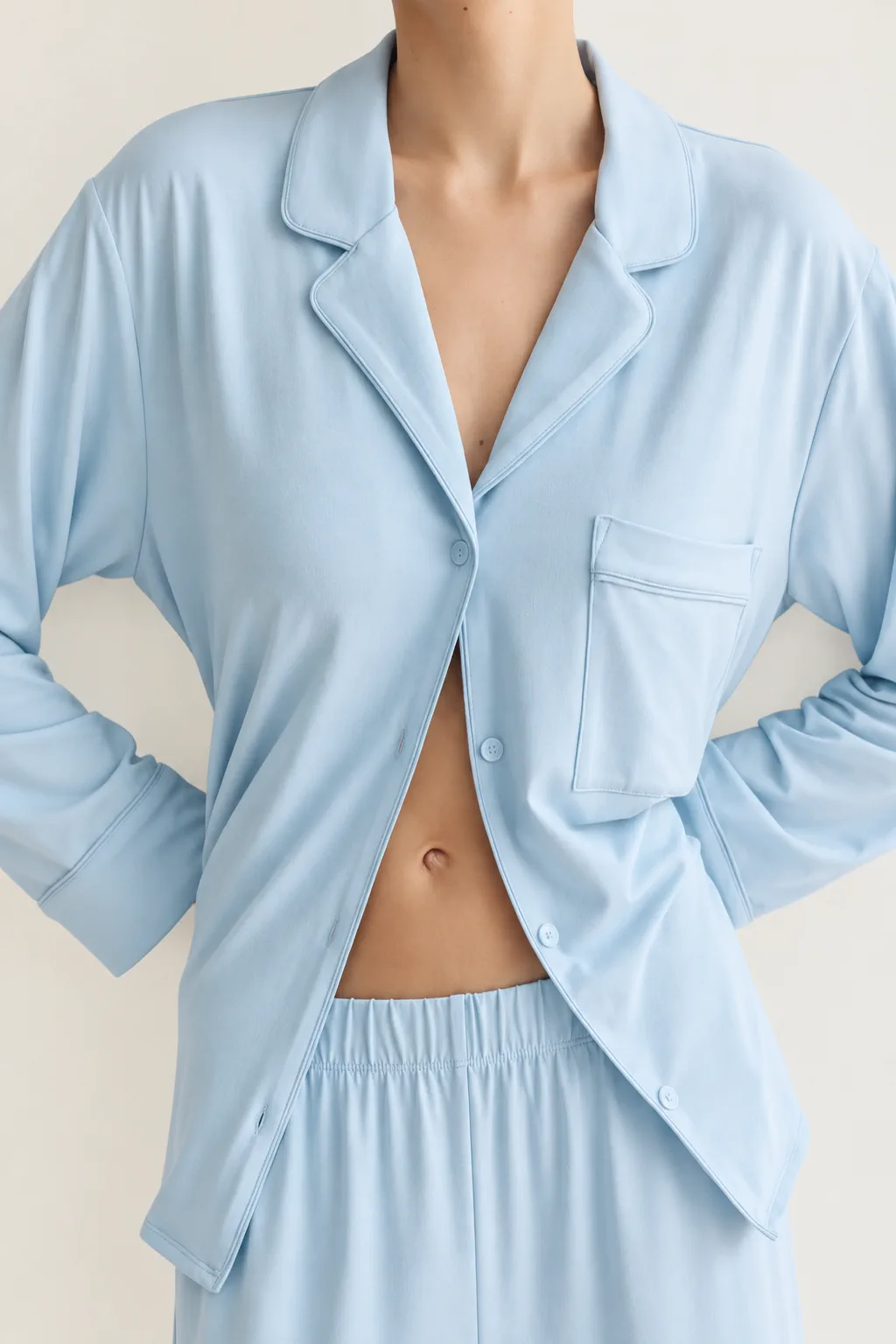
The most reliable decision comes from comparing the two routes against the same product brief. Use the following sequence before choosing a bulk route.
State whether the product is intended for bridal gifting, premium visual merchandising, everyday sleep, lounge use, hospitality or another channel. Also state the target retail position if it affects the material budget. A route that is suitable for a photo-led gift set may be wrong for a washable, high-repeat everyday program.
Record the target fiber or acceptable fiber range, construction, color, fabric weight or hand-feel reference, stretch expectation, finish, trims, size range and quantity by colorway. If the brand needs a satin look but is flexible on fiber, say so. If a fiber claim is mandatory, say that separately.
| Checkpoint | Woven questions | Knit questions | What to record |
|---|---|---|---|
| Hand feel and drape | Does the garment fall smoothly without looking rigid? | Does it feel soft without becoming limp or clingy? | Approved description and reference image |
| Fit and movement | Is there enough ease where the fabric has little stretch? | Does the garment move comfortably and return to shape? | Critical measurements and movement notes |
| Seam behavior | Do seams slip, pucker, open or show pressing marks? | Do seams twist, stretch out or create bulk? | Construction correction and tolerance |
| Opacity | Is the target color sufficiently covered in realistic light? | Does stretch reduce coverage on the body? | Colorway-specific approval |
| Surface after care | Does shine, wrinkling or shade change remain acceptable? | Do pilling, twisting or recovery changes remain acceptable? | Test method and post-test decision |
| Trims and decoration | Do piping, buttons and labels remain neat on the woven? | Do trims distort or restrict the knit? | Trim and placement approval |
The test method should match the market and product claim. If the brand will recommend machine washing, a dry swatch review is not enough. If the item is a premium gift set with delicate care, the buyer should still understand and approve the care trade-off before production.
A pale woven may raise a different opacity question from a dark woven. A printed knit may behave differently from a solid knit. Do not assume that approval of one sample automatically approves every color, print, trim and size. Keep the approved sample, fabric reference, measurement sheet and correction list together.
Material selection affects more than the fabric line in the quote. It can change pattern allowances, seam construction, lining or facing, trim application, pressing, decoration, packing and the amount of sample correction required.
For a woven route, discuss plackets, collars, piping, seam finishing, pocket bags, elastic or drawcord construction and the risk of seam movement. For a knit route, discuss neckline recovery, cuffs, waistband stability, cover-stitch or overlock requirements, print stretch and the handling of curved seams.
MOQ and lead time should remain conditional until the factory confirms the selected material, available color, quantity, decoration, trims and packing. A material that is easy to source in one color may require a different minimum or longer preparation in another. Avoid publishing a universal MOQ or lead-time promise based only on the word “satin.”
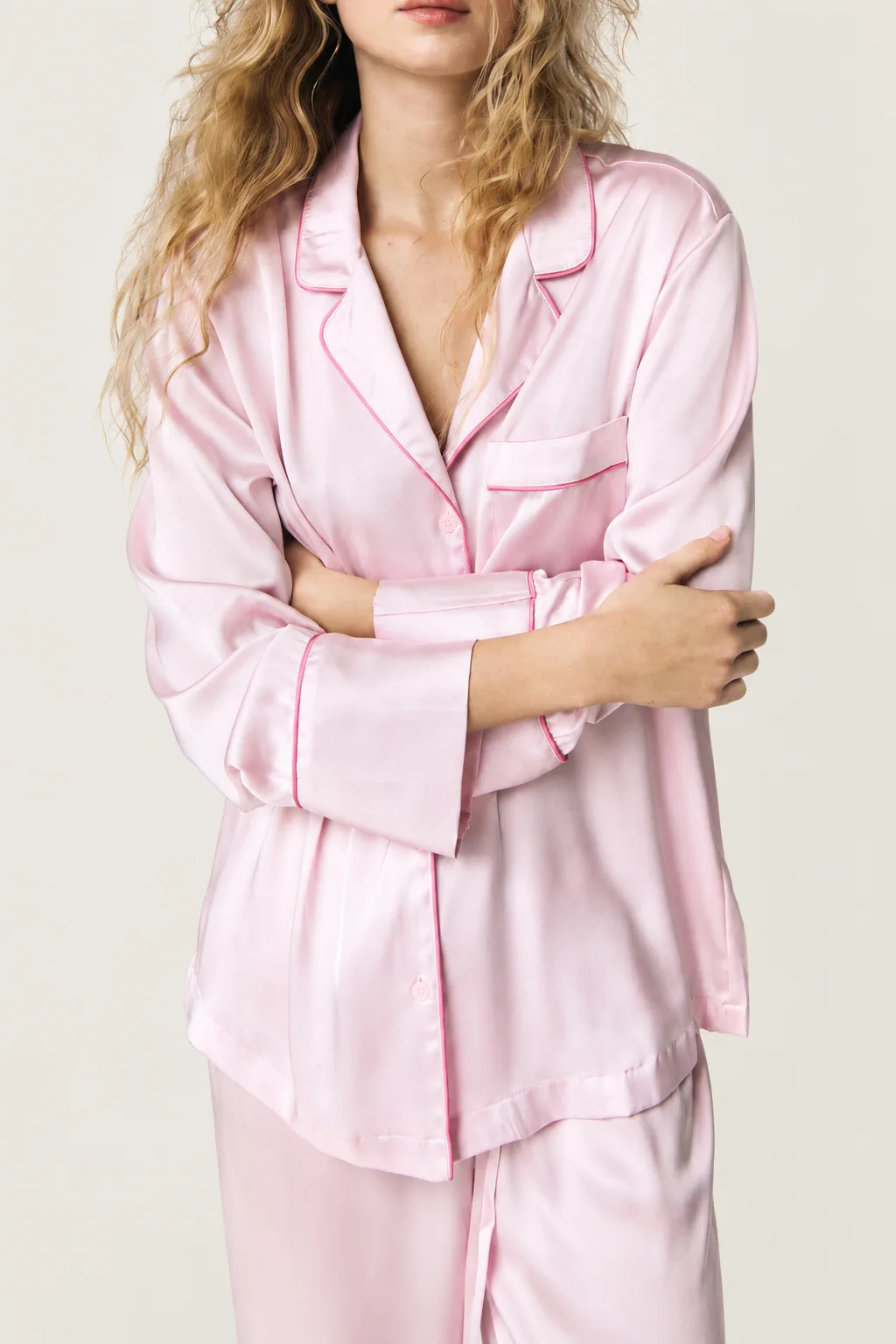
A useful inquiry lets the factory distinguish a material preference from a non-negotiable product requirement. Include:
If the brief is still exploratory, say which decisions are open. A factory can then present suitable routes without treating a temporary image reference as a locked specification.
The approved sample should become a working production reference, not a file that disappears after the quote. Before cutting, confirm the approved material, color, trims, artwork, measurements, construction and packing instructions.
During production, QC should pay attention to the risk identified at sampling. For satin-look woven pajamas, that may include shade consistency, surface marks, seam appearance, piping alignment, placket shape, loose threads and pressing marks. For knit pajamas, it may include stretch direction, measurement recovery, twisting, pilling-related surface concerns, print placement, waistband stability and seam stretch.
A final inspection cannot repair an unclear approval standard. When the buyer and factory have agreed what “acceptable drape,” “sufficient coverage” or “good recovery” means, corrections can happen earlier and bulk decisions become less subjective. Buyers can also review the apparel quality-control process when preparing the inspection points.
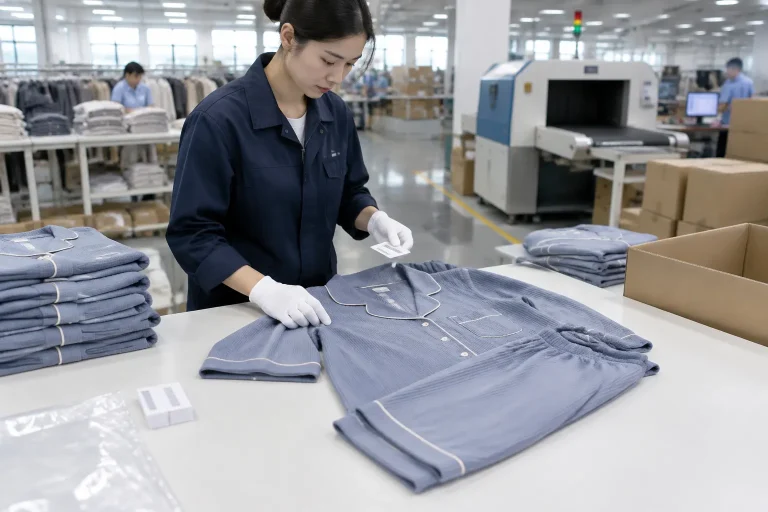
From a China OEM and private-label factory perspective, Hengcheng would first separate the visual reference from the product requirement: what should the garment look like, how should it feel and move, what care route is acceptable, and what must remain consistent in bulk production?
The team can then review the fabric and construction direction, sample requirements, measurements, trims, decoration, quantity, size range and packing. The first sample should answer the important commercial questions before the brand commits to a bulk route. Send the reference style, target market, quantity, size range and required performance through the contact page so the production fit can be reviewed before quoting.
For broader sleepwear capability, see Hengcheng’s Sleepwear & Pajama Manufacturer in China page and the sample development process.
No. In apparel briefs, satin usually describes a surface or construction effect. Fiber content, blend, finish, care and performance still need to be specified and verified for the program.
Not automatically. Comfort depends on fiber, hand feel, fit, stretch, recovery, seam placement, temperature preference and intended use. A woven may feel more fluid and polished; a knit may offer more movement comfort. The finished sample should decide whether the route fits the brand’s product promise.
No. A photo can communicate color, shine and styling direction, but it cannot reliably confirm fiber, construction, weight, stretch, opacity or care behavior. Request a fabric reference and review the finished sample.
Review hand feel, drape, seam stability, opacity, static, pressing marks, fit, trim behavior and post-care appearance. Check the target color and finished construction rather than relying only on a swatch.
Review stretch and recovery, neckline and waistband stability, pilling-related surface change, twisting, coverage, print durability if relevant, seam stretch and trim compatibility after the appropriate wear or wash test.
It can. The effect depends on fiber, color, material availability, style complexity, decoration, trims, packing and order quantity. The factory should confirm commercial terms after the development assumptions are clear.
Define the preferred route before sampling, verify it on the actual sample, and confirm the approved material and construction before pre-production. Carry the same reference into bulk QC.
Hengcheng can review the reference style, fabric and construction direction, quantity, size range, trims, decoration, packing and the performance or quality risk that needs to be controlled. A clearer brief supports a more useful first review and quotation.
This article uses factory-side product-development logic, buyer questions and downstream product-risk signals as the editorial framework. It is written for apparel brands, designers, sourcing teams and private-label buyers rather than retail shoppers.
The purpose of this comparison is not to declare one material route universally superior. It is to help a buyer turn “satin pajamas” into a defined product brief, an evidence-based sample decision and a production standard that the factory can actually follow.