Address
JINKE Technology Industrial Park, No. 3188 ChunYuan Road, Weifang City, Shandong Province, China
Work Hours
Monday to Friday: 7AM - 7PM
Weekend: 10AM - 5PM
Address
JINKE Technology Industrial Park, No. 3188 ChunYuan Road, Weifang City, Shandong Province, China
Work Hours
Monday to Friday: 7AM - 7PM
Weekend: 10AM - 5PM
Heat-transfer labels, labels printed directly on fabric, and tear-away labels can all reduce the feel or visibility of a conventional neck label, but they are not interchangeable. Compare the actual garment, label location, artwork, required information, fabric and care performance. A removable brand label does not automatically make required care or product information removable. Approve the construction on a sample and confirm destination-market wording with the responsible buyer or compliance adviser.
I treat “tag-free” as a design direction, not a promise that every wearer will find a garment irritation-free. The useful question is which information must stay with the garment, which branding can be changed or removed, and what method works on the chosen fabric after the agreed care process.
“Tag-free” usually describes an effort to avoid a projecting sewn label in a particular area, often at the neck. It does not identify one production method, guarantee comfort for every child, or remove the need to provide product information where required.
A label plan may include multiple information and branding elements. Separate them before asking for a quote:
Do not assume these elements can all use the same material or location. Ask the buyer’s compliance contact to confirm which information must remain attached and which content has been approved for the target market.
The main choices differ in attachment, feel, appearance, information capacity and development needs. Their performance depends on the specific materials and construction, so any comparison should be made on samples of the intended garment rather than on method names alone.
| Method | How it is used | Points to evaluate on the sample |
|---|---|---|
| Heat-transfer label | Printed transfer applied to the garment surface using a specified process | Edge feel, stretch, adhesion, color, legibility, placement and performance after the agreed care test |
| Direct garment print | Information or artwork printed directly onto a garment area | Fabric compatibility, ink hand, print definition, placement, curing/process assumptions and appearance after care |
| Tear-away label | Sewn-in label designed to be removed along a seam or tear line | Removal method, seam disruption, remaining edge, instructions and which information would be removed |
| Woven or satin label | A separately made label attached into a seam or surface | Bulk, edge finish, placement, attachment, comfort and whether it is intended to remain or be removable |
| Printed fabric label | A separate fabric label printed before being sewn into the garment | Material, fold/edge construction, print clarity, attachment and hand feel |
Terms vary between suppliers. Confirm the actual substrate, print or transfer process, dimensions, attachment and finishing rather than relying on the label-method name alone.
A heat transfer can create a low-profile brand or information mark without a conventional woven neck label. It is often considered for jersey tops, sleepwear or other garments where a sewn label at the neck is not desired. The result depends on the transfer material, artwork, fabric surface, application settings and placement.
A transfer that looks smooth on one fabric may feel different on a rib, brushed fleece or textured knit. Stretch, dye, surface treatment and garment construction can also affect how well the transfer sits. Ask the factory to apply the intended transfer to the actual approved material, not only to a generic swatch.
On the sample, check:
Do not describe a transfer as durable, skin-safe or irritation-free without evidence appropriate to the claim and product. A sample review is useful but is not automatically a standardized test.
A direct print places the label information on the garment itself, which can avoid adding a separate sewn piece. It may suit a clean interior or a simple brand/size mark, but the print still has to work with the fabric, location and information layout.
The buyer should provide final artwork and specify whether the factory is evaluating a print on the garment or on a separate label tape. Those are different constructions. For garment printing, ask how the process interacts with the fabric and when the item should be reviewed after production. Do not presume that a print suitable for a smooth cotton jersey will behave identically on a brushed or textured surface.
Review these details before bulk approval:
A tear-away label is physically sewn into the garment but designed so a customer can remove it. The removal line, seam construction and label placement matter. Poorly specified removal can leave a rough edge, open a seam or remove information the buyer intended to remain available.
Before choosing one, make a simple information map: list every item on the label, identify whether it must remain with the garment, and decide which component is removable. If care, fiber, origin or traceability content is involved, have the responsible adviser confirm the destination-market requirements before selecting a tear-away format.
On the physical sample, the buyer should verify:
Do not treat “tear-away” as equivalent to “all information can be removed.” Keep the approved content and construction linked in the tech pack.
Start with the information and product requirements, then compare the methods on the actual garment. There is no universal best choice: a simple brand mark, a multi-line care label and a removable brand identity element may need different solutions.
| Buyer priority | Possible starting point | What must still be checked |
|---|---|---|
| Low-profile brand or size mark | Heat transfer or direct print | Fabric compatibility, edge/hand feel, artwork clarity and care performance |
| Several lines of information | Separate printed or woven label, or another approved layout | Information legibility, placement, bulk and buyer-approved content |
| Removable brand identity | Tear-away or a separate removable brand component | What remains attached, seam integrity and removal result |
| Textured or brushed fabric | Compare physical samples of more than one method | Surface interaction, adhesion/print quality, feel and post-care appearance |
| Design-led outer-facing branding | Transfer, print or sewn label depending on the garment | Appearance, attachment, production repeatability and approved artwork |
| Product with market-specific labeling needs | Method selected after content and placement review | Qualified confirmation of required wording, language, permanence and location |
Ask the factory to quote against the same art, fabric, size range, color plan and order quantity. If a supplier proposes an alternative, request a sample or clear specification and identify any difference in cost, timing, appearance or information capacity.
A clear handoff reduces the chance that a factory assumes a method or content that the brand did not approve. Keep label artwork and instructions in the controlled tech-pack version, and distinguish confirmed requirements from open decisions.
| Field | What to provide | Why it matters |
|---|---|---|
| Label purpose | Brand, size, care/content, traceability or removable element | Prevents different information needs being combined by assumption |
| Method | Heat transfer, direct print, tear-away, woven, printed tape or open for factory recommendation | Defines the construction under review |
| Artwork and copy | Final vector/artwork file and buyer-approved text | Avoids retyping, outdated logos or unapproved wording |
| Location and size | Diagram or measurement from a named seam/edge | Makes placement repeatable across sizes and colors |
| Substrate/material | Approved garment fabric and label/transfer material if known | Enables relevant sample evaluation |
| Color and finish | Color reference, contrast, finish and any design constraints | Supports review of legibility and visual consistency |
| Removability | Which component is removable and what must remain | Protects information and seam construction decisions |
| Care review | Agreed care instructions, review point and acceptance criteria | Creates a consistent sample-to-bulk check |
| Version and approver | Date, style code, file version and approval owner | Keeps sample comments and bulk instructions traceable |
If the brand has not approved the copy or method, mark it as provisional. Do not let an indicative quote or a development sample silently become approval for production.
Check the label as part of the full garment sample. A small print can affect appearance or hand feel, and a sewn label can interact with the seam or neck binding. Review it alongside the intended fabric, construction, size and care direction.
Use a short review record:
When a label fails review, state the location and issue precisely. “Feels bad” is difficult to act on; “the lower-right transfer edge lifts after the agreed wash cycle on the approved rib fabric” gives the development team a testable observation, provided that is what was observed.
There is no reliable single surcharge or production-time estimate for a label method without a project specification. Artwork complexity, color count, material choice, setup, sourcing route, garment quantity, placement and the number of sample rounds may all affect the quote.
Ask the factory to separate the assumptions:
Compare quotes only when they cover the same content, method, artwork, material, placement and order assumptions. A lower price may reflect a different substrate or excluded setup, so ask for those differences in writing.
A useful RFQ question is: “Please confirm the proposed label method and material, what information it will carry, any separate component minimum or setup, and what sample/care review you recommend for this fabric.”
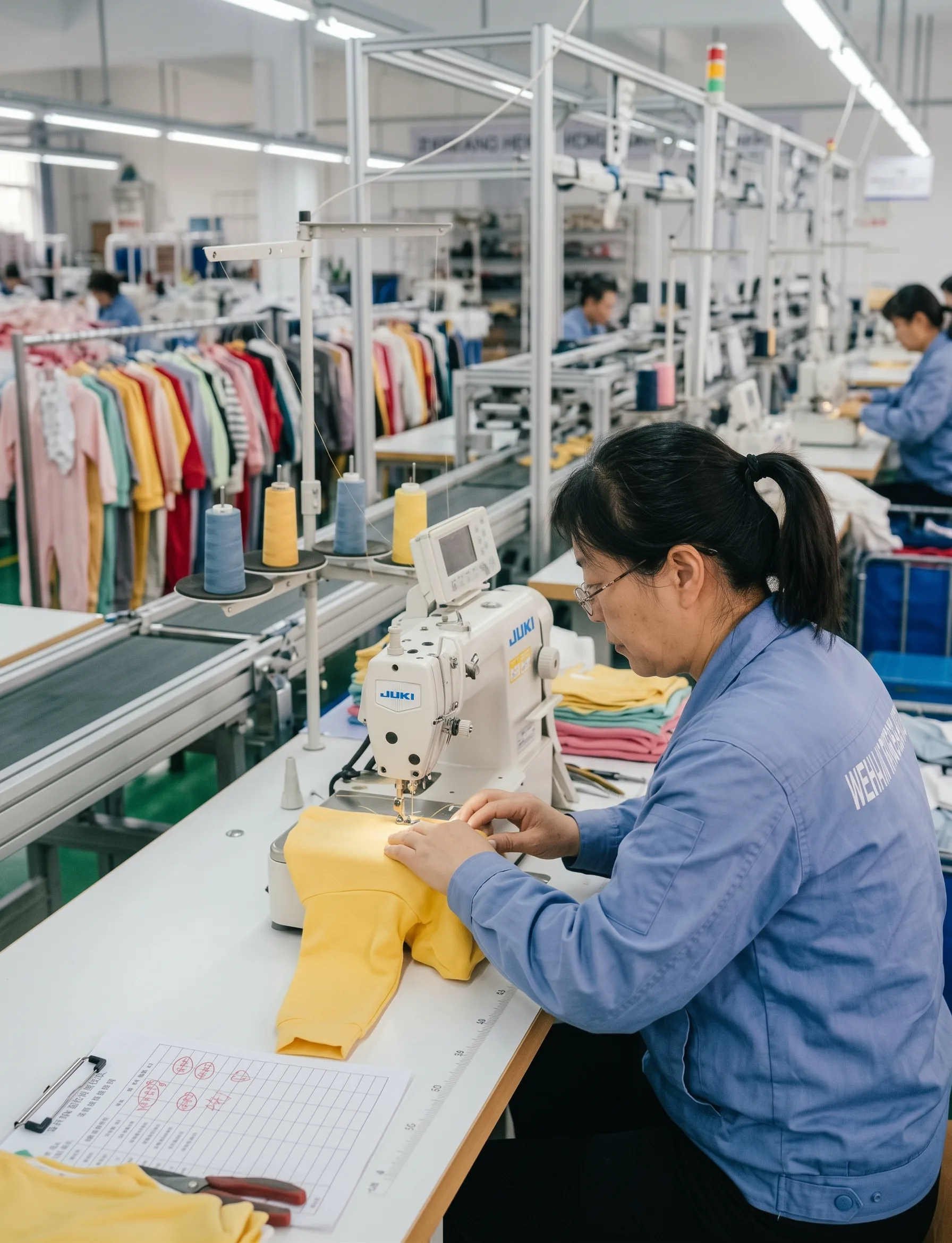
For an OEM or private-label inquiry, the factory needs the garment type, intended fabric, artwork, label location, size/color plan and target order quantity. Hengcheng develops kidswear such as T-shirts, hoodies, babywear and dresses; the specific label route and production terms should be confirmed for each project rather than assumed from a general capability statement.
A buyer can send the current tech pack or reference, identify the label information that is approved, and mark unresolved wording or testing questions. The factory can review placement and manufacturing feasibility. The buyer and its qualified advisers remain responsible for confirming market-specific content and substantiating consumer-facing claims.
See the Hengcheng kidswear manufacturing and product details and the kidswear quality-control section when preparing the brief.
There is no universal best method. Choose based on information needs, fabric, placement, feel, appearance, care performance and the buyer’s destination-market requirements, then approve it on a representative sample.
Not always. The result depends on the transfer material, design, placement, fabric and application. Compare the actual garment samples and avoid claiming that a method is irritation-free for every wearer.
It depends on the label and seam construction. Check whether removal leaves an edge or affects the seam, and confirm that required information remains available as approved.
Do not assume so. Have the buyer or qualified compliance adviser confirm which information must be provided and how it must be attached for each destination market.
Yes. Include the current artwork and copy, method, dimensions, location, color, version and approval status so the sample and bulk instructions can be compared.
Agree an appropriate care review or test for the actual garment and method. Record the conditions and acceptance criteria with the responsible product or quality team; do not imply an informal check is a certified test.
The factory can help manufacture and place buyer-approved artwork. The buyer should confirm market-specific content with the responsible compliance adviser or other qualified source.
Send the garment reference or tech pack, fabric direction, label method if known, approved copy and artwork, placement, size/color plan, order quantity and any care-review requirement. Mark open items clearly.