Address
JINKE Technology Industrial Park, No. 3188 ChunYuan Road, Weifang City, Shandong Province, China
Work Hours
Monday to Friday: 7AM - 7PM
Weekend: 10AM - 5PM
Address
JINKE Technology Industrial Park, No. 3188 ChunYuan Road, Weifang City, Shandong Province, China
Work Hours
Monday to Friday: 7AM - 7PM
Weekend: 10AM - 5PM

Comparing clothing manufacturers in China becomes dangerous when buyers treat price as the main decision rule. A low first quote can look attractive, but it rarely tells you how the factory handles workmanship, sample revisions, quality control discipline, or communication under pressure.
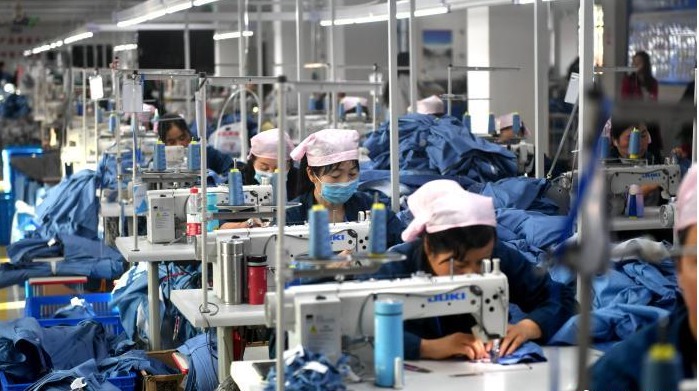
In practice, experienced buyers compare factories by the customer standards that shaped them, the number of years they have survived, the brands they have served, and the quality of the sample they put on the table. Those signals usually tell you far more than a quotation sheet.
That approach also aligns better with how higher-trust supplier evaluation is normally done. Quality-management frameworks such as ISO 9001 emphasize documented processes, customer focus, continual improvement, and repeatability rather than one-off low pricing alone [1]. In the garment sector, due-diligence guidance from OECD also pushes buyers to look beyond commercial promises and examine how suppliers actually operate [2].
Many clothing manufacturers can produce a competitive-looking quotation before the real technical details are fully clear. That does not mean the final cooperation risk is the same.
A cheaper quote may hide weaker workmanship control, looser tolerance standards, slower problem solving, or a factory that says yes too early and figures things out later. For apparel buyers, those hidden costs often appear during sample development, bulk production, rework, claims, or shipment delays.
That is why serious comparison should start with operating signals, not just unit price. From a buyer’s perspective, the question is not only “Who is cheaper today?” but “Who is more likely to deliver consistently when the project becomes more specific and more demanding?”
One of the fastest ways to evaluate a clothing manufacturer is to ask where its main customers are based. This question sounds simple, but it often reveals how the factory has been trained.
If a factory mainly works with Japanese clients, the quality bar is often higher. In real export manufacturing, Japanese buyers are widely known for being strict about stitching cleanliness, workmanship consistency, tolerance control, finishing details, and inspection discipline. In some cases, even a small loose thread can trigger rework. That does not come from theory. It comes from how those customers buy and approve products in practice.
That kind of customer base usually forces a factory to become more detail-oriented. It does not automatically mean the factory is right for every project, but it is a strong sign that the internal quality mindset may be more disciplined.
At Hengcheng, this is one reason we value our experience serving Japanese, European, and American brand clients. Different export markets train factories differently, and the most demanding customers often leave the strongest process habits behind.
A factory that has stayed in business for ten or twenty years has already passed tests that a newer supplier has not. Garment manufacturing is not an easy business to survive in for that long.
To last, a company usually needs to keep customers, manage delivery pressure, solve production problems, and stay commercially stable across different market cycles. That does not guarantee perfect performance, but it often tells buyers that the business has more real operating substance.

When buyers compare suppliers, years in business should not be treated as a vanity number. It should be treated as evidence that the factory has had to deliver under real pressure for a long time.
Longer operating history also tends to correlate with more stable internal routines: quoting discipline, sample review habits, escalation paths, and customer follow-up ownership. Those are exactly the things buyers feel later when a project becomes complicated.
Another useful signal is whether the manufacturer has produced for established brands or demanding retail customers before.
This does not mean buyers should only chase factories with famous logos in their presentation. The real value is what that experience usually implies: clearer approval processes, stricter quality expectations, more disciplined documentation, and more mature execution around packaging, inspections, and delivery.
If a factory has supported major brands in the past, it often means the team already understands what a tighter production standard feels like. That can make communication easier for buyers who want predictable execution instead of vague promises.
Still, this point should be interpreted carefully. A factory that once worked with big brands is not automatically the best fit for every smaller buyer. The smarter question is whether that experience has translated into stable process control today.
Sample quality is one of the most honest tests of a factory.
A sales conversation can sound polished. A quotation can look efficient. But the sample shows whether the manufacturer can actually translate instructions into workmanship.
When reviewing a sample, buyers should look closely at:
A good sample does more than look acceptable. It shows that the factory can understand requirements, manage details, and turn comments into action. This is one reason supplier evaluation should stay evidence-based. ISO 9001 places strong emphasis on process consistency, corrective action, and controlled quality systems rather than informal promises [1].
If you want to go deeper into inspection logic, our guide on quality control in China apparel factories breaks down the checkpoints buyers should watch.
Many sourcing problems begin long before production. They start when the factory cannot clarify requirements clearly, does not track comments well, or answers detailed questions in a vague way.
A reliable clothing manufacturer should make the project feel more structured as you move forward. Questions should become clearer, not more confusing. Responsibilities should become more visible, not less defined.
Buyers should notice whether the factory can explain:
If those answers stay fuzzy, the problem is usually not just communication style. It is often a sign that the internal process itself is not mature enough.
In other words, buyers should evaluate whether the supplier has a real operating system. Guidance for garment and footwear supply chains increasingly emphasizes process visibility, risk identification, and documented decision-making rather than surface-level reassurance alone [2].
Not every factory is strong in every product category. Some are much better at knitwear, casualwear, or kidswear. Others may be more comfortable with structured fashion, outerwear, or technical garments.
That is why buyers should ask what the factory already makes well, not just whether it is willing to take the order. A manufacturer can be honest, capable, and still be the wrong fit for your product type.
This is also why sample quality should be judged in context. A decent-looking sample from a factory outside its core category may still be harder to scale consistently in bulk.
Before choosing a supplier, ask yourself these questions:

This kind of checklist usually produces better sourcing decisions than comparing quotations in isolation.
When buyers compare clothing manufacturers in China, price should be part of the discussion, but it should not lead the whole decision.
A factory’s customer base, years in operation, brand-servicing experience, and sample quality often tell you more about future performance than a low first quote ever will. The goal is not to find the cheapest supplier on paper. It is to find the manufacturer that can deliver consistent quality with fewer surprises.
If you are still building your shortlist, you may also want to review our garment manufacturing FAQ page for common buyer questions, or contact Hengcheng if you want to discuss your product, sample plan, or production requirements.