Address
JINKE Technology Industrial Park, No. 3188 ChunYuan Road, Weifang City, Shandong Province, China
Work Hours
Monday to Friday: 7AM - 7PM
Weekend: 10AM - 5PM
Address
JINKE Technology Industrial Park, No. 3188 ChunYuan Road, Weifang City, Shandong Province, China
Work Hours
Monday to Friday: 7AM - 7PM
Weekend: 10AM - 5PM

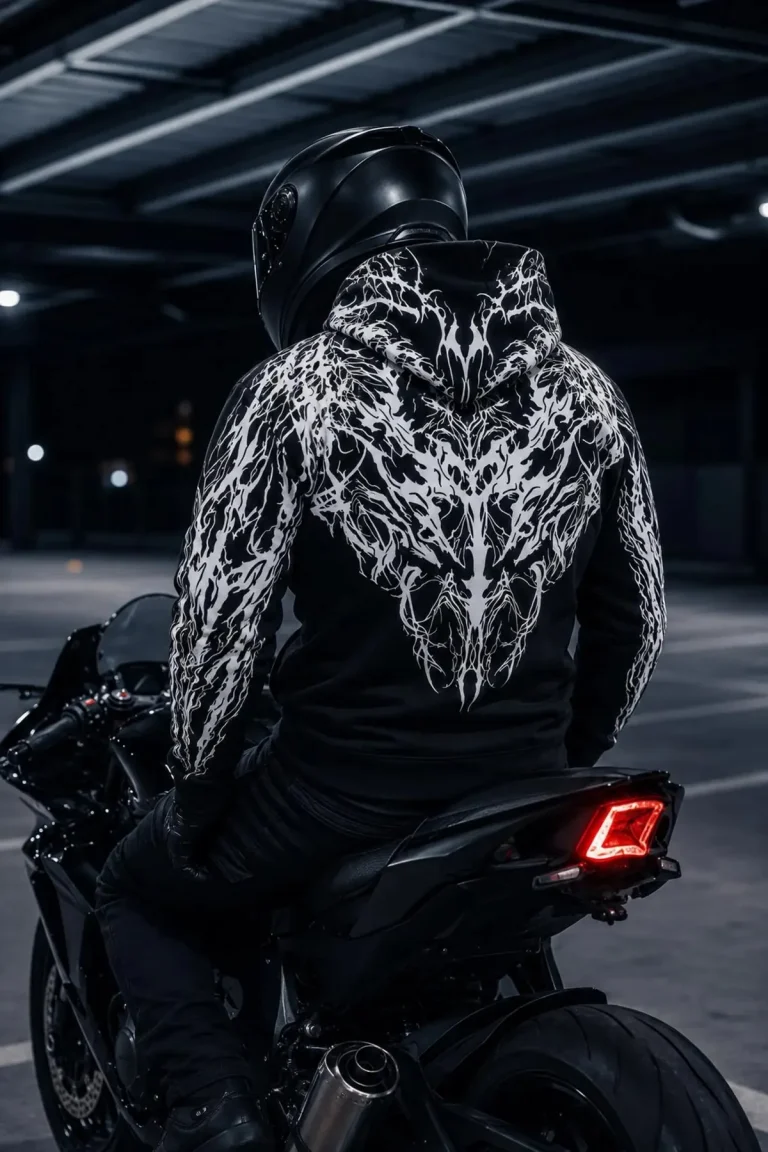
Many buyers ask for a quote too early. They send one reference image, a rough idea, or a screenshot from the internet, then expect the factory to give a reliable price immediately. That usually creates confusion from the start.
A garment factory cannot give a truly accurate quotation based on a model photo alone. If the information is incomplete, the first quote may only be a rough estimate, and later price increases or misunderstandings become much more likely.
The key point is simple: quotation quality depends on information quality. If you only send a nice-looking model photo from the internet, you are not really giving the factory enough to quote a real product. A serious factory needs enough technical and commercial detail to judge fabric, construction, trim cost, labor complexity, and production scale. Otherwise, even if they do send you a number, that number may not be rigorous enough to support a real production decision.
A model photo may communicate style direction, but it does not define the product clearly enough for costing.
A factory cannot quote accurately from a model image alone because the photo does not show the actual fabric specification, construction details, workmanship requirements, size standards, print files, or order quantity that will determine the real cost.
This is where many buyers create risk for themselves without realizing it. A reference image can be useful as inspiration, but it is not a technical document. The factory still needs to understand what the garment is really made of and how it is supposed to be produced.
If you only send a model image and ask, “How much?”, you are asking the factory to guess too many things at once. Some factories will still give you a number, but that number may only be a loose early estimate. If you later add more details, the quote can easily change. That is why quotation preparation should be treated as a serious first step, not a casual message.
| Missing information | Why it matters for quotation |
|---|---|
| Fabric composition and weight | Directly affects material cost |
| Color requirement | Can change sourcing and dyeing cost |
| Construction details | Changes labor time and difficulty |
| Print or embroidery requirements | Adds setup and execution cost |
| Size chart and fit direction | Affects pattern and production planning |
| Order quantity | Heavily influences unit cost |
The goal is not to send perfect documents. The goal is to give the factory enough clarity to quote the real product instead of guessing.
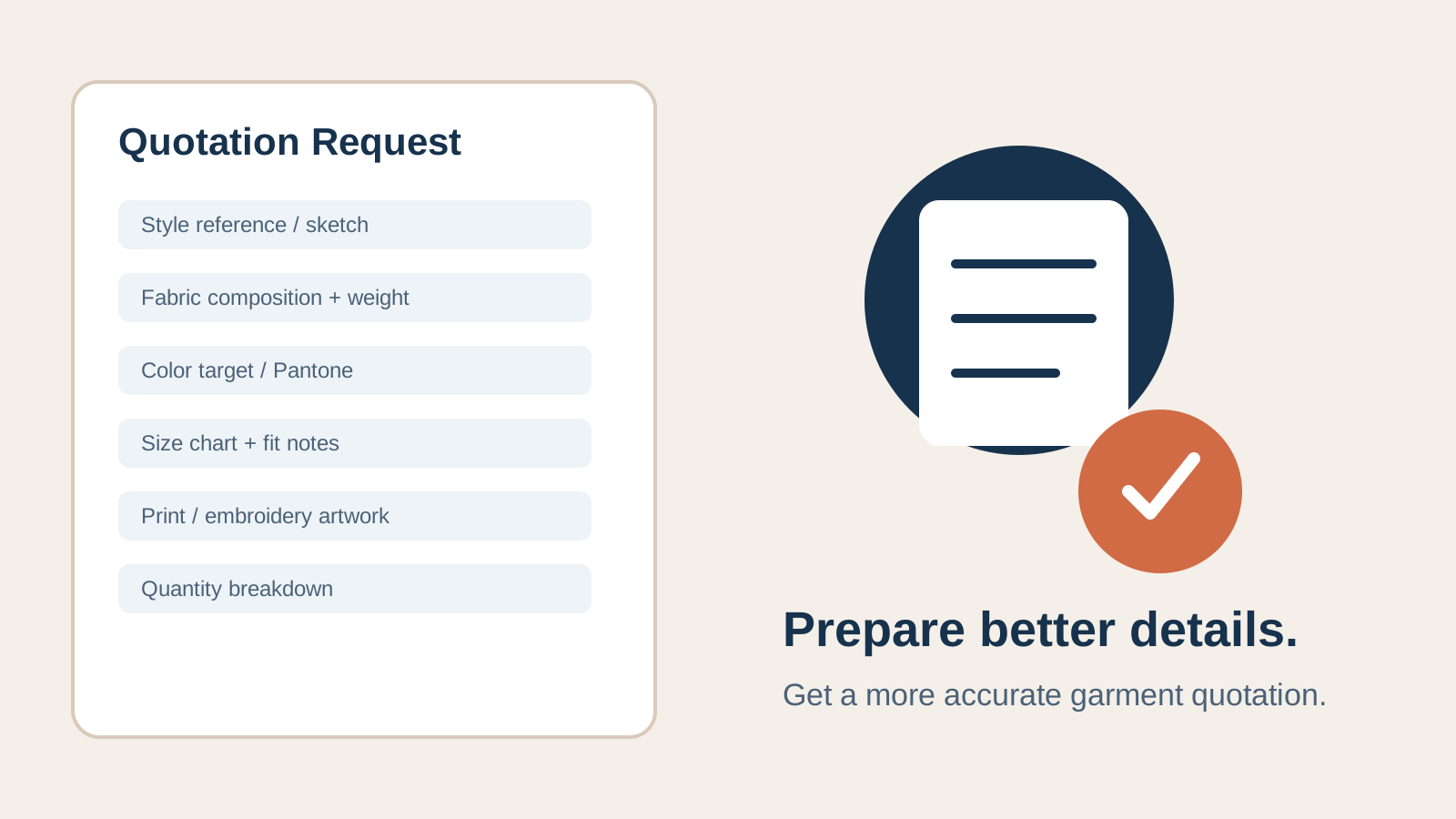
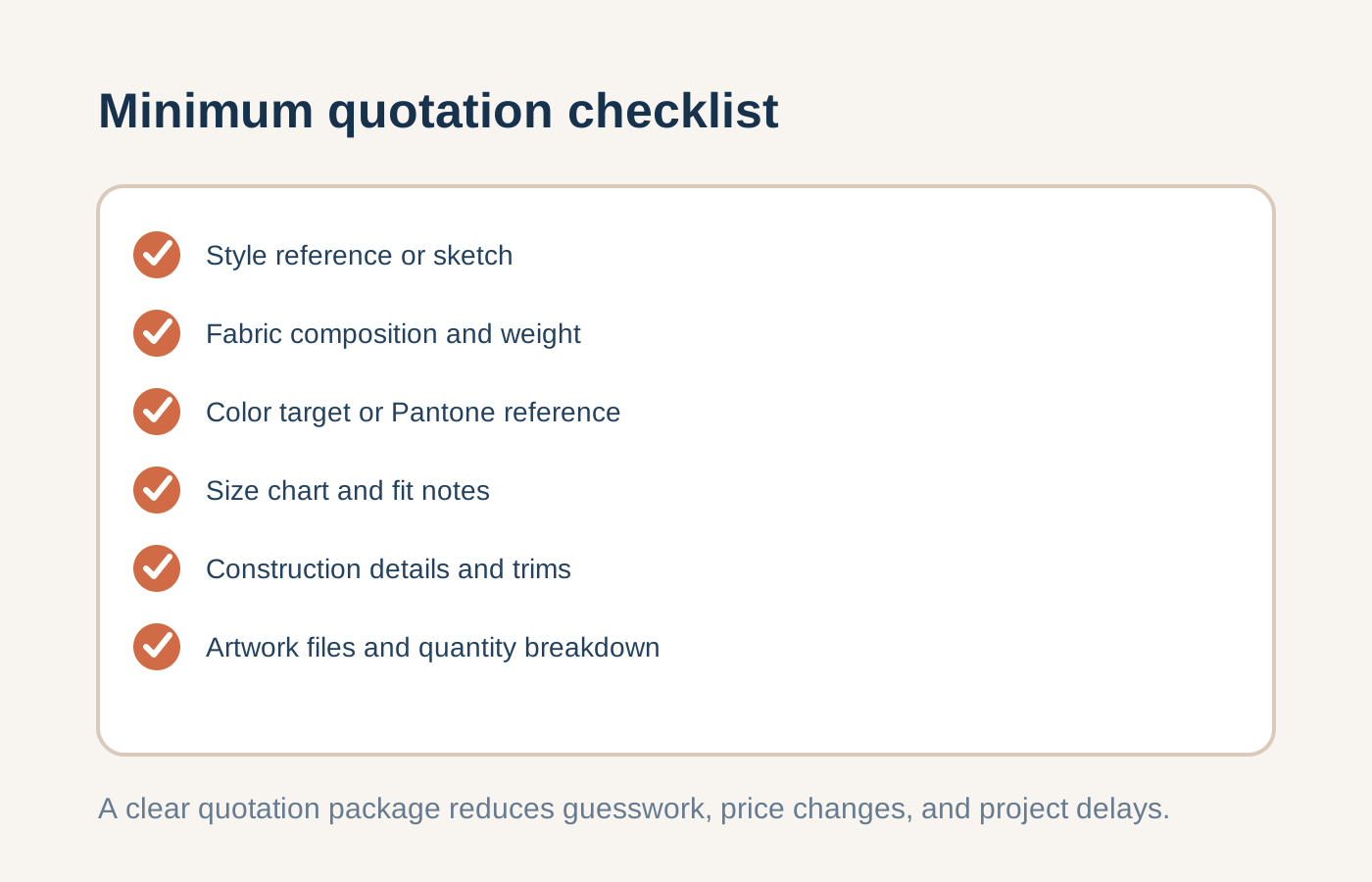
Before asking for a quotation, you should prepare a design pack or at least a practical information set covering fabric composition, color requirements, fit and style details, construction details, size chart, decoration requirements, artwork files, and expected quantity.
In practice, the more complete the information is, the more useful the quotation becomes. This does not mean every small point must be locked before the first conversation. It means the factory needs a working base.
If you send this information early, the factory can quote with more confidence. If you only send a style photo, you may get a price that looks convenient at first but becomes unstable later.
| Item | What to provide |
|---|---|
| Style reference | Product image, sketch, or reference sample |
| Fabric requirement | Composition, weight, and hand feel target |
| Color target | Pantone, swatch, or clear reference |
| Size chart | Measurements by size if available |
| Construction notes | Stitching, finishing, wash, trims |
| Decoration details | Print, embroidery, patch, label |
| Artwork file | High-resolution production-ready file |
| Quantity | Estimated order quantity and breakdown |
Many buyers hear the term “tech pack” and assume it has to be extremely formal. In reality, even a simpler design pack can already improve quotation quality a lot.
A practical design pack should help the factory understand the intended garment clearly, including fabric, measurements, construction, labeling, artwork, and any special comments that may affect price or feasibility.
A design pack does not have to look perfect. What matters most is whether it reduces factory guessing. A useful design pack can include:
The point is not to impress the factory with formatting. The point is to make sure pricing is based on the product you actually want, not on assumptions. Even a lighter version of a tech pack is much better than one inspiration photo with a message saying, “Please quote.”
| Section | Purpose |
|---|---|
| Product overview | Defines the style clearly |
| Fabric and color | Supports material costing |
| Measurements | Supports pattern and fit planning |
| Construction notes | Supports labor costing |
| Decoration/artwork | Supports print/embroidery costing |
| Quantity plan | Supports price logic and MOQ discussion |
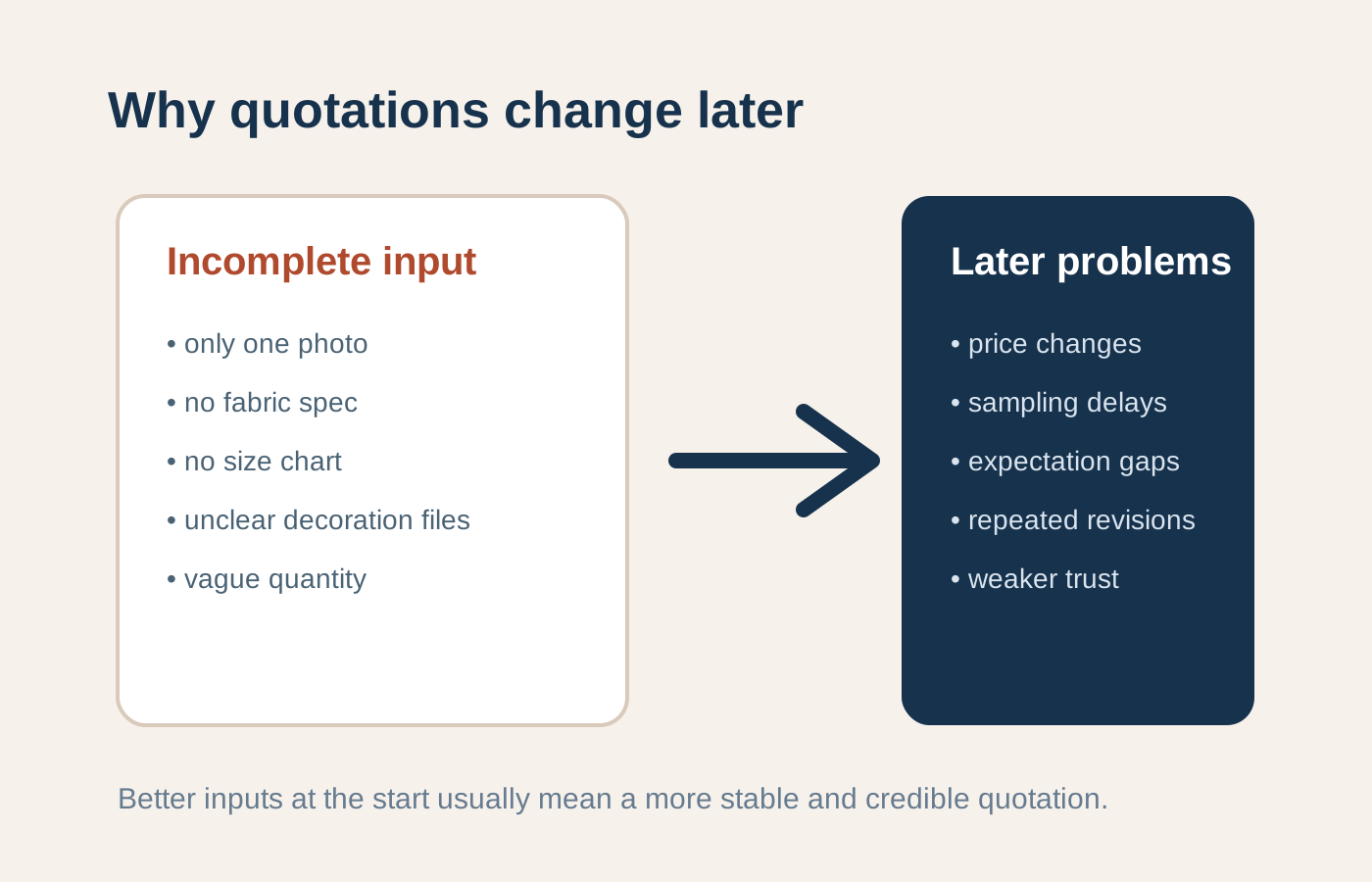
Many price increases do not happen because the factory is dishonest from the beginning. They often happen because the original quote was based on incomplete information.
Quotations often change later because key details were not confirmed at the beginning, especially fabric, workmanship, artwork, size range, packaging, or production quantity.
This is exactly why casual early quoting creates risk. If the factory quotes too early, the first number may create false confidence. Later, when more details appear, the quote becomes more expensive and the buyer feels the factory is “raising the price.” Sometimes that complaint is fair. Sometimes it is really an information problem from the start.
Common reasons later quotation changes happen include:
That is why a more detailed first quotation process actually protects both sides. It reduces friction later and makes the cooperation more professional.
| Cause | Typical result |
|---|---|
| Fabric upgraded | Material cost increases |
| Decoration becomes more complex | Setup and labor cost rise |
| Quantity falls | Unit cost increases |
| Construction gets refined | Sewing cost increases |
| Packaging gets customized | Extra packaging cost appears |
At Hengcheng Garment, we often see buyers ask for pricing with only a reference photo and no supporting production details. In that situation, any quotation can only be preliminary. For projects that are seriously moving toward sampling or bulk production, a clearer design pack helps us review fabric, construction, artwork, and quantity more accurately from the beginning.
Factories usually quote better when the request is clear, organized, and commercially realistic.
If you want a faster and more accurate quotation, send one organized information package, clearly mark confirmed points versus open questions, and state the expected quantity and project stage honestly.
The cleaner the handoff is, the easier it is for the factory to respond seriously.
A quotation request should not feel like a random chat message. It should feel like the beginning of a real project. When you do that, you usually get better numbers and better questions back from the factory.
A factory can give you a rough estimate from one product image, but it usually cannot provide a reliable production quotation without more technical details.
The factory usually needs a clear product information package covering fabric, measurements, construction, decoration, artwork, and quantity.
No. A full tech pack is ideal, but even a simpler design pack with key production details is much better than sending only a reference image.
This often happens because the first quotation was based on incomplete assumptions, and later confirmed details changed the real production cost.
That is normal. You should provide the confirmed information first, clearly mark open questions, and ask the factory which missing points matter most for quotation.
Yes, but you should give the factory a realistic estimated quantity range. Without that, the quotation may only be a rough reference rather than a stable price.
If you want a quotation that is serious, stable, and useful for decision-making, you need to prepare more than a nice-looking product photo. The better you define fabric, fit, construction, decoration, and quantity at the beginning, the more accurate the quotation becomes and the less likely you are to face confusion or price changes later.
Looking for a reliable partner to bring your designs to life? Learn how our Private Label Clothing Manufacturing in China services can help you scale