Address
JINKE Technology Industrial Park, No. 3188 ChunYuan Road, Weifang City, Shandong Province, China
Work Hours
Monday to Friday: 7AM - 7PM
Weekend: 10AM - 5PM
Address
JINKE Technology Industrial Park, No. 3188 ChunYuan Road, Weifang City, Shandong Province, China
Work Hours
Monday to Friday: 7AM - 7PM
Weekend: 10AM - 5PM
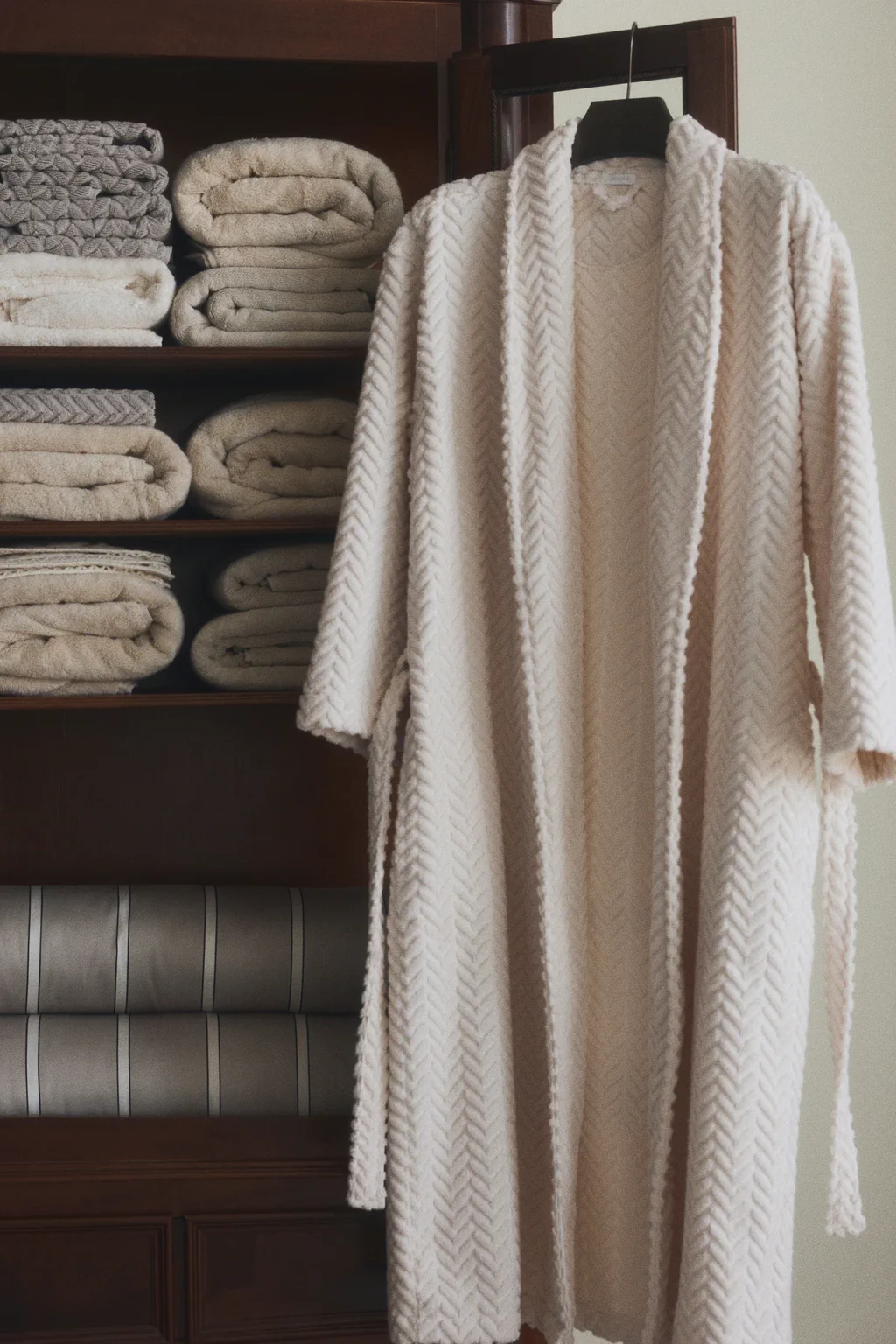
A custom pajama sample usually costs USD 50–80 per piece because the first garment concentrates pattern work, material and trim sourcing, sample-room labor, measurement checks and development coordination into a very small quantity. The exact fee depends on the style and the agreed sample scope. It is not a scaled-down bulk unit price.
For a brand, the useful question is not simply whether the sample fee is high or low. It is whether the sample is designed to answer the right product questions before bulk: fit, fabric, construction, decoration or final pre-production readiness. A clear brief and a defined review purpose help avoid paying for repeated rounds that do not resolve the real uncertainty.
Bulk production spreads development and setup work across an order. A one-off sample does not. The factory may need to review a pattern, source a small amount of fabric, prepare trims, make construction decisions and check the finished measurements for only one or a few pieces.
That work still needs to happen even when the sample quantity is small. Some materials are sold or dyed in larger lots, and a fabric or trim that is not already available may require extra sourcing or a practical substitute for the first review. This is why the sample fee should be assessed against the work and information it provides, not against the eventual bulk price alone.
| Development cost driver | Why it can affect the sample fee | What the buyer should clarify |
|---|---|---|
| Pattern and style complexity | A simple top-and-short set needs different development work from piping, multiple panels, lace, a robe or nursing access | Which design details must be accurate in round one? |
| Fabric availability | Special colors, compositions, prints or hand-feel targets may not be available in sample quantities | Can an available fabric be used for fit review, or must the exact bulk fabric be used? |
| Trims and decoration | Buttons, elastic, drawcords, labels, embroidery, print and piping add placement or sourcing decisions | Which trims and branding elements are needed for this sample stage? |
| Sample purpose | A fit sample, material swatch, decoration test and pre-production sample answer different questions | What decision will this sample allow the team to make? |
| Revision scope | New design direction after review may require additional pattern, material or construction work | How will corrections be separated from design changes? |
A sample fee usually rises with the number of decisions that must be resolved on the garment. A basic knit pajama set may need a fit and construction review. A woven button-front set may also require collar shape, placket, pocket, button spacing and piping to be checked. A robe can add belt loops, belt dimensions, edge finishing and a larger fabric requirement.
| Style direction | Sample-stage details to review | Potential source of extra work |
|---|---|---|
| Knit tee and shorts | Neck opening, shoulder, body ease, waistband and leg opening | Fabric weight, stretch recovery and size grading |
| Woven button-front set | Collar, placket, button placement, pocket and hem | More construction points and fabric behavior review |
| Piped or contrast set | Piping width, color, corner turns and symmetry | Added trim sourcing and sewing operations |
| Robe or wrap style | Length, overlap, belt, loops and edge finishing | Larger garment area and additional construction details |
| Lace or decorated style | Lace quality, placement, attachment and appearance after care | Small-lot trim sourcing and precise placement |
For a satin-look set, for example, a photo can communicate the overall appearance but cannot confirm the selected fabric, drape, color, piping width or the feel of the finished garment. The sample should be reviewed against the buyer’s intended product, not merely against a visual reference.
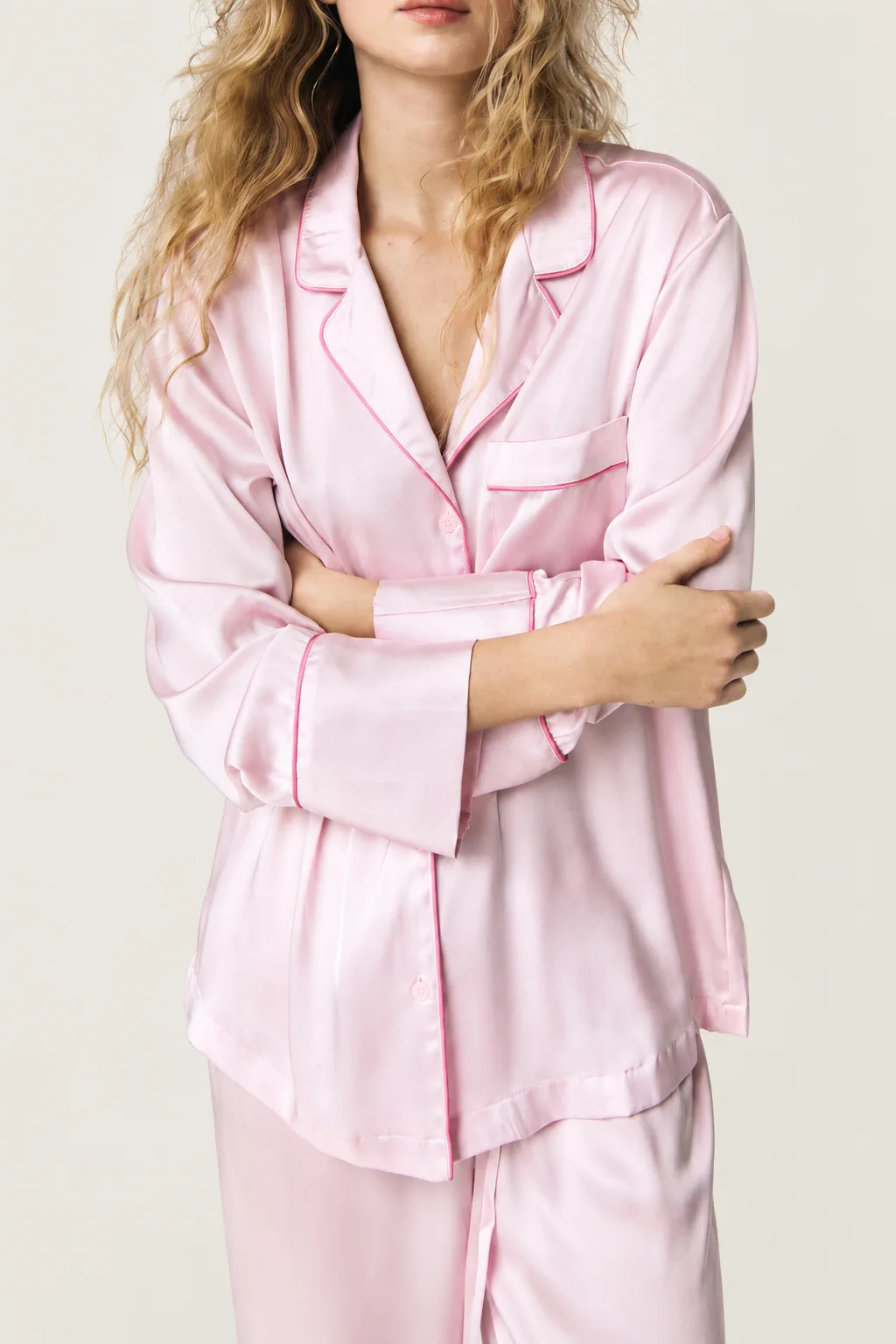
The first sample should match the biggest open decision. If fit is uncertain, prioritize fit. If material choice is uncertain, confirm the fabric route before spending time on final branding. Asking one sample to prove every detail can be inefficient when some components are not yet selected.
| Sample route | Best used to answer | Usually not enough to approve |
|---|---|---|
| Fit-first sample | Silhouette, ease, key measurements and basic construction | Final color, bulk fabric performance or complete packaging |
| Fabric or material confirmation | Hand feel, weight, drape, opacity and color direction | Final fit or every construction detail |
| Decoration sample | Print, embroidery, lace, piping, label or placement | Overall fit unless made in the intended garment size and material |
| Pre-production sample | The combined, agreed material, fit, construction, trims and branding before bulk | Unspecified buyer requirements or tests not included in the approval plan |
Before requesting a sample, name the route and the decision it supports. This helps the factory identify which materials and details must be ready, and helps the buyer avoid judging a fit sample as though it were a finished pre-production sample.
The most reliable way to reduce unnecessary sample rounds is to reduce uncertainty before work starts. It does not mean removing important quality checks or asking a factory to guess at missing specifications.
The factory should confirm the fee, included work, expected sample timing and any material assumptions before proceeding. Hengcheng’s general sleepwear sampling guidance is typically 1–2 weeks, subject to style details, material availability, confirmation time and the agreed scope. A specific project schedule should be confirmed with the factory.
Not automatically. A sample fee pays for development work on a small quantity, while a bulk quotation covers the agreed production quantity and specifications. Any credit or adjustment of a sample fee against a later order must be confirmed for that project; buyers should not assume it applies universally.
For internal planning, a brand can spread a sample fee across an expected order to understand its planning impact. For example, a hypothetical USD 60 fee divided by 300 bulk pieces equals USD 0.20 per planned piece. This is only an accounting illustration. It is not a factory unit-price quote, does not mean the sample fee is included in bulk pricing, and does not replace confirmation of commercial terms.
When comparing factories, ask each one to state separately:
A factory can begin a preliminary review from references, but it will need clear assumptions to plan the sample and quote the bulk program consistently.
| RFQ input | Useful detail |
|---|---|
| Product reference | Photos, sketch or tech pack with front/back views and construction notes |
| First sample purpose | Fit, material, decoration or pre-production approval |
| Fabric direction | Composition, weight or hand-feel target, knit/woven construction, color and acceptable alternatives |
| Size and fit | Base size, size chart, grading range and fit preference |
| Trims and branding | Buttons, elastic, drawcord, piping, lace, labels, print or embroidery |
| Order assumptions | Quantity by style, colorway and size, plus target market and requested delivery window |
| Review requirements | Critical measurements, wash or wear checks, retailer specifications and approval owner |
| Packing | Folding, polybag, size sticker, carton or other confirmed requirements |
If a point is undecided, mark it as open rather than leaving the factory to infer it. A quotation based on an explicit assumption is easier to compare and revise than one based on hidden guesswork.
Review the sample against the purpose declared in the brief. A fit sample should be measured and assessed on the intended wearer or fit form. A material sample should be checked for the properties the buyer named. A pre-production sample should match the final agreed specifications closely enough to become a clear reference for bulk.
Once the pre-production sample is approved, carry the same measurements, fabric and trim references, construction notes, artwork and packing details into production documents and QC. Approval is only useful if the bulk team can see what was approved.
From a China OEM and private-label factory perspective, Hengcheng first needs to understand the reference style, material direction, quantity, size range, target market and the decision the buyer expects the sample to support. That review helps separate fit and construction work from material sourcing, decoration and packaging requirements.
The published general guidance for Hengcheng is a sample cost of USD 50–80 per piece, depending on style complexity, and a sampling lead time of 1–2 weeks, subject to project details and confirmation. These are planning ranges, not a project-specific quotation or guaranteed schedule. Exact cost, exclusions, courier and any fee-credit terms should be confirmed in the inquiry.
For the first review, prepare the product reference, sample purpose, size chart, material and trim direction, quantity by colorway, target market and required timing. See the <a href="/sleepwear-pajama-manufacturer-china/">Sleepwear & Pajama Manufacturer</a>, <a href="/how-sample-development-works-china-garment-manufacturer/">sample development guide</a> and <a href="/how-can-you-guarantee-quality-control-when-manufacturing-clothes-in-china/">apparel quality control guide</a> pages for related manufacturing information.
Hengcheng’s published general range is USD 50–80 per piece, depending on style complexity. Confirm the exact scope, material or trim exclusions and courier separately for each project.
A sample concentrates pattern review, sourcing, small-lot preparation, sewing and measurement checks into one or a few garments. Bulk quantities spread production work across more units.
It depends on the quotation. Ask the factory to identify whether the fee includes fabric, special trims, decoration and courier, and to list exclusions clearly.
Sometimes a project may include an agreed credit or adjustment, but it is not automatic. Confirm eligibility, order conditions and timing in writing before sampling.
Hengcheng’s general guidance is 1–2 weeks, subject to style complexity, material availability, complete buyer information and approval timing. Confirm the project schedule directly.
Send a complete, consolidated brief; name the purpose of each sample; prioritize the critical questions; and return one aligned set of comments after review.
Approve the pre-production reference against the agreed material, measurements, fit, construction, trims, branding and packing requirements. Carry those approved details into the production and QC documents.
Use the exact fabric when material hand feel, drape, color or performance is the decision being tested. A substitute may be useful for an early fit check only when both sides agree that it does not approve the final fabric.