Address
JINKE Technology Industrial Park, No. 3188 ChunYuan Road, Weifang City, Shandong Province, China
Work Hours
Monday to Friday: 7AM - 7PM
Weekend: 10AM - 5PM
Address
JINKE Technology Industrial Park, No. 3188 ChunYuan Road, Weifang City, Shandong Province, China
Work Hours
Monday to Friday: 7AM - 7PM
Weekend: 10AM - 5PM


A holiday pajama launch can fail even when the sewing finishes on time. Unapproved artwork, a missing child-size sample, late barcode instructions or an unrealistic freight plan can keep a coordinated family range from reaching its selling window. We start with the date the buyer needs saleable stock, not just a requested factory completion date.
Plan holiday family matching pajama production backward from warehouse receipt or retail launch. Hengcheng's confirmed sleepwear planning references are 1-2 weeks for sampling after core details are confirmed and 4-6 weeks for bulk after sample approval and deposit. These are not total door-to-door timelines: material development, sample revisions, testing, packing, inspection and transport need separate allowances and project confirmation.
A family range is also more than one adult style enlarged or reduced. Its adult, child and toddler products may share a theme while requiring different patterns, print proportions, fit checks and market-specific requirements. The useful question is which decisions must be approved before the next stage can start.
We first distinguish four dates: retail launch, warehouse receipt, shipment departure and factory completion. They describe different milestones. If the buyer needs stock available for photography, fulfillment preparation or retailer distribution before launch, warehouse receipt must be earlier than the selling date.
Set the delivery route with the logistics owner, then work backward through packing, inspection, bulk, pre-production approval and development. Some tasks can run in parallel, but dependent approvals cannot simply be compressed into the sewing window.
| Planning stage | What must be confirmed | Schedule implication |
|---|---|---|
| Warehouse and launch | Destination, required stock date and receiving allowance | Defines the commercial deadline, not just an ex-factory date |
| Shipping | Mode, routing, booking, documentation and clearance assumptions | Transit must be confirmed with the logistics provider |
| Inspection and packing | Release criteria, carton plan, barcodes and retailer instructions | Reserve time for correction and reinspection if needed |
| Bulk production | Approved sample, confirmed materials, quantities and commercial terms | Typical 4-6 week reference is conditional on readiness |
| Sample approval | Fit coverage, material approval, artwork and buyer feedback | Allow dispatch, review and possible correction rounds |
| Development | Tech pack, size architecture and material/print availability | Typical 1-2 week sampling reference starts after core confirmation |
We would not turn these stages into one universal countdown. A repeat order using approved inputs and a new collection using custom printed fabric have different schedules. Write an owner and approval date next to each open decision so the calendar can be reviewed rather than guessed.
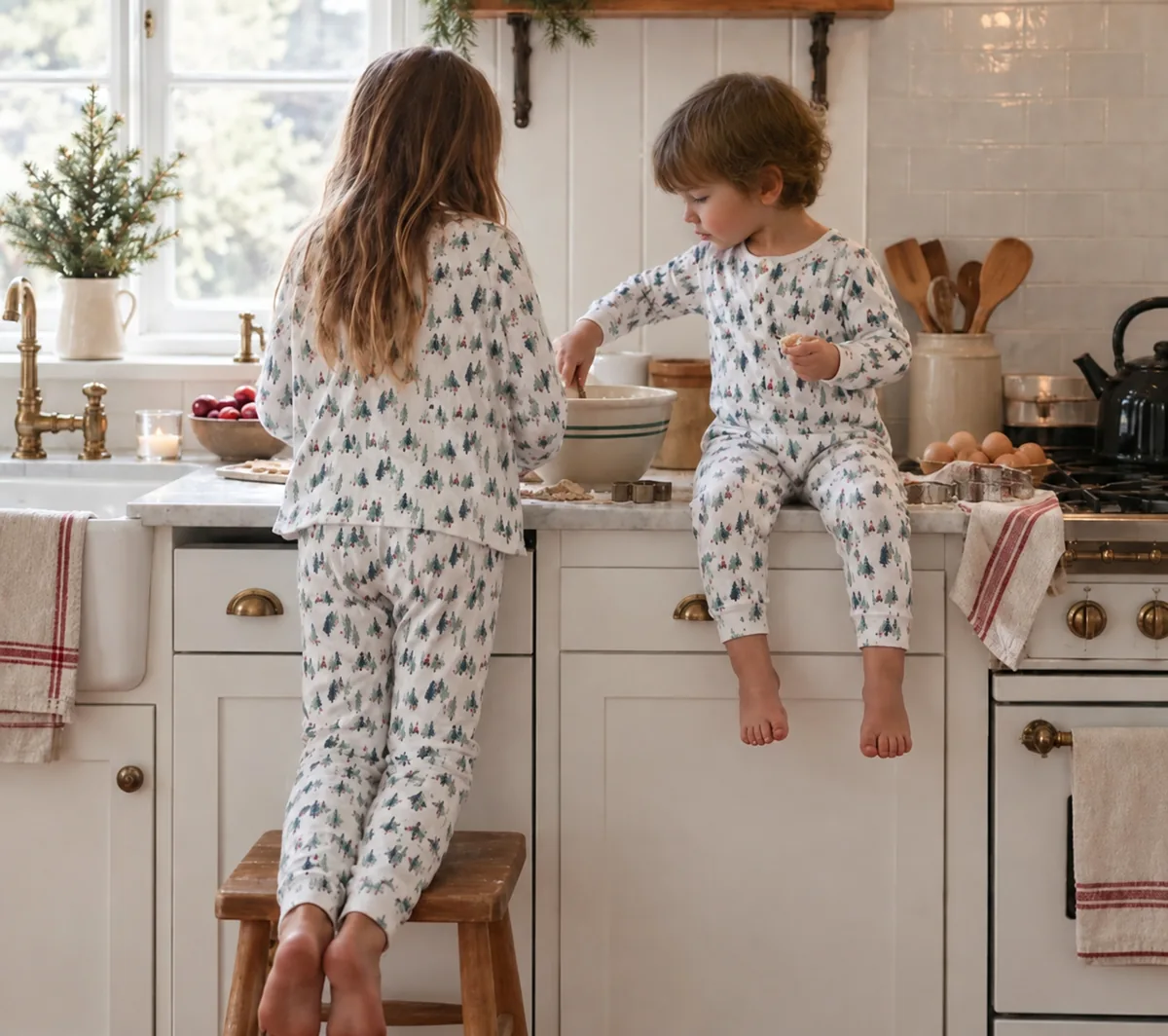
Define what "matching" means before the factory quotes. An identical all-over print is one route; solid adult tops coordinated with printed children's sets are another. A shared theme does not necessarily mean every garment uses the same construction or material.
| Assortment route | Useful when | What we would review first |
|---|---|---|
| Same print across age groups | The buyer wants a recognizable family theme | Print scale, garment proportions and color consistency across sizes |
| Solid adults, printed children | Coordination matters more than identical styling | Shade relationship between solid and printed fabrics |
| Several styles sharing one fabric | The range combines different silhouettes | Pattern consumption, trim differences and separate fit approval |
| Different fabrics in one theme | Season, age or garment use requires different materials | Dye/print appearance and wash behavior on each fabric |
A coordinated lifestyle photo is a direction reference, not proof of production capability or finished-garment compliance. We ask the buyer to translate the reference into a style list, material choices, quantities and approval criteria. This prevents a quote for one sample from being mistaken for a quote covering the complete family range.
Freeze the commercial size architecture before reserving fabric or confirming the production plan. The factory needs actual size codes and quantities by style, colorway and size, not an overall total labeled "family sizes."
One adult fit sample cannot establish children's sleeve proportions, waist construction or grading. The buyer should identify physical fit-review sizes and decide how the remaining range will be verified against the measurement chart. For broader planning, see family matching sleepwear size planning.
If quantities change after approval, revisit material consumption, trim purchasing and carton instructions. A change that appears small in the sales spreadsheet may require additional fabric or leave one size group short of matching components.
Approve the physical inputs as well as the visual concept. A holiday mood board cannot specify composition, weight, hand feel, shrinkage allowance, print repeat or trim compatibility. We separate fabric approval, artwork approval and finished-garment approval because they answer different questions.
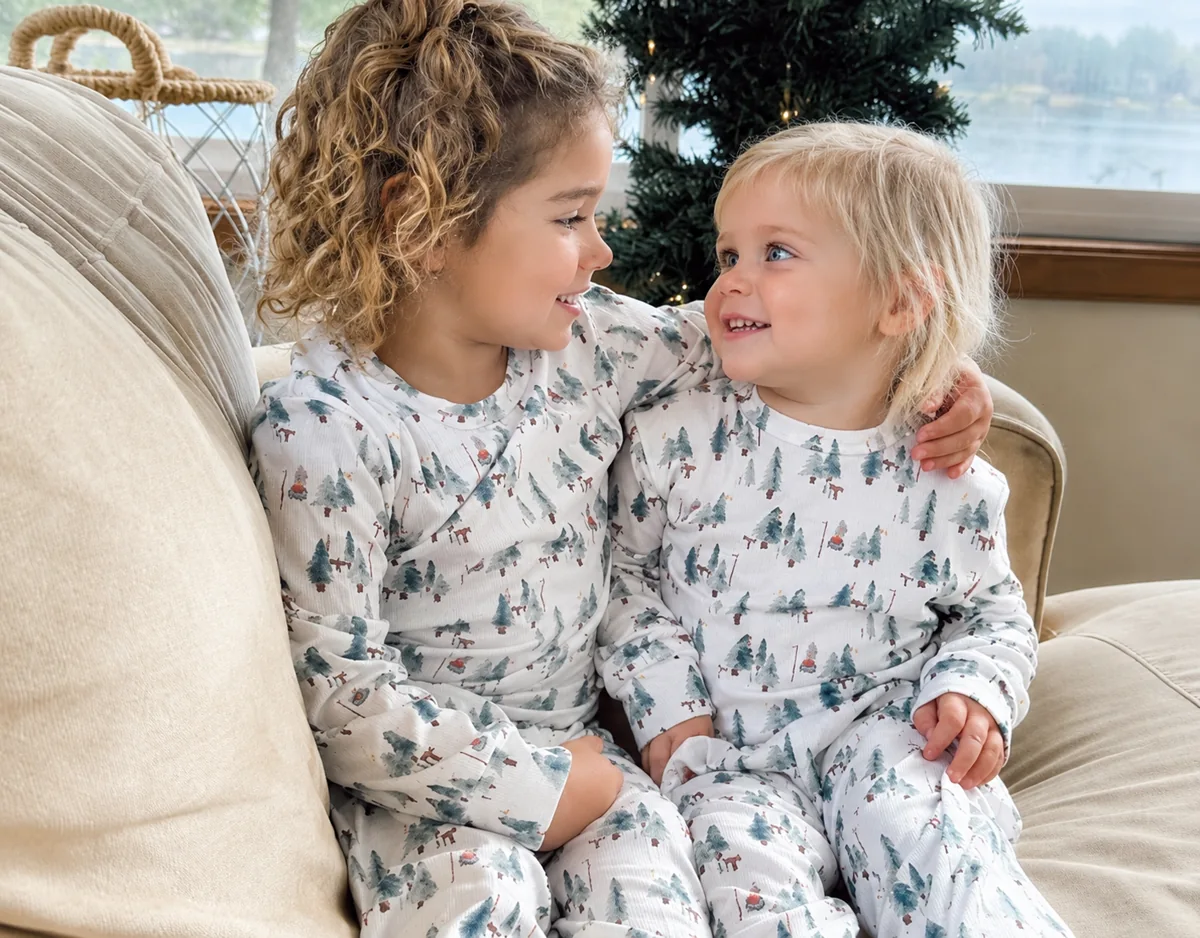
For fabric, define composition, weight range, finish, stretch or recovery and relevant wash expectations. For artwork, provide usable files, repeat dimensions, color references and placement instructions. Confirm whether a smaller garment uses the same print scale or a revised layout.
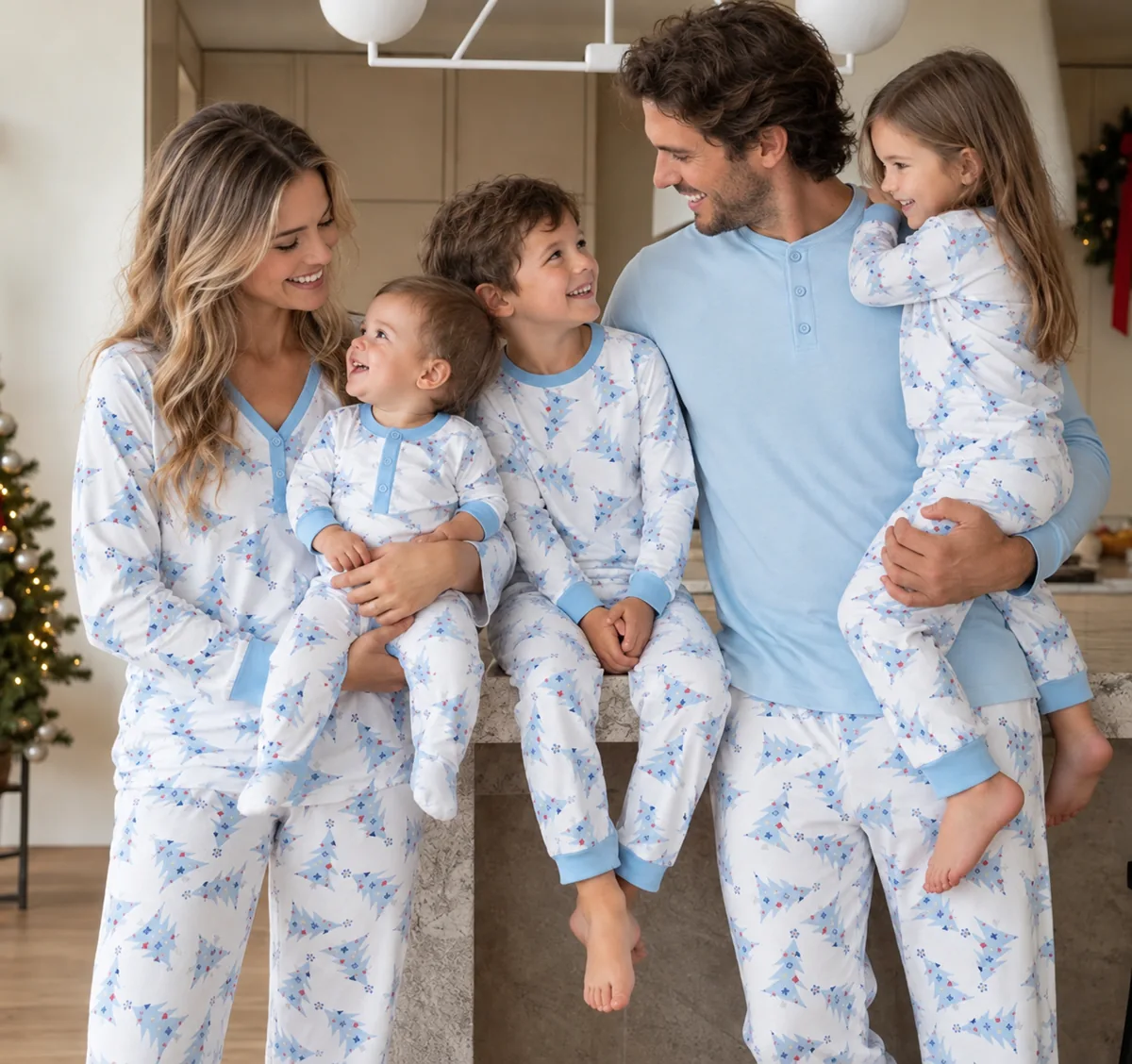
A print that looks balanced on an adult top may place a large motif awkwardly on a small front panel. Solid rib, contrast piping or buttons may also look different beside the same printed fabric. Review the selected components together under agreed viewing conditions, including after relevant care testing.
Children's sleepwear must be assessed for the destination market, age range and product classification. The buyer or importer and nominated compliance partner should confirm applicable requirements before bulk; a family theme or a product photograph does not establish compliance. Treat testing and compliance as a separate buyer-led workstream and document the applicable requirements before production release.
A sample round should have a defined purpose. Design approval, fit approval, material approval and pre-production approval may happen together, but they are not interchangeable. A photo can help approve appearance; it cannot prove finished measurements, hand feel or wash behavior.
For a new family program, we would ask the buyer to list the proof needed at each stage:
Keep one consolidated comment sheet with style, size, issue, required correction and decision owner. Separate defect corrections from new design changes. Changing the artwork or adding a size range after a sample is approved may create a new development task rather than a quick correction.
Sample dispatch and buyer review take time too. The 1-2 week reference describes a conditional sampling window, not an assurance that every physical sample can be made, delivered overseas, reviewed and revised within that period. Our sample development process explains the approval route.
Total pieces alone do not determine commercial feasibility. Several styles, colorways and age groups can split a seemingly large order into small production lots. Fabric and decoration minimums can be more restrictive than garment sewing minimums.
Hengcheng's confirmed sleepwear references are MOQ of 100-200 pieces per colorway per style and sample cost of USD 50-80 per piece, depending on style complexity. The actual project needs confirmation against fabric, quantity, decoration, trims, packaging and buyer requirements. Do not assume multiple styles can be pooled to satisfy one minimum.
Ask for a quotation that states its assumptions and exclusions. Freight, testing, special packaging and additional sample rounds should be clarified rather than silently treated as included. Shared fabric or trims can simplify a range, but only if they still meet the product brief.
A useful RFQ tells us what is fixed and what is still open. If the buyer only has references, that is enough to start a feasibility conversation, but not enough to promise a landed date or final unit price.
| RFQ input | What to send | Why it matters |
|---|---|---|
| Deadline and destination | Warehouse stock date, destination and preferred shipping route | Allows a backward schedule and flags delivery assumptions |
| Full assortment | Style list, colorways, size codes and quantity by size | Supports material, sample and packing planning |
| Product specification | Tech pack or detailed references with measurements | Clarifies construction, fit and development work |
| Fabric direction | Composition, target weight, finish and wash expectations | Defines material availability and approval needs |
| Artwork and trims | Files, scale, placement, colors, piping, closures and labels | Reveals print setup and component dependencies |
| Market requirements | Destination, age groups and testing/compliance owner | Places the necessary review before production release |
| Packaging | Set composition, barcode, folding, inner packs and cartons | Prevents a late packout hold |
| Approval responsibilities | Sample reviewer, feedback timing and final approver | Makes the schedule depend on named decisions |
Mark provisional items clearly. We would rather review a transparent conditional brief than give a precise-looking quotation that conceals unresolved fabric or shipping assumptions.
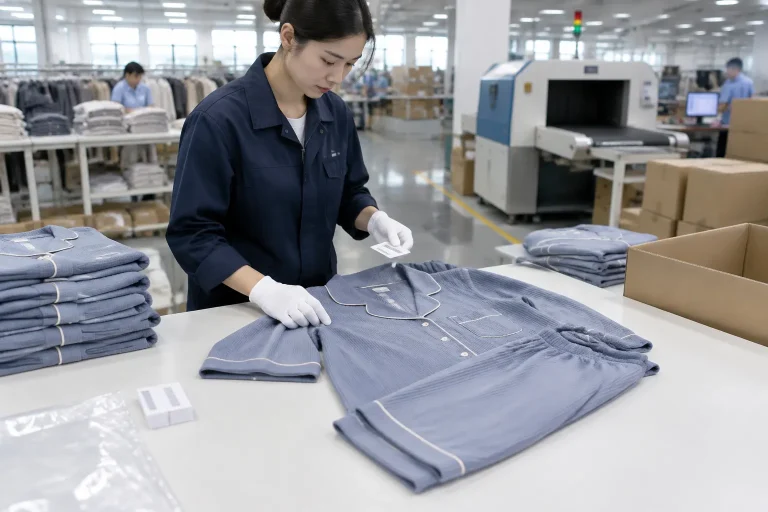
Bulk QC should follow the approved sample and written specification through material receipt, cutting, sewing, finishing and packing. Check both the individual garment and the family range: a correct adult set does not prove that every child size, print lot or pack label is correct.
The useful handoff includes approved fabric and trim references, artwork and placement rules by size, measurement methods and tolerances, workmanship criteria, labels and packing instructions. Our apparel quality-control process supports this approved-reference approach.
The buyer should define which issues require a hold and who can approve a correction. A final inspection is a checkpoint, not a substitute for clear standards or permission to ship an unresolved problem because the holiday date is close.
First identify the actual constraint. If custom printed fabric is the longest dependency, reducing sewing time alone will not solve the problem. If approvals are complete but the transit plan no longer works, the logistics owner must review route options and cost.
Possible changes include fewer styles or colorways, an available fabric, simpler decoration or staged delivery. Each needs a revised quote, approval plan and packing schedule. A split shipment may preserve part of a launch, but it must not leave the buyer with unusable size coverage or incomplete sets.
We do not recommend skipping child-product requirements, sample approval or agreed QC to protect a selling date. When the confirmed path cannot meet the deadline, a smaller scope or a later launch is more defensible than an unsupported delivery promise.
We would start with the complete assortment, deadline, destination, fabric direction and approval status. Then we would separate the open decisions into material sourcing, sample work, buyer approval, bulk production and logistics. This exposes the dependencies that a simple "how many weeks?" question misses.
Send the reference style or tech pack, quantities, size range, colorways, artwork, target market, packing instructions and required arrival date through the contact page. We can review production fit and the sample/QC checkpoints before confirming commercial terms. The Sleepwear & Pajama Manufacturer in China page provides the broader product-development scope.
Work backward from required warehouse receipt. Include development, materials, samples, buyer feedback, pre-production approval, bulk, inspection, packing and shipping. Start earlier when fabric, artwork, trims or packaging require new development.
No. They are conditional planning references after core confirmation and, for bulk, sample approval and deposit. Revisions, material availability, testing, decoration and delivery are separate dependencies.
Not always. Agree which fit points need physical review and how the remaining sizes will be measured and graded. One adult sample cannot validate the children's range.
Yes, but define the relationship: identical print, coordinated colors, mixed solid/printed styles or another shared theme. Confirm fabric, shade, artwork and fit requirements for each style separately.
It can review feasibility and provide a conditional quotation. Final price and timing depend on confirmed artwork, execution method, fabric, quantities and approvals. List those open assumptions explicitly.
Do not assume so. Hengcheng's 100-200 piece reference is per colorway per style, subject to complexity and project review. Fabric or decoration minimums may impose additional conditions.
Approve barcodes, labels, folding, set composition and carton instructions alongside product approvals. Check the actual packing reference before final packout rather than sending instructions after sewing is complete.
We would not treat that as a reliable solution. Resolve the real constraint, consider a smaller confirmed scope or revise delivery. Keep agreed sample, compliance and QC requirements intact.
This guide uses Hengcheng's confirmed sleepwear commercial references and factory-side development framework. Sample cost, MOQ and timing remain conditional on the actual project. The visuals illustrate product and assortment direction, not factory evidence or certification.