Address
JINKE Technology Industrial Park, No. 3188 ChunYuan Road, Weifang City, Shandong Province, China
Work Hours
Monday to Friday: 7AM - 7PM
Weekend: 10AM - 5PM
Address
JINKE Technology Industrial Park, No. 3188 ChunYuan Road, Weifang City, Shandong Province, China
Work Hours
Monday to Friday: 7AM - 7PM
Weekend: 10AM - 5PM
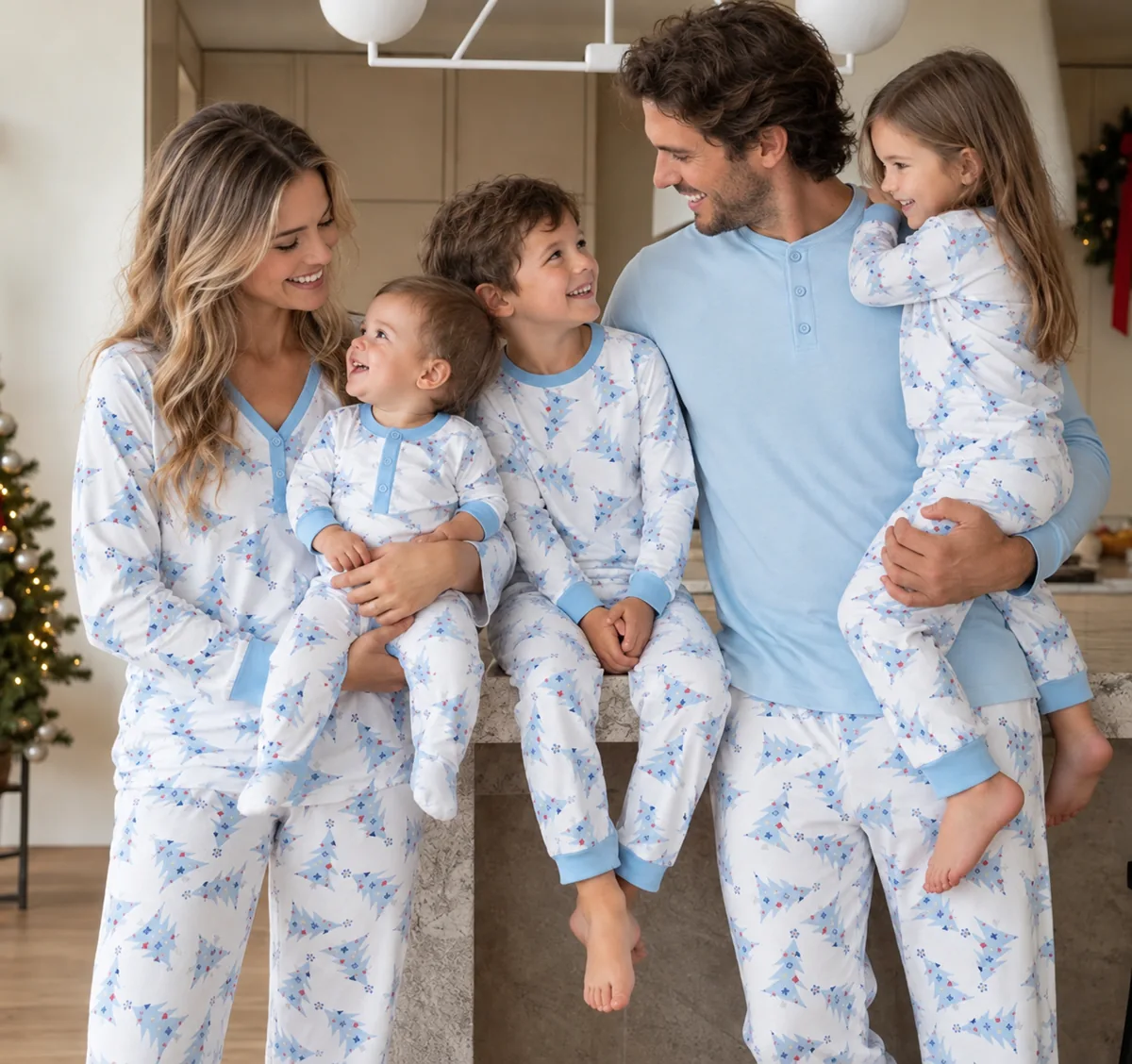
A family matching pajama collection should be developed as a small product range, not as one adult set scaled down. Adult, youth, child and toddler garments can share a visual language, but they need separate checks for fit, print scale, waist construction, size mix, labeling and, where applicable, product-specific compliance requirements. A brand should approve representative adult and child samples before it releases a family program to bulk production.
The risk is easy to miss. A print may look balanced on an adult top but become oversized on a small chest. A waistband that feels comfortable on an adult can be unsuitable for a child block. A colorway that photographs as one coordinated range can separate into visibly different shade lots when fabrics, prints or trims are not controlled together. The commercial risk is also real: every extra size group divides quantity across more patterns, more markers and more packing variants.
From a China garment factory perspective, the first useful question is not simply, “Can you make matching family pajamas?” It is: “What are the separate product groups, which details must match, and which details must change by age and size?” Hengcheng can review that brief as a private-label sleepwear development program before sampling and quotation are finalized.
An adult sample can approve the adult silhouette and part of the visual direction. It cannot prove that the print, fit, waist, neckline, sleeve, rise, labels and packing will work across the full collection. A family matching range normally needs at least one representative adult sample and one representative child sample. Programs with toddler or infant products should also define their own product and compliance review route before bulk.
| Range decision | Why it matters | Minimum buyer input |
|---|---|---|
| Age groups | Patterns, construction, labels and product questions can differ. | Adult, youth, child, toddler or infant groups intended for launch. |
| Size mix | Quantity is divided across more SKUs, affecting MOQ and material planning. | Expected units by style, colorway and size group. |
| Print route | Scale and placement can change dramatically on smaller garments. | Artwork, repeat size, placement rule and reference sizes. |
| Sample plan | One sample cannot validate every block. | Named adult and child sizes for physical sample approval. |
| Packing route | Family sets can be sold as separate pieces, pairs or bundles. | SKU, label, barcode, folding and carton instructions. |
“Family matching pajamas” is a collection concept, not a factory specification. Before a quote can be compared meaningfully, the buyer should turn the concept into a range architecture. That means listing the intended groups, style forms, fabric route, colorways, prints, size range, quantities, packaging and selling calendar. The buyer does not need to lock every unit by size on day one, but the factory needs a credible working version.
For example, an adult long set, child long set and toddler romper may share a print but not a pattern, consumption, marker, trim set or sewing sequence. Treating all of them as one style can make a quotation look simple at first, then create a late revision when the factory receives the real range. The better approach is to identify which components are shared and which are separate.
A family program can have a healthy total quantity but a weak quantity at individual style-colorway-size level. That is why a factory should review the size mix, rather than quote only from a total campaign number. The more fabric colors, print variants, fit blocks and packing variants a brand adds, the more the production quantity fragments.
MOQ is not one fixed number for every family range. The practical threshold depends on fabric availability, whether the print is custom, the number of colorways, construction complexity, labels, packaging and how units are distributed. A buyer can reduce avoidable cost pressure by using one or two core fabric routes, controlling the color palette, sharing trims where appropriate, and sharing the expected size curve early.
| Buyer choice | Commercial effect | Factory-side question |
|---|---|---|
| One print across adult and child groups | Can simplify artwork, but does not remove separate cutting and sizing work. | Does the repeat work at both small and large garment scale? |
| Multiple seasonal colorways | Can divide fabric, print and trim quantities. | Which colors can share a production route without damaging the launch plan? |
| Adult, child and toddler blocks | Adds patterns, samples, labels and potentially different requirements. | Which blocks need physical approval before bulk? |
| Gift-box or bundled sets | Adds packing labor, components and SKU-control risk. | Are pieces packed separately, paired by size, or packed as a family bundle? |
| Late size expansion | May change fabric consumption, print placement, markers and timeline. | Can the added group be sampled and approved without moving bulk release? |
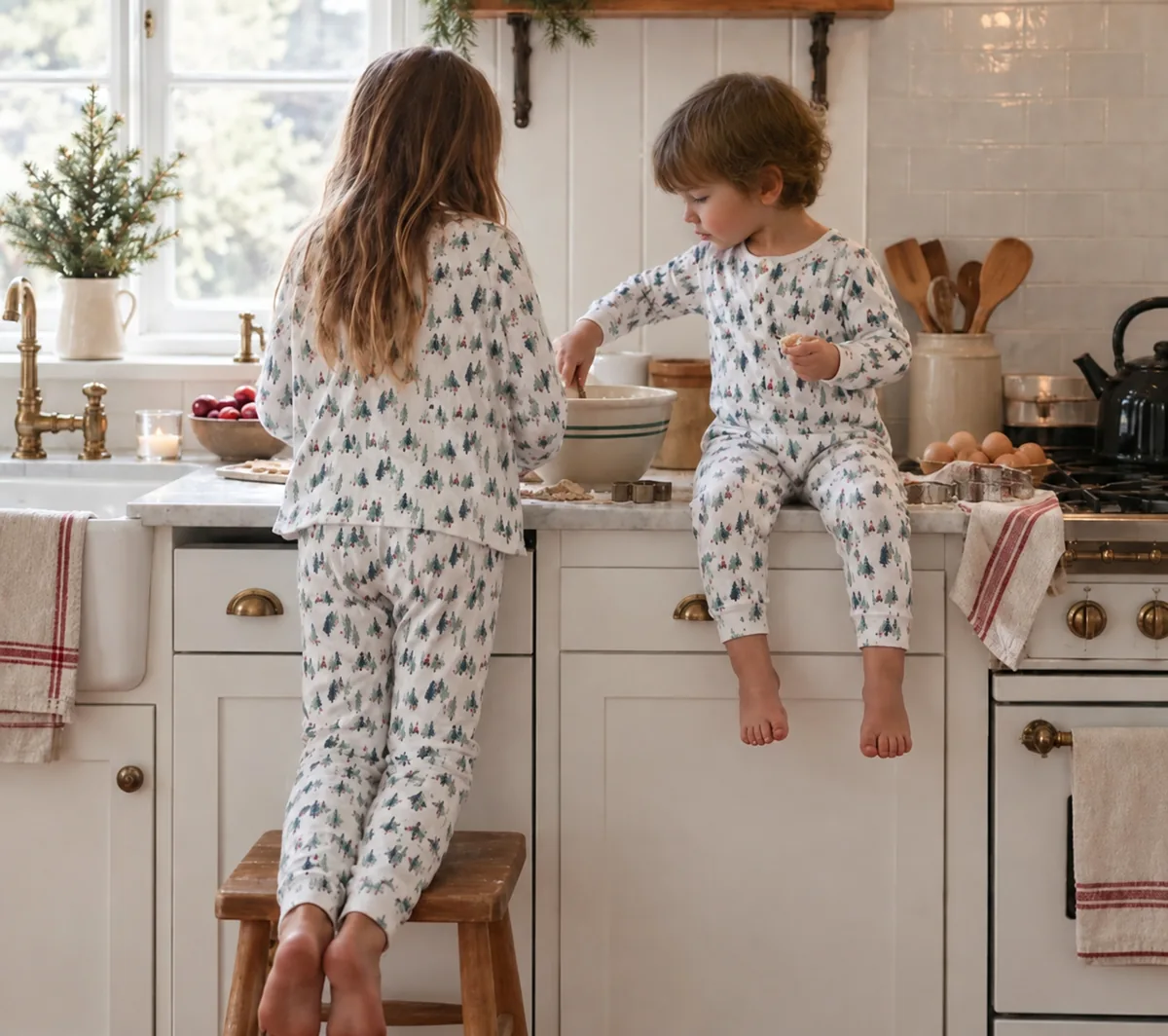
All-over prints, plaids, stripes and placement graphics behave differently as a garment gets smaller. A large repeat may land well on an adult shirt front but cut awkwardly around a child neckline. A motif may become too dominant on a small chest, disappear into a side seam, or look inconsistent between a child top and matching pants. Plaid and stripe programs also need a clear decision about matching at visible seams.
The buyer should provide the original artwork and state whether the print is an all-over repeat, a placement print or a scale-sensitive motif. The factory can then prepare a representative placement view for the named adult and child sample sizes. A product photo or digital mockup is useful for direction, but it should not replace an approval of the actual print scale on a garment.
Family matching does not mean identical fit. Adults may want a relaxed shoulder, longer rise and a loose lounge silhouette. Children need their own movement, rise, sleeve and waist considerations. Toddlers and infants may need another construction route entirely. The goal is coordinated appearance with age-appropriate comfort and proportions, not a mechanical scale-down of the adult pattern.
The buyer should identify a fit reference for each group and define the points of measure that matter most. At minimum, this normally includes chest, body length, sleeve length, waist relaxed and stretched measurement, rise, inseam and leg opening where applicable. A factory should record which sample block is approved and avoid treating a comment on an adult garment as an automatic instruction for every child size.
| Product group | Fit issues to review | Useful sample check |
|---|---|---|
| Adult | Ease, shoulder line, rise, drape, body length and sleep comfort. | Target adult size with full measurement chart. |
| Youth / child | Movement, sleeve and leg proportion, waist comfort and print scale. | Representative mid-child size with separate points of measure. |
| Toddler / infant | Construction, closure, trims, labeling and applicable age-specific requirements. | Product-specific review before a factory treats it as bulk-ready. |
| Unisex range | Whether one block serves the intended customer and size progression. | Named fit reference rather than a vague unisex label. |
Family programs move more safely when each sample has one clear approval purpose. A fit sample proves shape and measurements; it does not automatically approve final print color or packaging. A fabric swatch may confirm hand feel, but it does not prove post-wash shrinkage, seam comfort or waistband recovery. A pre-production sample is where the buyer combines the approved decisions into the production reference.
| Approval gate | What it should confirm | What should remain documented |
|---|---|---|
| Material and trim review | Fabric route, hand feel, print method, elastic, buttons, labels and color direction. | Swatch, trim card, supplier route and any material changes. |
| Adult fit sample | Adult silhouette, key measurements and construction direction. | Adult POM comments and agreed revisions. |
| Child fit sample | Child proportions, movement, print scale, rise and waist comfort. | Child POM comments and print-placement approval. |
| Pre-production sample | Selected fabric, approved trims, print, labels, packing and final construction. | One signed or written release reference for bulk. |
| Bulk release | Production only after the final reference and any required buyer checks are complete. | Revision log, QC checkpoints and packing instructions. |
When a collection includes children’s sleepwear, the buyer should name the destination market, age group and intended product type before the final sample is approved. Requirements can vary by market, age group, product classification, retailer and materials. The factory can support sample preparation, material records and testing coordination, but it should not guess the buyer’s legal or retailer route.
Drawcords, buttons, snaps, decorative parts, labels, finishes and packaging should be reviewed as part of the child product brief, not added after bulk materials are committed. For a more cautious planning checklist, see the related guide on children’s sleepwear testing and compliance questions.
Bulk quality control must check both the garment and the collection. A factory can inspect a child top against its own specification, yet the family range may still look inconsistent if print scale, shade, piping, labels or packing differ from the adult set. The QC plan should include collection-level checkpoints alongside normal workmanship and measurement inspection.
A more complete RFQ produces a better quotation and a more useful sample plan. The factory needs enough detail to identify the true development work, material route and risk points before it commits to timing or cost.
| RFQ item | What to provide | Why the factory needs it |
|---|---|---|
| Range map | Each adult, youth, child, toddler or infant style and its intended size range. | Separates shared visual direction from distinct pattern and construction work. |
| Quantity plan | Units by style, colorway, size group and expected size mix. | Lets the factory assess MOQ, fabric consumption, markers and packing feasibility. |
| Artwork | Original print file, repeat size, placement instruction, color reference and required seam matching. | Allows print scale and placement to be reviewed before sampling. |
| Fabric and trims | Composition, hand feel, GSM direction, elastic, buttons, labels and packaging requirements. | Defines the material and cost route rather than relying on product photos. |
| Fit references | Measurement chart or reference garments for named adult and child sizes. | Creates separate approval logic for the relevant fit blocks. |
| Market and calendar | Destination, selling window, sample deadline, bulk deadline and any retailer requirements. | Helps sequence development, testing, packing and shipment realistically. |
For a family matching project, Hengcheng would first separate the collection into production blocks: adult, youth, child, toddler or other groups. The review then checks which fabric, print, trim and packing elements can be shared, which need individual specifications, and which sample sizes should be approved before bulk. The team would also review quantity distribution, target market, development calendar and any requirement the buyer has already identified for children’s products.
That review is intended to expose the decisions that often create rework later: a print that has not been scaled for small sizes, a quantity plan that fragments below a workable level, a late-added age group, an adult measurement comment applied incorrectly to a child block, or a packaging route that does not match the SKU plan.
For children’s products, brands should validate the applicable destination-market, retailer and testing requirements with their own compliance team and qualified provider before bulk. This article is a manufacturing-development framework, not legal advice or a claim that one adult sample, one test or one factory document approves every family range.
No. An adult sample can approve the adult direction, but a representative child sample is needed to check child fit, movement, print scale, rise and waist construction. Younger age groups may require their own product review route.
It can increase commercial pressure because quantity is divided across styles, colors and size groups. The buyer should share the expected size mix early so the factory can review a workable production plan.
Often they can share a coordinated fabric route, but the factory and buyer should confirm comfort, opacity, wash behavior, fit, construction and any age-specific product questions for each group.
Often, yes. A repeat or placement that looks balanced on an adult garment may be oversized, poorly positioned or visually inconsistent on a smaller garment. The buyer should approve representative adult and child placements.
Provide the range map, quantity by group and colorway, intended size range, fabric route, artwork, sample sizes, target market, packing expectation and delivery calendar. A total unit number by itself is not enough.
Yes, a preliminary quote can be based on a working size architecture and expected size mix. The buyer should identify which details are provisional and understand that material, marker or packing changes can affect the final quote.
First decide whether items are sold separately, paired or bundled as a family set. The buyer should then supply the SKU, size-label, barcode, folding, polybag, hangtag and carton-mark instructions for that commercial route.
Send the family range map, design pack or reference images, fabric direction, target market, quantities by size group, colorways, print artwork, labels, packaging and target delivery date through the contact page. The clearer the range architecture, the more useful the factory quotation and sample plan will be.