Address
JINKE Technology Industrial Park, No. 3188 ChunYuan Road, Weifang City, Shandong Province, China
Work Hours
Monday to Friday: 7AM - 7PM
Weekend: 10AM - 5PM
Address
JINKE Technology Industrial Park, No. 3188 ChunYuan Road, Weifang City, Shandong Province, China
Work Hours
Monday to Friday: 7AM - 7PM
Weekend: 10AM - 5PM
A dated buyer note on July 2026 tariff changes, China+1 apparel sourcing, Vietnam and Southeast Asia cost advantage, and how buyers should compare landed cost.
On July 24, 2026, a new U.S. Section 301 tariff action took effect across 60 economies. For apparel buyers, the important point is not simply that China remains under tariff pressure. The more practical change is that Southeast Asia is no longer a clean “zero-tariff escape route” in the way many sourcing discussions still describe it.
The advantage has not disappeared. Bangladesh, Cambodia, Indonesia and Malaysia may still have a lower treatment under this new tariff layer than China or Vietnam. But the easy tariff-arbitrage story is weaker. Buyers now need to compare landed cost, capacity, quality risk, lead time and factory control, not only the headline duty rate.
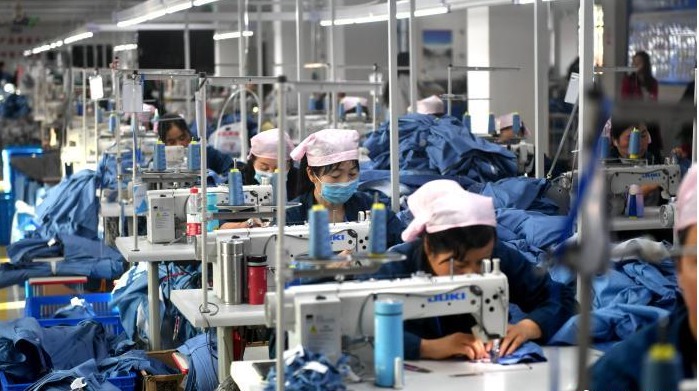
After the July 24, 2026 tariff change, Southeast Asia may still be cheaper for some apparel programs, but the cost advantage is narrower and more conditional than before. The decision should be recalculated product by product.
If your only reason for moving a hoodie, T-shirt or knit casualwear program out of China was tariff avoidance, the old calculation may now be outdated. A small tariff difference can be erased by higher FOB cost, booked capacity, slower sampling, fabric dependency, more difficult QC follow-up or higher defect risk.
| Decision layer | What buyers should now check |
|---|---|
| New Section 301 tariff layer | 60 economies now face an additional 10% or 12.5% duty, subject to exclusions and future quota mechanisms. |
| China and Vietnam | Both are listed in the 12.5% group under the new forced-labour Section 301 action. |
| Bangladesh, Cambodia, Indonesia, Malaysia | These economies are in the 10% group, with textile/apparel tariff-rate quota mechanisms directed but not yet fully implemented at the time of review. |
| Real advantage | For this new tariff layer, the headline difference can be only 2.5 percentage points between 12.5% and 10%. |
| Buyer takeaway | Do not compare countries only by tariff table. Compare landed cost plus execution risk. |
This article is based on information reviewed on August 5, 2026, including the July 24, 2026 Section 301 forced-labour tariff action, logistics and trade summaries, and apparel sourcing commentary available at the time.
This is not legal or customs advice. Tariff treatment depends on HTS classification, origin, exclusions, preference programs, shipment timing and customs interpretation. Before making a sourcing or import decision, buyers should confirm current duty treatment with a customs broker or trade professional.
China+1 became popular for good reasons. Many brands wanted to reduce concentration risk, respond to U.S. tariff pressure and access lower labor-cost markets. Vietnam became a particularly strong apparel and footwear hub, and some reports describe it as one of the world’s largest apparel exporters behind China and Bangladesh.
I would not ignore that fact. Southeast Asia can still be the right answer for certain products, especially where a buyer has stable volume, simple construction, a strong local factory relationship and a clear compliance path.
The problem is that many sourcing conversations became too simple: “China has tariffs, Southeast Asia avoids them.” That shortcut is now much less reliable.
According to Global Trade Alert, the U.S. Trade Representative’s final action in 60 forced-labour Section 301 investigations took effect at 12:01 a.m. Eastern Time on July 24, 2026. Additional duties of 10% or 12.5% now apply to products of the investigated economies, subject to exemptions and detailed tariff-schedule rules.
CV International’s summary of the same action lists China and Vietnam in the 12.5% group. It lists Bangladesh, Cambodia, Indonesia and Malaysia in the 10% group. It also notes that tariff-rate quotas are to be established for Bangladesh, Cambodia, Indonesia and Malaysia, intended to allow specified quantities of qualifying textile and apparel goods to enter free of the applicable Section 301 tariffs once the mechanism is implemented.
That creates a more nuanced picture than the older China+1 pitch. Some Southeast Asian countries may still have an advantage, but the advantage is no longer “China pays, Southeast Asia pays nothing.” For many apparel buyers, the new question is whether the remaining tariff gap is large enough to justify the operational tradeoffs.
| Sourcing country / group | New Section 301 treatment discussed in current sources | Buyer interpretation |
|---|---|---|
| China | 12.5% under the new action, in addition to other applicable duties and China-specific measures where relevant. | Still under tariff pressure, but buyers must compare the total landed cost, not this new layer alone. |
| Vietnam | 12.5% under the new action. | Vietnam is not a clean escape from this new tariff layer, so the China-vs-Vietnam calculation needs updating. |
| Bangladesh, Cambodia, Indonesia, Malaysia | 10% under the new action, with textile/apparel TRQ mechanisms directed but requiring further implementation details. | Potentially lower than China/Vietnam for this layer, but not tariff-free by default. |
| Other economies | 10%, 12.5% or net-of-MFN treatment depending on the economy and rule structure. | Country-by-country review is necessary before quoting savings. |
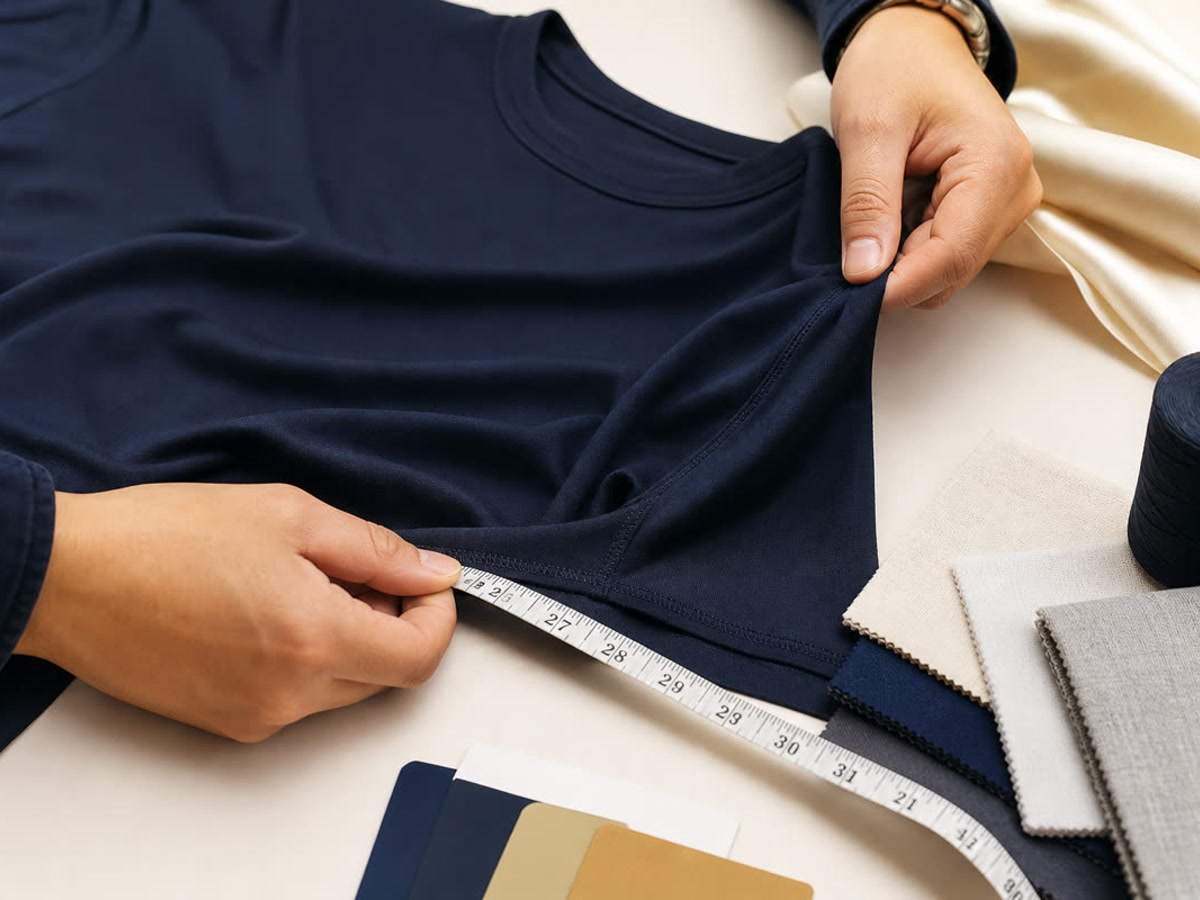
The landed-cost comparison has at least four layers: base duty and new tariff treatment, FOB garment price, supply-chain execution cost, and the cost of mistakes.
Vietnam is still a serious apparel sourcing destination. But OneAim’s 2026 Vietnam manufacturing guide says tier-1 capacity is booked through Q3 2026 and points to minimum-wage pressure, including a 6% increase in July 2024 and a further 2026 wage increase. The exact effect depends on the factory and product, but the direction is clear: capacity and labor are not static.
For a simple, high-volume, well-specified garment, Southeast Asia may still win. For a hoodie, fleece set, cut-and-sew top or private-label program that needs fabric coordination, decoration follow-up, fit correction and steady QC, a small tariff advantage can disappear quickly.
| Cost / risk factor | How it affects a buyer |
|---|---|
| Booked capacity | Longer booking windows can delay launch timing or force buyers into less suitable factories. |
| Wage pressure | Lower labor cost may narrow over time, especially in stronger export clusters. |
| Fabric and trims access | If fabric still needs to be sourced elsewhere, the apparent country advantage may weaken. |
| Sample rounds | Extra revisions add time, courier cost and management friction. |
| Defect risk | A 2.5-point tariff difference is small if QC problems create rework, discounts or missed delivery windows. |
| Communication and control | Direct factory communication can matter more than country-level cost when the product is not a commodity. |
Quality risk is hard to measure from the outside, but it is exactly where many China+1 decisions become messy. A supplier-side industry article from NewWay Apparel argues that many buyers who shifted production to Southeast Asia later experienced quality-control problems. I would treat that as industry commentary rather than a universal statistic, but the underlying risk is real.
When a buyer changes country, the factory is not the only thing that changes. Fabric sources, trim vendors, washing, decoration, sample habits, communication rhythm, measurement tolerance and final inspection discipline can all change at the same time.
That is why the sourcing decision should be framed as: “What is the landed cost after quality and execution risk?” not simply “Which country has the lower headline tariff?”
Buyers should also watch the separate U.S. policy discussion around overcapacity and trade practices. A CRS product page on Congress.gov points to a Section 301-related overcapacity investigation covering multiple economies, including major textile and apparel sourcing countries. At the time of this article, that issue had not produced a final sourcing rule for apparel buyers to rely on.
The practical point is simple: do not build a 2026 sourcing decision on the assumption that today’s tariff map will stay fixed. If the order is strategic, keep the quote model flexible enough to update when the rule changes.
China can still make sense when the buyer needs mature fabric sourcing, decoration coordination, direct factory communication, repeat production and stable QC follow-up. This is especially relevant for hoodies, fleece items, knit casualwear, T-shirts, loungewear and private-label programs where the product is not just a blank commodity.
A mature direct factory in China cannot erase every tariff. But it may reduce hidden costs: fewer sample rounds, clearer technical communication, faster fabric/trims coordination, tighter measurement control and more realistic quotation based on actual production assumptions.
For buyers already working with Chinese suppliers, the July 2026 change is a reason to recalculate, not automatically relocate.
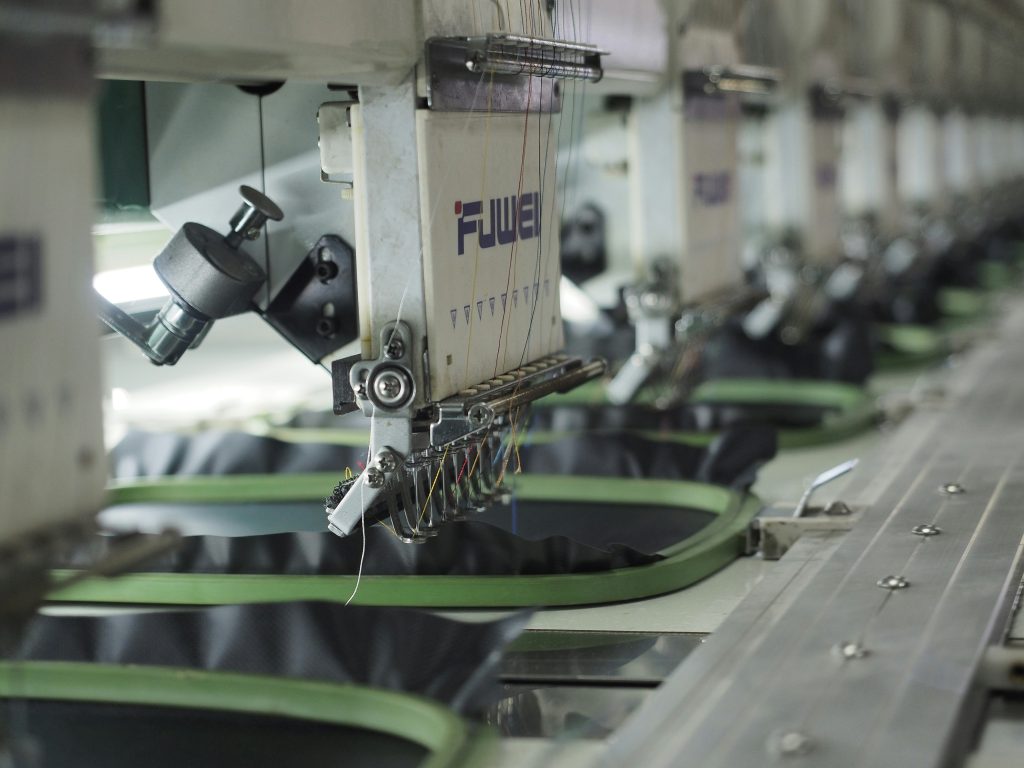
Before moving production from China to Southeast Asia, I would ask the buyer to compare at least two scenarios side by side: current China supplier, and proposed Southeast Asia supplier. The model should include more than FOB and duty.
| Question | Why it matters |
|---|---|
| What is the exact HTS classification and duty stack? | Different fibers and garment types can carry different base rates and additional duties. |
| What is the FOB difference at the same spec? | A lower country cost is not meaningful unless fabric, trims, construction and QC level are comparable. |
| How many sample rounds are likely? | Extra revisions can erase small duty savings. |
| Can the factory source the same fabric and trims reliably? | Fabric substitution can change handfeel, shrinkage, color and customer satisfaction. |
| What is the real booking window? | Capacity pressure can delay delivery or push the order into a weaker factory. |
| Who controls QC and final inspection? | Defect risk should be priced into the sourcing decision. |
| What happens if the policy changes again? | A good sourcing plan needs update points, not a one-time tariff snapshot. |
For Hengcheng, the useful starting point is not a vague request for a cheap hoodie. The buyer should share reference images, target fabric or GSM, colorway and size breakdown, decoration method, label and packing needs, target quantity and timeline.
From there, the factory can review sampling feasibility, MOQ direction, decoration risk, QC points and bulk production assumptions. This keeps the sourcing conversation practical. The buyer learns where the real cost drivers are, and the factory avoids quoting against incomplete information.
For the full capability overview, see Hengcheng’s hoodie manufacturer in China page.
Sometimes, but not automatically. For this new Section 301 tariff layer, some Southeast Asian countries may still be lower than China or Vietnam, but the difference can be small enough that FOB, capacity, fabric access and QC risk decide the real cost.
No. The advantage is narrowed and more conditional, not eliminated. Bangladesh, Cambodia, Indonesia and Malaysia still appear more favorable than China/Vietnam under this specific new layer, but buyers should not treat them as tariff-free by default.
No. Hoodie production depends on fabric, GSM, trims, decoration, sizing, shrinkage control, sample development and inspection. A small tariff difference can disappear if execution risk rises.
No. Buyers should confirm current duty rates, HTS classification and shipment treatment with customs professionals before making decisions.
Research and trade-policy references reviewed on August 5, 2026. Tariff information should be rechecked before publication or order placement if policies change.