Address
JINKE Technology Industrial Park, No. 3188 ChunYuan Road, Weifang City, Shandong Province, China
Work Hours
Monday to Friday: 7AM - 7PM
Weekend: 10AM - 5PM
Address
JINKE Technology Industrial Park, No. 3188 ChunYuan Road, Weifang City, Shandong Province, China
Work Hours
Monday to Friday: 7AM - 7PM
Weekend: 10AM - 5PM

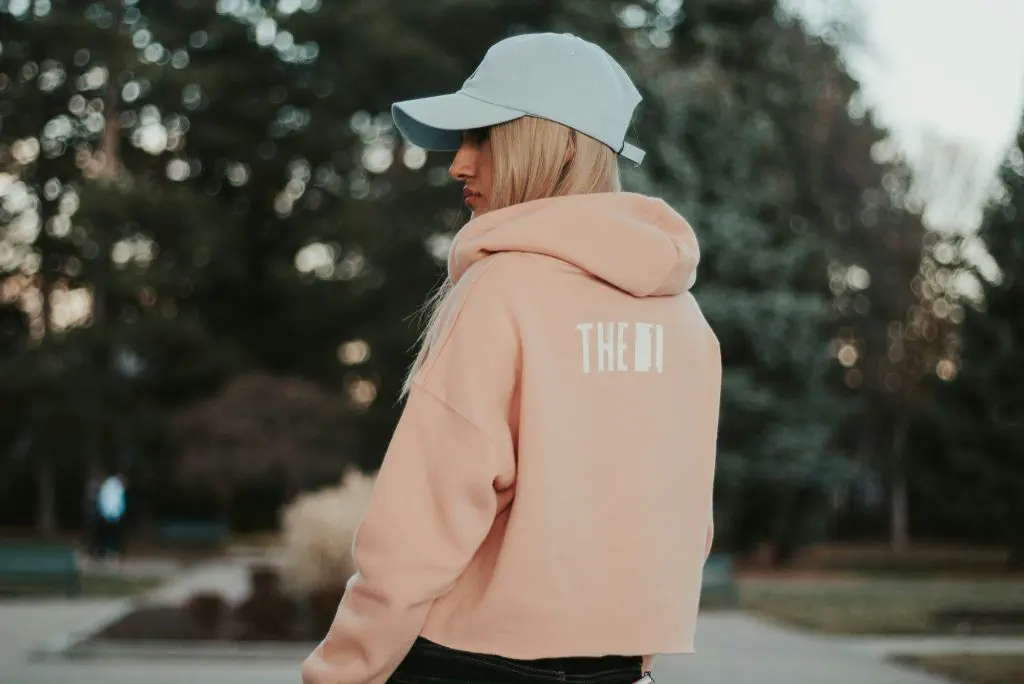
How startup brands should evaluate low-MOQ custom hoodie manufacturers without chasing no-minimum claims that do not fit real OEM production.
For a brand founder, designer, or sourcing team, the real problem is not finding a supplier that says "low MOQ." The real problem is finding a factory that can keep control of fabric, fit, decoration, labels, packing, and quality when the order is still small.
This is where many hoodie projects go wrong. A print-on-demand supplier, a blank customization vendor, and a real low-MOQ OEM factory solve different problems. If you need a private-label hoodie with repeatable bulk standards, you should not judge the supplier by a single minimum order number.
From my side, the better question is always: can this supplier still build a product the brand will be happy to reorder?
Low MOQ for hoodies usually means a smaller first production run that is still handled like real manufacturing, not just a one-off print job. In practice, that means one focused style, limited colorways, a realistic fabric choice, clear decoration requirements, and a sample approval process before bulk.
A low-MOQ custom hoodie manufacturer should help you understand what can stay flexible and what must be controlled. The right partner will explain MOQ by fabric, colorway, decoration, and private-label setup, instead of giving one attractive number that hides the real production limits.
Low MOQ is not one universal number. It depends on the type of hoodie you are buying and how much product control you need.
If you only want a test run of artwork on an existing blank, a print-on-demand route may be enough. If you want a true private-label hoodie with custom fabric direction, fit, labels, and packing, then the MOQ has to cover setup work and production risk.
| Route | Best for | Product control | Typical buyer risk |
|---|---|---|---|
| Print-on-demand | Artwork tests, creator merch, very small proof-of-concept runs | Low | Limited control over fabric, fit, and private-label details |
| Blank customization | Fast branded blanks, events, simple launch tests | Medium | The blank supplier controls the body, fabric base, and size standard |
| Low-MOQ OEM | First private-label hoodie drop, capsule collection, preorder-backed launch | Higher | Needs clearer specs, sample approval, and realistic quantity |
| Bulk OEM | Repeat styles and proven sellers | Highest | Requires stronger demand planning and inventory confidence |
The useful lesson is simple. A low MOQ is only good if it still fits the product model you actually need.
For a serious custom hoodie, low MOQ should still include real production discipline:
Low MOQ is not the same as "no process." It is a smaller production run with enough process control to protect the buyer.
Buyers often ask for one number. A factory usually needs to answer with conditions.
For Hengcheng hoodie programs, a small private-label order is more realistic when the buyer can focus the style, reduce color splits, and use available fabric or a workable fabric direction. The final MOQ should always be confirmed after the factory reviews the fabric, decoration, label, packing, and quantity plan.
| Buyer request | MOQ pressure | Factory-side explanation |
|---|---|---|
| Existing blank with simple print | Low | This is often closer to blank customization than OEM manufacturing |
| One private-label pullover, one fabric, one or two colors | More workable | The factory can keep sourcing, cutting, sampling, and QC focused |
| Custom dyed fabric in several colors | Higher | Dyeing and fabric minimums can become the real MOQ driver |
| Heavy embroidery or multiple decoration placements | Higher | Setup, placement control, and defect risk increase |
| Custom labels, hangtags, barcode, retail packing | Medium | Private-label details add coordination but can be planned if specs are clear |
| Many sizes with very small units per size | Higher risk | Cutting and size-curve efficiency become weaker |
| Repeatable hoodie program after a test run | Stronger fit | The first order can establish the standard for future bulk orders |
This is why low-MOQ conversations should not start and end with "How many pieces?" The better conversation is: how much control does the buyer need, and which parts of the product are worth customizing in the first run?
A buyer who wants 100 pieces per color with custom fabric, custom dyeing, complex embroidery, special wash, multiple labels, and retail packing may be asking the factory to carry too many setup points on a small order. A buyer who wants one focused style with clear specs gives the factory a better chance to support the project.
A factory does not invent MOQ out of nowhere. MOQ usually comes from setup points in fabric, cutting, decoration, trims, labels, packing, and production planning.
| MOQ driver | Why it matters | What usually happens to small orders |
|---|---|---|
| Fabric availability | Stock fabric is easier than custom dyeing or rare composition | Custom fabric pushes MOQ up or makes the quote more expensive |
| Colorway count | Every additional color adds sourcing and production complexity | More colors usually mean more leftover risk |
| Decoration method | Print, embroidery, patch, applique, wash effects, and special finishes all have setup logic | Complex decoration can make a small run inefficient |
| Trims and labels | Drawcords, eyelets, zippers, woven labels, care labels, and hangtags may have separate minimums | Small orders often need simpler trim choices |
| Size breakdown | A realistic size curve is easier to cut and pack than many tiny size splits | Fragmented size plans increase waste and cost |
| Packing requirements | Polybags, barcode labels, carton marks, and retail packing all add work | Export-ready packing can raise the real MOQ burden |
| Finishing process | Brushing, washing, compacting, anti-pilling treatment, and special handfeel work all add control steps | More finishing usually means more setup and QC attention |
The point is not to avoid all complexity. The point is to know which complexity is worth paying for at a small volume.
For a low-MOQ hoodie project, I usually advise buyers to protect the product elements that customers will notice most: fabric handfeel, fit, decoration quality, and wash performance. Other elements can sometimes be simplified in the first run, then upgraded once the product has sales proof.
A low-MOQ OEM factory makes sense when the buyer is ready to treat the first run as real production, not as a loose experiment.
| Buyer situation | Fit for low-MOQ OEM? | Why |
|---|---|---|
| One hoodie style, one or two colorways, clear fabric direction | Strong fit | The factory can focus sourcing, sampling, and QC around one product standard |
| Preorder-backed drop with a clear size plan | Strong fit | Demand risk is lower and the size curve can be planned honestly |
| Small brand launch with one hero hoodie | Good fit | The first order can create a repeatable base style |
| Six colors, three graphics, and 20 pieces each | Weak fit | Setup cost and complexity become too high for the quantity |
| Artwork-only test with no need for custom fabric or fit | Usually not OEM | POD or blank customization is often faster and cheaper |
| Premium private-label hoodie with repeat potential | Good fit if specs are clear | The first run can establish the bulk standard for later repeats |
If the buyer wants everything custom at once, the order often stops being a low-MOQ project and starts becoming a loss-making setup exercise.
A factory that handles low-MOQ work well should be willing to say when the project is not ready. That is a good sign. A supplier who accepts any quantity, any fabric, any decoration, and any deadline without questions may be hiding risk until later.
From my factory perspective, I would not start with price. I would start by separating the fixed parts of the order from the open parts.
For a real quote, I need to understand:
| Quote component | What it changes | Why it matters for a low-MOQ order |
|---|---|---|
| Fabric choice | Cost, handfeel, warmth, wash behavior, and MOQ | Fabric is usually the biggest lever on both quality and quantity |
| Decoration choice | Setup cost, labor, and defect risk | A small order can become expensive if decoration is too complex |
| Trim package | Sourcing complexity and retail readiness | Simple trims usually help low-MOQ programs stay realistic |
| Packing spec | Final presentation and labor | Retail-ready packing can add hidden work to a small run |
| Quality standard | Sample approval and inspection time | A tighter standard needs more testing, not less |
| Reorder plan | Whether the first run can become a repeat style | A repeatable base reduces future development risk |
A clean quote comes from a clean brief. A vague brief usually creates a vague quote.
The buyer should also ask what the quote includes. One supplier may include fabric sourcing, sample development, label coordination, and packing review. Another may quote only the garment sewing cost. Those two numbers should not be compared as if they are the same product.
Low MOQ often increases the unit cost because setup work is spread across fewer garments. That does not automatically make the order bad. It just means the buyer should understand which costs are fixed and which costs scale with quantity.
| Cost layer | How it behaves at low MOQ | Buyer decision point |
|---|---|---|
| Pattern and sample work | Does not shrink much just because the order is small | Use the first style as a repeatable base if possible |
| Fabric sourcing | Can be efficient with available fabric, harder with custom fabric | Avoid custom dyeing unless the color is essential |
| Decoration setup | Screen, embroidery, patch, and placement setup can be fixed-cost heavy | Keep artwork placements focused in the first run |
| Trim and label sourcing | May have separate minimums from suppliers | Use standard trims where possible and customize the visible brand details first |
| Cutting and sewing | Some efficiency improves with quantity | Avoid too many size/color splits |
| QC and packing | Still needs time even on a small order | Do not remove checks just to lower the quote |
The cheapest low-MOQ quote is not always the best result. If the quote removes sampling, simplifies fabric without telling the buyer, skips wash review, or ignores packing details, the real cost may appear later through defects, returns, or unsellable inventory.
For a first hoodie order, the smarter goal is often not the lowest possible MOQ. It is the smallest order that still protects the product standard.
If the buyer wants to keep MOQ under control, the smartest move is often to reduce the number of variables.
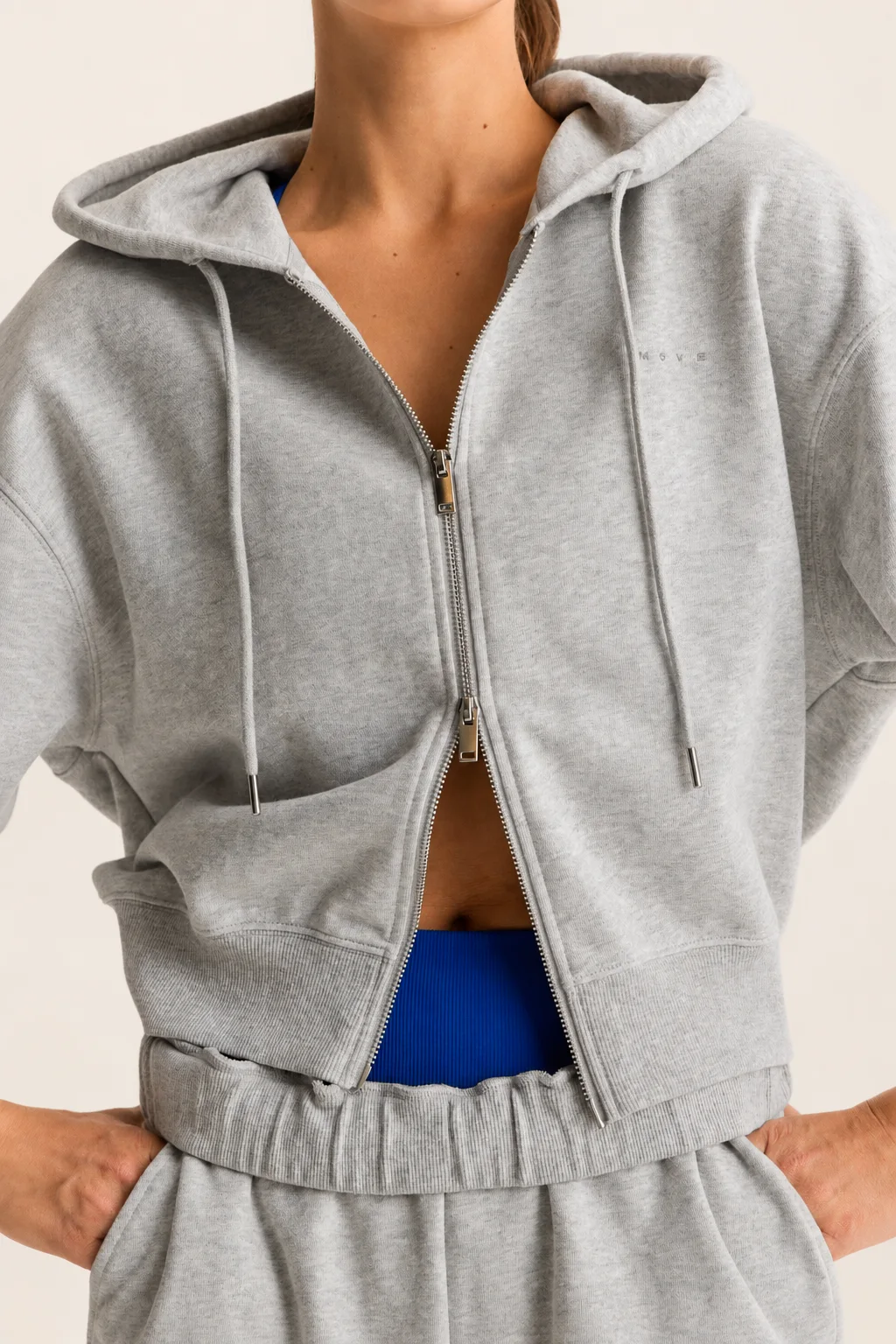
| Choice | MOQ pressure | Factory-side note |
|---|---|---|
| Available stock fabric | Low | Easiest way to keep the first run small |
| Custom dyed fabric | High | Adds sourcing, color matching, and minimum risk |
| Brushed fleece | Medium to high | Soft and warm, but surface control must be good |
| French terry | Medium | Often more stable and easier for some small programs |
| CVC or cotton-poly blend | Medium | Can balance cost and wear behavior if the yarn is controlled |
| Heavy embroidery | Medium to high | Looks premium, but adds setup and wash-risk checks |
| Screen print | Low to medium | Usually easier than embroidery if the artwork is simple |
| Patch or applique | Medium | Depends on patch size, placement, and attachment method |
| Wash effect or special finishing | High | Small orders need to justify the extra process work |
A low-MOQ project becomes much more practical when the buyer is willing to keep the first drop focused instead of trying to do every idea at once.
For example, a startup brand may want heavyweight fleece, puff print, garment wash, custom drawcords, custom labels, and six colors. Each choice may be reasonable alone. Together, they can make the MOQ and unit cost harder to control. A factory-side review helps separate "must-have brand signature" from "can wait until reorder."
The sample is not just a preview. For a low-MOQ project, the sample is the production standard.
If the sample is weak, the bulk order will usually be weak too. That is why I would never approve a hoodie based only on a nice photo or a soft showroom touch.
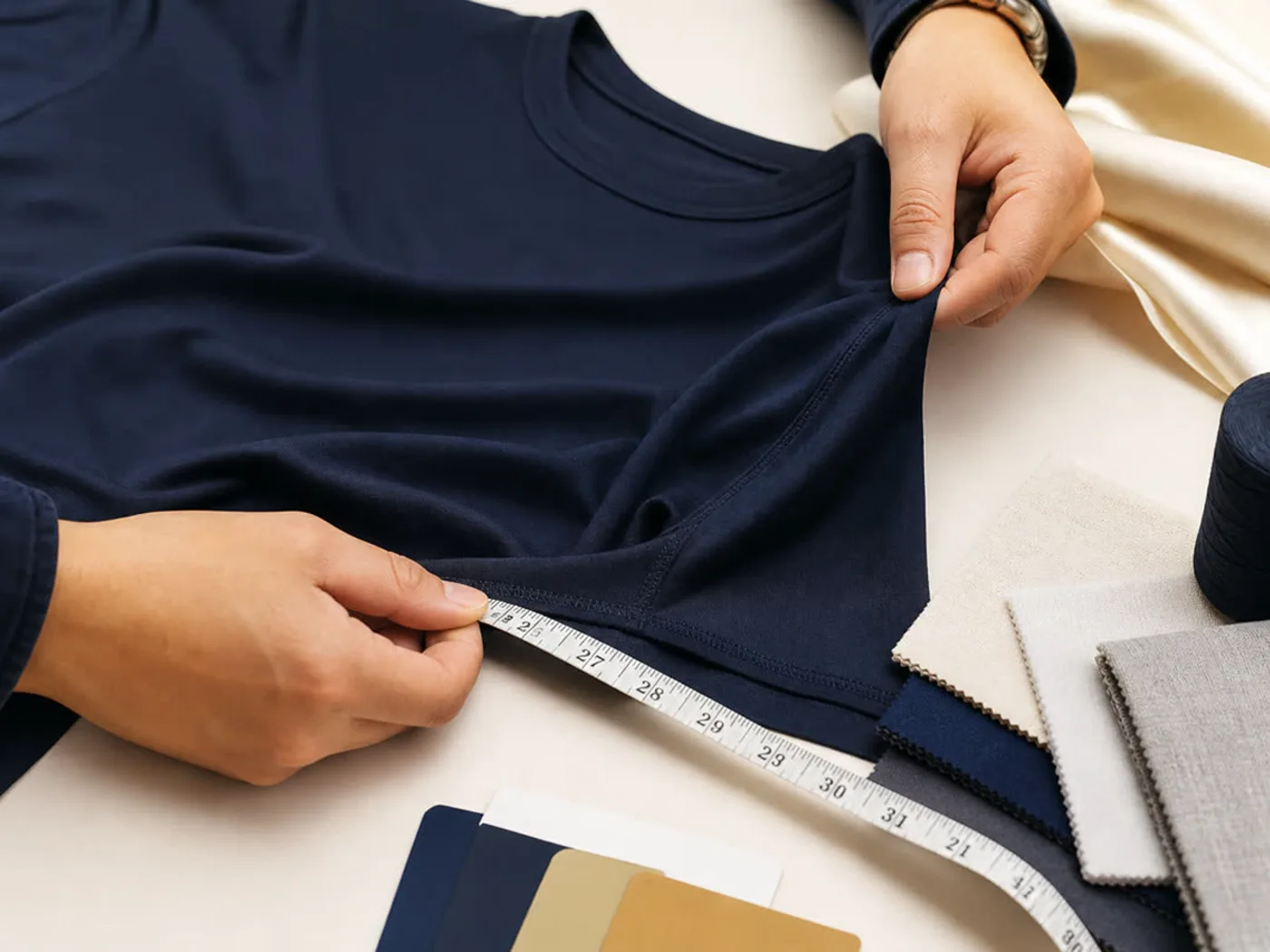
| Sample stage | What to verify | Why it matters |
|---|---|---|
| Proto sample | Silhouette, proportions, hood shape, pocket position, and overall direction | Confirms the style is worth developing further |
| Fit sample | Chest, shoulder, sleeve, body length, hem, and rib balance | Prevents a small order from becoming a fit problem |
| PP sample | Fabric, trims, decoration, workmanship, label placement, and packing | This is the last serious gate before bulk |
| Wash test | Shrinkage, pilling, color behavior, rib recovery, and shape retention | A hoodie can look fine before washing and fail after washing |
| Decoration test | Print handfeel, embroidery tension, patch attachment, and placement accuracy | Decoration defects are very visible on small brand launches |
| Packing review | Folding, labels, polybag, barcode, carton marks, and final presentation | The product must arrive in a condition the buyer can actually sell |
For Hengcheng, I would want the buyer to confirm the wash standard and pilling tolerance before we treat the sample as approved. Small orders have less room to recover from a wrong assumption.
The sample should also be reviewed against the commercial use case. A promotional hoodie, a mid-market streetwear hoodie, and a premium private-label hoodie should not be judged by the same standard. The buyer needs to decide what level of performance the customer will expect.
Low MOQ should not mean loose QC. It means the QC standard must be clear enough to fit the order size and product level.
At minimum, a buyer should define the checkpoints that would make the hoodie hard to sell if they fail.
| QC point | What to check | Why it matters for buyers |
|---|---|---|
| Measurement tolerance | Chest, shoulder, sleeve, length, hem, hood opening, and rib areas | Size inconsistency creates returns and bad reviews |
| Fabric appearance | Shade consistency, surface fuzz, pilling risk, holes, stains, and handfeel | Fabric problems are visible before the customer notices sewing details |
| Stitching and seams | Shoulder seam, side seam, pocket, cuff, hem, and hood joining | Weak workmanship can distort shape after wear or wash |
| Decoration durability | Print cracking, embroidery puckering, patch edge lift, and color bleed | Branding failure damages the product impression quickly |
| Rib recovery | Cuff and hem elasticity after stretching and washing | Poor rib recovery makes hoodies look tired early |
| Packing accuracy | Size label, care label, barcode, polybag, color, and carton mark | Packing mistakes create warehouse and ecommerce problems |
For small orders, some buyers are tempted to skip inspection to save cost. That is risky. A low-MOQ first run is often the buyer's first customer-facing proof. If quality is inconsistent, the brand loses trust before it has enough sales data to improve.
The easiest way to lower MOQ is to lower unnecessary complexity.
That does not mean making the hoodie worse. It means focusing the first run on the things that matter most to the buyer and the end customer.
Sometimes the right decision is to build a smaller but stronger first run, then scale from a real response instead of from hope.
A good low-MOQ plan should answer three questions before bulk:
If the buyer cannot answer those questions, the issue is not only supplier MOQ. The product plan still needs work.
A low-MOQ RFQ should reduce guessing. If the buyer only says "I need low MOQ hoodies," the factory has to guess the fabric, fit, decoration, and packing standard.
| RFQ item | Minimum useful detail | Why it matters |
|---|---|---|
| Style reference | Front/back photos, sketch, tech pack, or similar retail product | Defines pullover, zip-up, pocket, hood, cuff, and fit direction |
| Fabric target | Composition, GSM range, handfeel, season, or sample reference | Fabric is the biggest quality and MOQ driver |
| Quantity | Pieces by style, colorway, and size if available | Prevents total-MOQ misunderstanding |
| Decoration | Artwork file, placement, size, color count, and technique | Decoration changes setup cost and defect risk |
| Branding | Neck label, care label, hangtag, barcode, polybag, and carton marks | Private-label details often have separate minimums |
| Timeline | Sample deadline, bulk target date, shipping destination, and sales launch date | Helps the factory judge feasibility honestly |
| Quality expectation | Measurement tolerance, wash concern, pilling concern, or market requirement | Makes sample approval more objective |
| Commercial plan | First test, preorder, repeat style, or seasonal drop | Helps the factory judge whether the order is a one-time test or a program |
If the buyer cannot yet define these details, that is not a failure. It simply means the project is still in the early stage and should be scoped honestly.
A clear RFQ also protects the buyer from misleading comparisons. If one supplier quotes based on stock fleece and another quotes custom dyed heavyweight fleece with private-label packing, the lower number may not be the better answer.
Most low-MOQ mistakes come from chasing a number instead of managing risk.
A good manufacturer will not only quote the order. It should help the buyer see where the plan is too complex, too vague, or too risky for the requested quantity.
When I review a low-MOQ hoodie inquiry at Hengcheng, I separate what is fixed from what is still open.
For a private-label hoodie program, I would normally review:
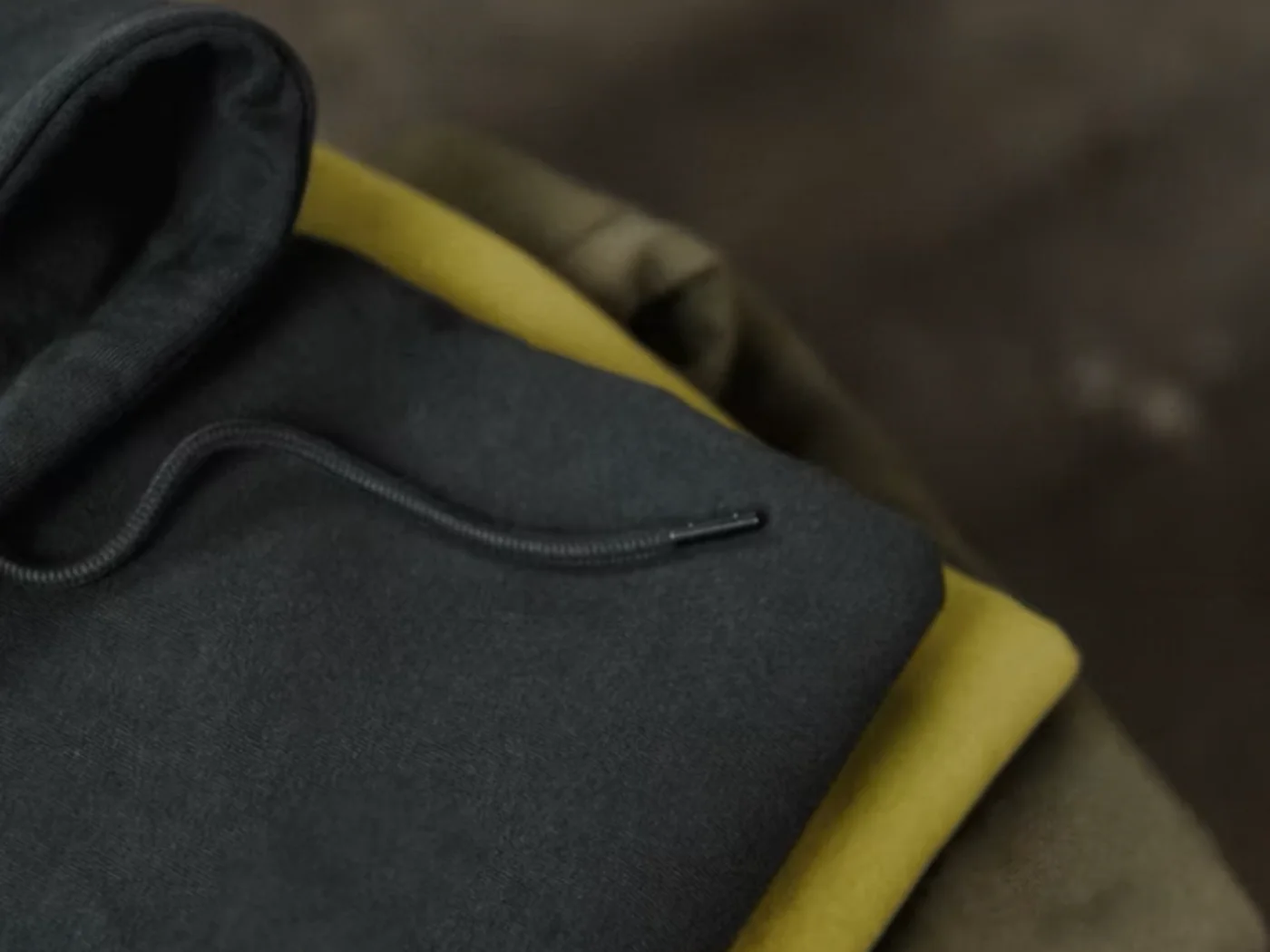
If the project is too small for OEM production, I would rather say that early than force the wrong solution. If it is suitable, a clear brief helps the factory quote more accurately and helps the buyer avoid the trap of a cheap but incomplete answer.
If you want to understand Hengcheng's broader hoodie production scope, see the Hengcheng hoodie manufacturer in China page. If your project is still at the development stage, the sample development process page is also useful before sending an RFQ.
Before you choose a supplier, make sure the low MOQ is attached to a real production plan.
| Checklist item | What to confirm |
|---|---|
| MOQ basis | Per style, per colorway, per fabric, per decoration setup, or total order |
| Customization scope | Fabric, fit, decoration, labels, and packing included or excluded |
| Sample process | Sample fee, sample lead time, revision logic, and approval standard |
| Fabric direction | Available fabric, stock color, or custom dyeing implications |
| Decoration route | Artwork files, placement, technique, color count, and wash expectation |
| QC points | Measurements, workmanship, rib recovery, shrinkage, pilling, and packing |
| Cost basis | What is included in the quote and what is charged separately |
| Reorder path | Can the first run become a repeatable style if the product sells? |
If those answers are still vague, the order is not really ready yet.
Before you commit, ask the supplier to explain the limits of the low MOQ. A serious answer may sound less exciting than "we can do anything," but it gives you a better chance of receiving a hoodie you can actually sell and reorder.
A realistic MOQ depends on fabric, colorway, decoration, trims, label requirements, packing, and whether the project uses available fabric or custom development. For Hengcheng, the final MOQ should be confirmed after the project details are reviewed, especially for private-label or OEM hoodie programs.
No-minimum orders usually belong to print-on-demand or blank customization, not full OEM hoodie manufacturing. If you need custom fabric, fit, labels, and bulk QC, a realistic production minimum is needed.
Not always. Low MOQ is useful only if the supplier can still control the product. A slightly higher MOQ with better fabric, sample review, and QC may be safer than an ultra-low MOQ with limited customization.
Focus on one style, limit colorways, use available fabric when possible, keep decoration controlled, and prepare a clear size breakdown. That makes the small order easier for the factory to support.
Blank customization starts from an existing blank garment and mainly changes decoration or branding. Low-MOQ OEM can develop a more specific private-label product, but it requires clearer specifications and a more realistic production quantity.
Send reference photos, fabric or GSM target, quantity by color and size, artwork, decoration method, labels, packing requirements, shipping destination, and timeline. Clear information helps avoid misleading quotes.
No. Photos help, but buyers should also review measurements, handfeel, wash behavior, decoration placement, workmanship, labels, and packing before approving bulk production.
Pattern work, sample development, fabric sourcing, decoration setup, trim coordination, and QC still take time on a small order. Those setup costs are spread across fewer garments, so the unit cost can be higher than a larger repeat order.
Ask what the MOQ is based on, what the sample will prove, which fabric is being used, whether decoration and labels are included, what QC checks are expected before bulk, and what changes would push the MOQ or price higher.
For a low-MOQ hoodie project, the winning move is usually not to chase the lowest advertised number. It is to find the smallest order that still lets the factory control the product well enough to be worth repeating.



