Address
JINKE Technology Industrial Park, No. 3188 ChunYuan Road, Weifang City, Shandong Province, China
Work Hours
Monday to Friday: 7AM - 7PM
Weekend: 10AM - 5PM
Address
JINKE Technology Industrial Park, No. 3188 ChunYuan Road, Weifang City, Shandong Province, China
Work Hours
Monday to Friday: 7AM - 7PM
Weekend: 10AM - 5PM


If you are sourcing garments from China, quality control is not just a final inspection before shipment. It is the system that keeps the approved sample, bulk production, packaging, and buyer expectations moving in the same direction.
The short answer: a stronger garment QC process starts before production, continues during sewing, and finishes with shipment-ready checks. Final inspection still matters, but it should confirm a controlled process, not discover preventable problems after most of the order is already finished.
From a China garment factory perspective, the best QC conversations happen early. When a buyer sends clear specs, sample comments, tolerance rules, packaging details, and defect priorities, the factory can turn those details into practical checkpoints for fabric, trims, measurements, workmanship, labeling, and packing.
For Hengcheng projects, we usually think about QC as part of the full manufacturing workflow. Sourcing, sample development, bulk production, inspection, and shipment handoff should connect with each other. If they are treated as separate islands, small misunderstandings can become expensive bulk problems.
Buyers should check whether the factory has a real process for converting requirements into production standards. A factory that only says "we inspect before shipping" is not giving enough information.
A useful first filter is simple: ask how the factory controls quality before, during, and after production. The answer should include pre-production alignment, incoming material checks, inline inspection, measurement control, workmanship review, final inspection, and packing verification.
| QC maturity signal | Weak answer from a supplier | Stronger factory-side answer |
|---|---|---|
| Sample approval | "Just send the sample" | Confirms sample comments, fit changes, trim approvals, and production standard before bulk |
| Measurement control | "We follow the size chart" | Identifies key measurement points, tolerances, grading risks, and inline measuring frequency |
| Workmanship | "Our workers are experienced" | Names actual risks such as skipped stitches, puckering, loose threads, seam twisting, stains, and asymmetry |
| Material control | "Fabric is checked" | Reviews fabric weight, hand feel, shade, shrinkage risk, surface defects, and trim matching |
| Packing | "We pack as requested" | Checks ratio, barcode, labels, folding, polybag, carton marks, and buyer packing manual |
| Problem handling | "We will fix problems" | Explains who checks, when defects are reported, and how corrections are tracked before defects spread |
The important point is not whether the factory uses impressive language. The important point is whether the factory can describe how quality risk is found early enough to fix.
A buyer should also look at the factory's export habits. Long-term work with demanding overseas buyers can shape a factory's internal discipline. For example, Japan-facing apparel programs often place strong pressure on finishing detail, consistency, presentation, and packaging accuracy. That does not mean every Japan order follows the same rulebook, but it is a useful signal when evaluating process culture.
Many bulk defects start as unclear decisions before production. If the approved sample is not translated into clear bulk rules, the line team may interpret details differently from the buyer.
This is why pre-production alignment is one of the most important QC steps. Before cutting and sewing move forward, the factory should understand the product standard in practical terms.
| Pre-production item | Why it affects QC | What buyers should prepare |
|---|---|---|
| Tech pack or size spec | Sets measurements, construction, trims, and labeling expectations | Latest spec sheet, BOM, label files, size chart, grading rules |
| Approved sample | Gives the factory a physical reference for fit, feel, and workmanship | Approved sample, sample photos, comments, or previous bulk reference |
| Measurement tolerances | Defines what is acceptable and what must be corrected | Tolerance table by POM, plus any critical points |
| Fabric and trim standard | Prevents shade, hand feel, shrinkage, or accessory mismatch | Fabric composition, GSM, color reference, trim cards, zipper/button/cord details |
| Decoration standard | Controls placement and appearance of print, embroidery, wash, or appliques | Artwork, placement map, Pantone/color notes, strike-off comments |
| Packing manual | Prevents shipment-level mistakes | Fold method, polybag, hangtag, barcode, carton mark, size/color ratio |
| Inspection requirement | Aligns pass/fail logic before final check | AQL level, defect list, third-party inspection plan, retailer manual if any |
In our experience, buyers sometimes focus only on unit price and lead time during early RFQ. Those matter, but QC depends heavily on specification clarity. A vague tech pack can make even a capable factory slower and less accurate.
For a factory, unclear standards create two problems. First, the merchandiser and production team need to spend time confirming details that could have been defined earlier. Second, the sewing line may move forward while the standard is still soft. Both problems increase rework risk.
A practical QC workflow normally moves through several checkpoints. The exact details depend on product category, but the logic is similar for hoodies, T-shirts, knitwear, casualwear, loungewear, kidswear, and many private-label programs.
| Stage | Factory-side QC focus | Buyer risk controlled |
|---|---|---|
| Pre-production meeting | Confirm approved sample, specs, BOM, workmanship points, packaging, and shipment requirements | Misinterpretation before bulk starts |
| Incoming material check | Review fabric, trims, accessories, color, surface defects, and material readiness | Wrong material, shade difference, late trim problems |
| Cutting check | Confirm fabric direction, marker use, size/color matching, and cutting accuracy | Fit drift, twisting, shade panels, wrong assortment |
| Inline sewing inspection | Catch construction mistakes while production is still active | Repeated defects across many pieces |
| Measurement review | Check key points against size spec and tolerance | Bulk sizes running too large, too small, or inconsistent |
| Decoration and finishing check | Review print, embroidery, wash, pressing, thread trimming, and presentation | Logo errors, poor finishing, visible surface problems |
| Final inspection | Confirm workmanship, measurements, ratio, labeling, packing, and shipment readiness | Defects discovered before goods leave the factory |
| Packing handoff | Verify folding, polybag, barcode, carton marks, and quantity | Retail receiving problems and buyer complaints |
The most valuable stage is often inline checking. If a seam, pocket position, neck rib, cuff, zipper, or decoration placement is wrong, catching it after 30 pieces is very different from catching it after 3,000 pieces.
Inline review also protects lead time. Rework discovered late can push shipment dates, create air-freight pressure, or force the buyer to accept a compromise. Early correction is usually cheaper and more realistic.
AQL is useful, but it is not a replacement for production control. It is a statistical inspection method used to decide whether a lot should pass or fail based on an agreed sampling plan and defect limits.
For buyers, AQL can be helpful because it creates a common language for final inspection. But it has limits. AQL does not automatically define your product standard, and it does not prevent defects from being made. It only helps evaluate finished goods at a certain point in time.
| Inspection logic | What it does well | What it cannot solve alone |
|---|---|---|
| AQL final inspection | Gives buyer and inspector a structured pass/fail method | Cannot fix unclear samples, poor specs, or late material changes |
| 100% inspection | Useful for high-risk details or premium/strict orders | Adds time and cost, and still needs clear defect definitions |
| Inline inspection | Finds recurring problems earlier | Requires factory discipline and production-floor follow-up |
| Third-party inspection | Adds independent checking before shipment | Works best when buyer standards are already clear |
| Buyer QC manual | Defines defect priorities and presentation expectations | Must be practical enough for factory execution |
If you plan to use a third-party inspector, tell the factory early. Share the inspection standard, AQL level, critical defects, and any retailer-specific requirements before production. A factory should not discover the real pass/fail rules only when the inspector arrives.
For Hengcheng projects, we can work with buyer-defined QC standards or third-party inspection requirements when they are shared early enough. The more precise the standard, the easier it is to build it into production instead of treating it as a last-minute gate.
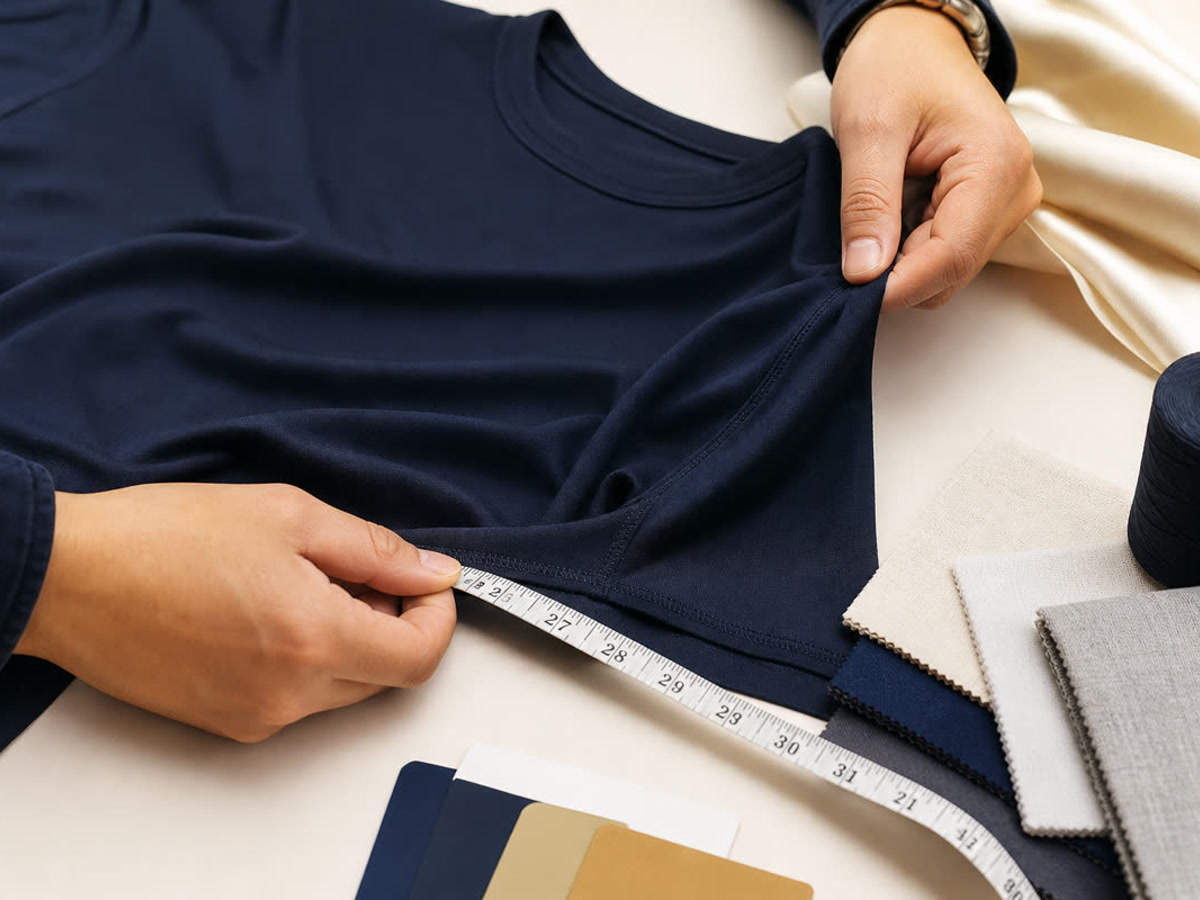
Not every defect has the same business impact. Buyers should separate critical, major, and minor defects based on the product, sales channel, and customer expectation.
A loose thread may be minor in one context, while a wrong care label, sharp object, severe stain, wrong size ratio, or failed seam could be serious. For kidswear, compliance and safety details become more sensitive. For premium streetwear or boutique apparel, visible presentation defects may damage brand perception even if the garment is technically wearable.
| Defect area | Common examples | Why it matters |
|---|---|---|
| Measurement | Chest width, length, sleeve, shoulder, waist, inseam out of tolerance | Fit complaints, size returns, poor repeat-order confidence |
| Workmanship | Skipped stitches, open seams, broken stitches, puckering, twisting | Durability risk and visible quality complaints |
| Fabric | Holes, stains, shade variation, pilling risk, hand-feel mismatch | Product value and customer satisfaction |
| Decoration | Print cracking, wrong placement, embroidery thread issues, color mismatch | Branding accuracy and retail appearance |
| Trims | Wrong zipper, button, drawcord, rib, label, tag, eyelet, snap | Product function and brand consistency |
| Packing | Wrong barcode, carton mark, ratio, polybag, size sticker | Warehouse receiving problems and retailer chargeback risk |
| Compliance | Wrong care label, fiber content issue, missing warning or import label | Customs, retailer, or market compliance risk |
One buyer mistake is to treat all defects as equally important. A better approach is to tell the factory which points are critical to your customer, your retail channel, and your brand positioning.
For example, a promotional basic T-shirt order may prioritize correct print, measurement tolerance, and packing ratio. A premium heavyweight hoodie may need closer control of fabric weight, hand feel, seam balance, hood shape, zipper quality, rib recovery, and finishing. A kidswear program may need extra care on trims, label content, seams, and safety-related details.
QC is connected to commercial decisions. When buyers push for very low MOQ, very low price, fast lead time, or complex customization at the same time, the factory has less room to absorb changes and rework.
This does not mean small orders cannot be controlled. It means the buyer and factory need a realistic QC plan for the order structure.
| Commercial factor | QC impact | Practical buyer advice |
|---|---|---|
| Very low MOQ | Less production buffer and less room to spread setup cost | Keep fabric, trims, colors, and packaging simpler for the first order |
| Many sizes/colors | More assortment and measurement-control points | Confirm size ratio, color references, labels, and carton plan early |
| Custom fabric | Higher material approval and shrinkage/control risk | Approve lab dips, hand feel, GSM, and fabric test requirements before bulk |
| Complex decoration | More placement, color, durability, and finishing checkpoints | Approve strike-offs or pre-production samples before bulk production |
| Tight lead time | Less time for sample revisions and rework | Avoid late changes; define inspection rules before production starts |
| Lowest-price sourcing | Can reduce room for better materials, workmanship time, or inspection effort | Compare total risk, not only quoted unit price |
A realistic QC plan should match the product. A basic blank T-shirt has different risk from a washed hoodie, embroidered sweatshirt, ribbed knit set, or multi-trim private-label style.
When Hengcheng reviews a project, we look not only at quantity and target price, but also at whether the requested fabric, construction, decoration, and packaging can be controlled within the timeline. This is why an RFQ should include quality-related information, not only product name and order quantity.
A good RFQ helps the factory quote and plan quality control at the same time. If the factory receives only a photo and quantity, it may be able to estimate, but the estimate will carry more assumptions.
| RFQ information | Why it helps the factory | Example detail |
|---|---|---|
| Product category and style | Defines process and risk profile | Hoodie, T-shirt, sweatshirt, knit set, kidswear, loungewear |
| Fabric requirement | Affects price, MOQ, shrinkage, hand feel, and inspection | 320 GSM cotton-poly fleece, enzyme wash, anti-pilling request |
| Size range and tolerance | Affects grading, measurement checks, and sample review | XS-XXL with key POM tolerance +/-1 cm or buyer-defined table |
| Decoration | Adds approval and QC checkpoints | Embroidery chest logo, puff print back artwork, woven label |
| Trim and packaging | Controls brand presentation and receiving accuracy | Custom neck label, hangtag, barcode sticker, individual polybag |
| Quantity by color/size | Affects cutting, ratio, carton plan, and MOQ reality | 500 pcs total, 3 colors, 5 sizes, buyer ratio attached |
| Target market | Affects labeling, compliance, and buyer expectations | US DTC, EU boutique, Japan retailer, Australia wholesale |
| Inspection standard | Prevents late disagreement | AQL 2.5 major / 4.0 minor, third-party inspection before shipment |
| Timeline | Helps plan sampling and production controls | Sample needed in two weeks, bulk delivery target before seasonal launch |
If you are still early in development, you do not need every detail ready immediately. But before bulk production, the factory and buyer should agree on enough information to control quality consistently.
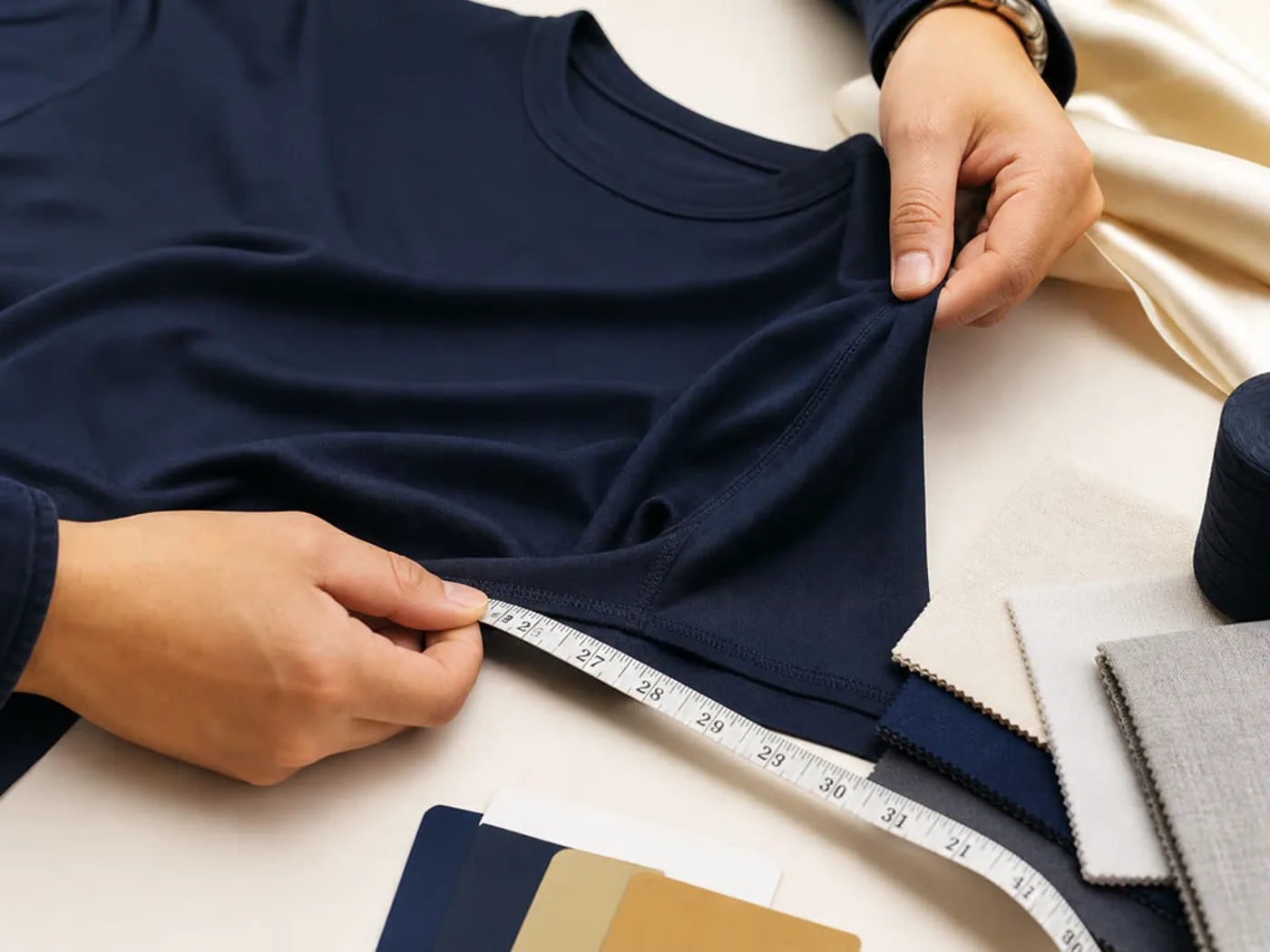
Sample approval is one of the strongest QC gates. A buyer should not approve a sample only because it looks roughly correct in photos. The approved sample becomes the reference for bulk production, so unclear approval creates risk.
A practical sample review should cover fit, measurements, workmanship, fabric, trims, decoration, wash/finish, labels, and packing direction. Comments should be specific enough for the factory to execute.
| Sample review point | What to check | How to comment clearly |
|---|---|---|
| Fit and silhouette | Overall shape, length, shoulder, sleeve, body width, drape | "Body length +2 cm; shoulder unchanged; keep relaxed body shape" |
| Measurements | Key POM against spec and tolerance | Mark each point pass/revise; attach revised size spec |
| Fabric | Weight, hand feel, stretch, recovery, surface, shrinkage risk | Confirm approved fabric or state exact change needed |
| Workmanship | Stitching, seam balance, puckering, loose thread, symmetry | Use photos with circles/arrows and short action comments |
| Decoration | Artwork scale, color, placement, embroidery/print quality | Confirm placement from seam/edge points and approve strike-off if needed |
| Trims | Zipper, buttons, drawcord, rib, labels, hangtags | Confirm supplier/reference, color, length, and finish |
| Packing | Fold, polybag, label, barcode, carton requirement | Send packing manual or approve factory proposal before bulk |
One good rule: if the comment can be misunderstood, rewrite it. "Make it better" is not a production instruction. "Reduce sleeve length by 1.5 cm from size M sample and keep cuff rib width unchanged" is much more useful.
From the factory side, clear sample comments help merchandising, pattern, material, and production teams work from the same standard. This is especially important when more than one team member touches the order.
At Hengcheng, QC is most useful when it is connected to sample development. The sample stage is where many buyer expectations become visible for the first time: fit preference, fabric hand feel, trim quality, stitch detail, decoration accuracy, and packaging direction.
When a sample moves toward approval, the important question is not only "does the buyer like it?" The factory also needs to ask whether the approved details can be repeated in bulk within the target MOQ, cost, and timeline.
That is why a factory-side review often includes:
This is also why direct factory communication matters. When buyers work directly with the production side instead of only through a middle layer, technical questions can be clarified faster and quality risks are easier to translate into production actions.
Most QC problems are not caused by one dramatic mistake. They often come from small gaps that accumulate.
| Buyer mistake | What usually happens | Better approach |
|---|---|---|
| Approving a sample with vague comments | Bulk team repeats details the buyer expected to change | Approve only after comments are clear and documented |
| Changing fabric or trim late | Cost, lead time, shade, shrinkage, and fit can shift | Freeze materials before production or reset sample approval if needed |
| Ignoring tolerance rules | Buyer and factory disagree on whether a measurement is acceptable | Define POM tolerances before bulk cutting/sewing |
| Focusing only on price | The quote may leave less room for material stability or inspection effort | Compare unit price together with QC plan and supplier reliability |
| Sending incomplete packing rules | Barcode, carton, ratio, or label mistakes appear late | Share packing manual and label files before final production |
| Treating QC as final inspection only | Defects are found after they have already spread | Build inline checks into the production plan |
| Not ranking defect priorities | Factory may spend attention on the wrong issues | Identify critical, major, and minor defects for your product |
A good factory should still ask questions when something is unclear. But buyers can reduce risk by making the important standards visible before production starts.
Third-party inspection is useful when the buyer needs independent verification before shipment, especially for larger orders, retail orders, strict compliance channels, or first-time factory cooperation.
It is also useful when the buyer cannot visit the factory and wants an outside report on workmanship, measurements, quantity, packaging, and visible defects.
But third-party inspection should not replace factory QC. If the only serious check happens at the end, the buyer may receive a clear report, but the order may still be late or hard to fix.
A stronger structure is:
For serious buyers, this layered approach is more practical than relying on one final inspection report to solve everything.
A buyer-friendly QC process is clear, specific, and connected to action. It does not hide behind vague promises like "high quality" or "strict inspection."
The buyer should be able to understand:
This is the kind of process overseas buyers should ask for when evaluating a garment manufacturer in China. It protects the buyer, but it also helps the factory quote, plan, and execute more accurately.
At Hengcheng, we do not treat QC as a slogan. We treat it as part of the order workflow, from sample review to production control to final shipment handoff. That is the practical foundation for repeatable private-label and OEM apparel production.
No. Final inspection is important, but it is too late to be the only serious quality checkpoint. Stronger QC starts with sample and spec alignment, then continues through material checks, inline production review, measurement control, finishing review, packing checks, and final inspection.
AQL means Acceptable Quality Limit. It is a sampling method used to judge whether a production lot passes or fails based on agreed defect limits. Buyers should define AQL level and defect categories before inspection, not after production is finished.
Third-party inspection can be useful, especially for first orders, larger orders, retail orders, or high-risk programs. It works best when the factory already has a clear internal QC process and the buyer has shared the inspection standard early.
Send the product category, fabric details, size spec, tolerances, decoration requirements, trim details, packaging manual, quantity by size/color, target market, timeline, and any inspection or AQL standard. The factory can quote and plan more accurately when these details are clear.
Approve samples carefully, write specific comments, freeze important materials and trims before production, define measurement tolerances, confirm decoration placement, and ask the factory how it will control inline quality before final inspection.
They can be, especially when the order has many colors, sizes, trims, custom packaging, or complex decoration. Low MOQ is workable, but the product plan should stay realistic and the QC standard should be clear before production.
Yes. If a buyer has a QC checklist, AQL rule, third-party inspection requirement, retailer manual, or specific defect standard, Hengcheng can review it during project alignment and connect it with sample development, production, final inspection, and shipment handoff.
If you are evaluating a China garment manufacturer for OEM or private-label production, prepare your product brief, quantity, size range, fabric direction, sample comments, timeline, and QC expectations. A factory can give a more realistic quotation and control plan when the quality standard is clear from the start.
You can also review Hengcheng's related pages on sample development, private label and OEM manufacturing, and contact us if you want to discuss a specific garment project.



